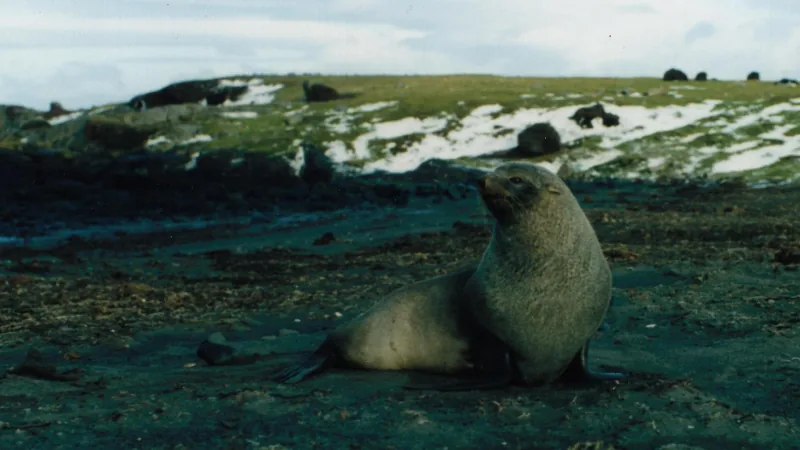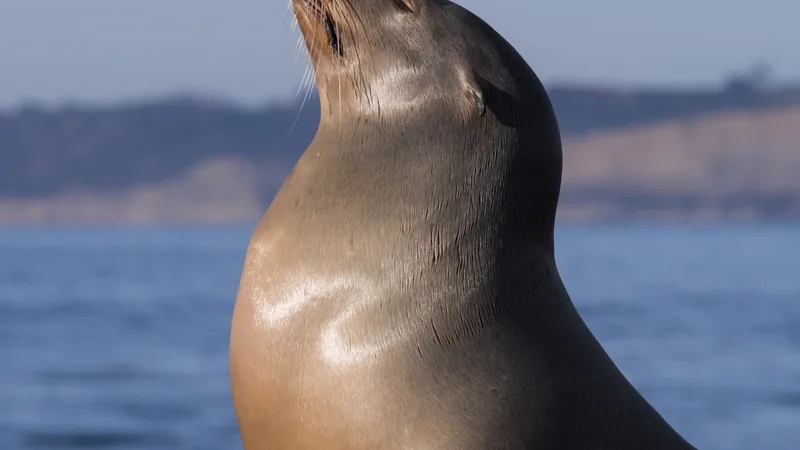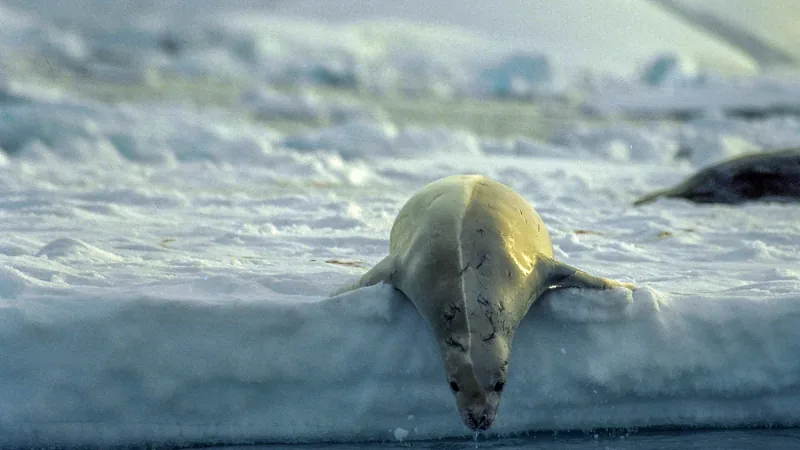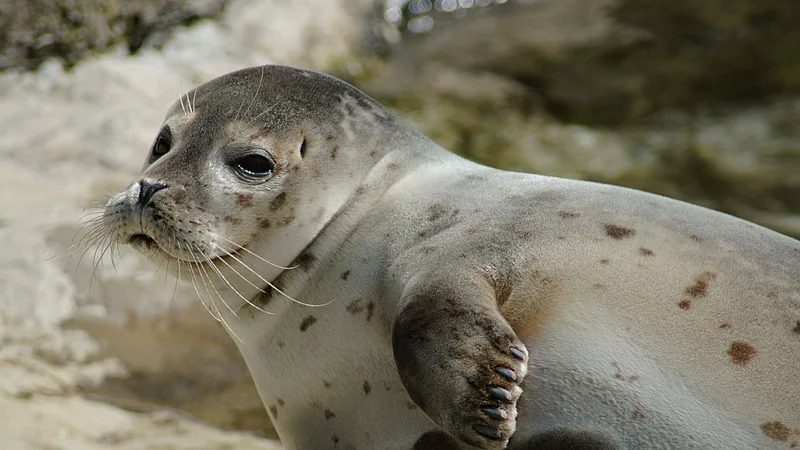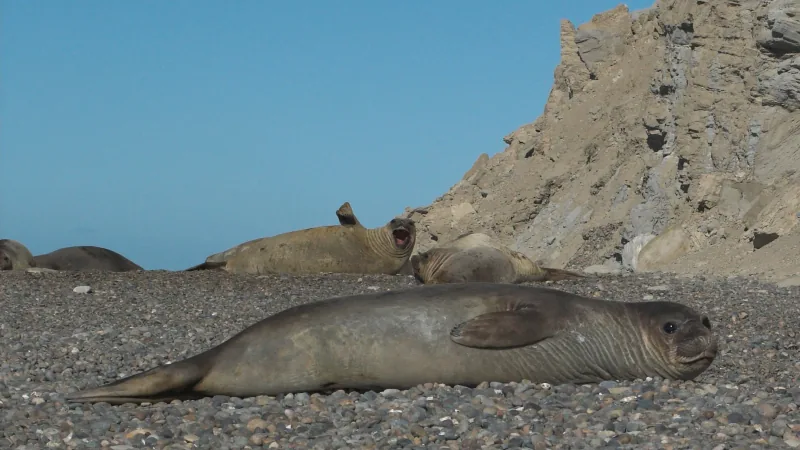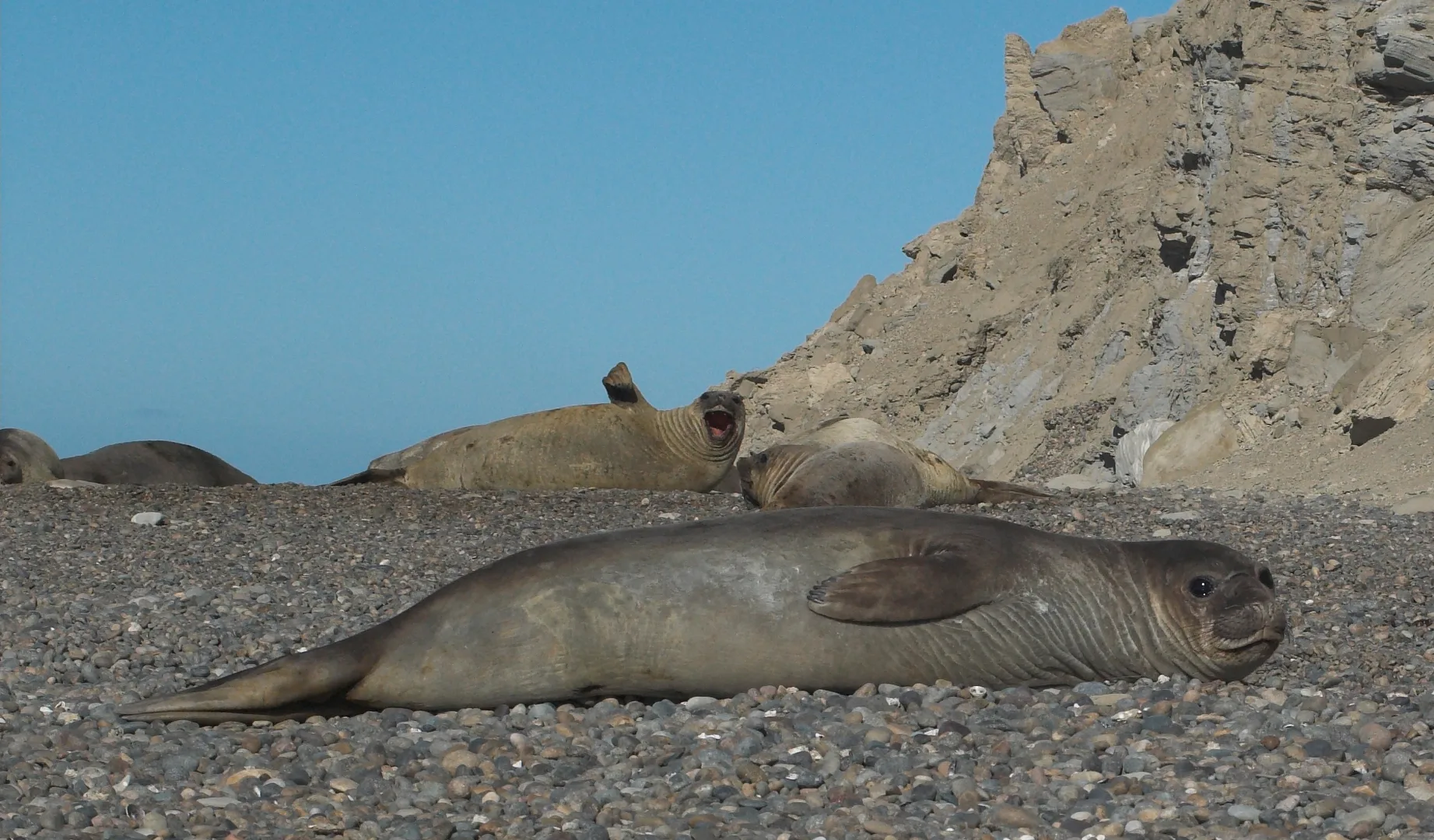
Southern elephant seals at Punta Ninfas, Patagonia, south of the Valdés Peninsula
Field
notes
Bigger Than a Polar Bear
Hauling out on the beaches of South Georgia and Macquarie Island, the southern elephant seal (Mirounga leonina) is the largest carnivoran alive, larger than even the polar bear. Carnivorans are the mammal order that includes bears, cats, dogs and seals. Adult bulls weigh up to 3,000 kilograms, the species averages 4.5 meters in length, and cows weigh between 300 and 900 kilograms just before giving birth. The Guinness Book record holder, as compiled by Wood in 1982, was a male that measured 6.85 meters and weighed 5,000 kilograms.
A Nose Built to Roar
The bull’s large proboscis, the feature that gives the species its name, is used to make loud roaring sounds, especially during the mating season. Bulls also use that same roar to challenge each other for dominance on a crowded beach. Adult males grow to nearly five times the body mass of females, and about 4 percent of adult males control a harem, which can hold up to 100 females in a breeding season. Guarding that harem, a bull will not leave to hunt; instead he survives on blubber reserves, the fat stores these seals build up by eating throughout the rest of the year.
Two-Hour Dives Into the Dark
After breeding or moulting, elephant seals head into the Southern Ocean, migrating up to 4,000 kilometers from their colonies to hunt squid and fish at the edge of the Antarctic sea ice. Biologists have recorded them diving up to 2 kilometers deep and holding their breath for up to two hours, though most dives last around 30 minutes and reach 300 to 800 meters. Between dives they spend roughly two minutes at the surface.
Black Muscle, Thick Blood Extra red blood cells that may carry more hemoglobin than usual, plus oxygen-storing myoglobin that turns their muscle tissue black, let a southern elephant seal make one breath last for up to two hours.
Hunted to the Brink, and Not Yet Safe
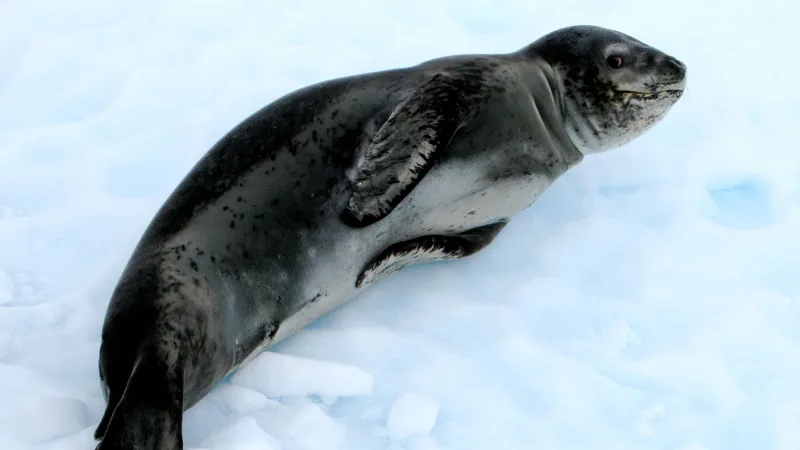
From the early 19th century until 1964, sealers harvested southern elephant seals for their blubber oil, and many populations were nearly wiped out. Today the IUCN Red List lists the species as Vulnerable. Killer whales, leopard seals, and some large sharks are its main predators at sea, and an elephant seal fights back with its teeth or swims away.
Published Updated
Traits
Intel
& FAQ
Guess
first
How big is a Southern Elephant Seal, really? Slide, lock in, and see what the sources say. Every answer is a figure from this page, quoted from where it came from.
Sources
- 01Mirounga leonina (southern elephant seal). Animal Diversity Web, University of Michigan.
- 02Elephant seal. Australian Antarctic Program.
- 03McClain et al. (2015). Sizing ocean giants: patterns of intraspecific size variation in marine megafauna. PeerJ.
- 04Volzke et al. (2023). Extreme polygyny results in intersex differences in age-dependent survival of a highly dimorphic marine mammal. Royal Society Open Science.
- 05Jonsen et al. (2018). Movement responses to environment: fast inference of variation among southern elephant seals with a mixed effects model. Ecology.
- 06Hofmeyr (2026). Mirounga leonina. The IUCN Red List of Threatened Species 2026: e.T13583A95970952.
What the sources say: 43 claims checked word for word against these sources →