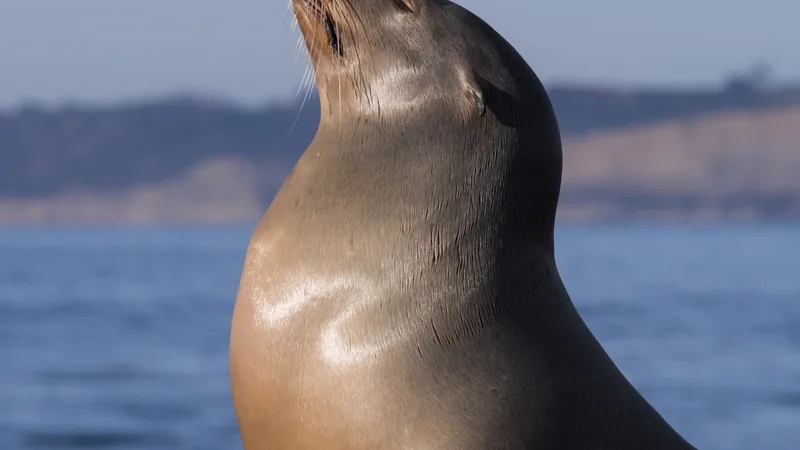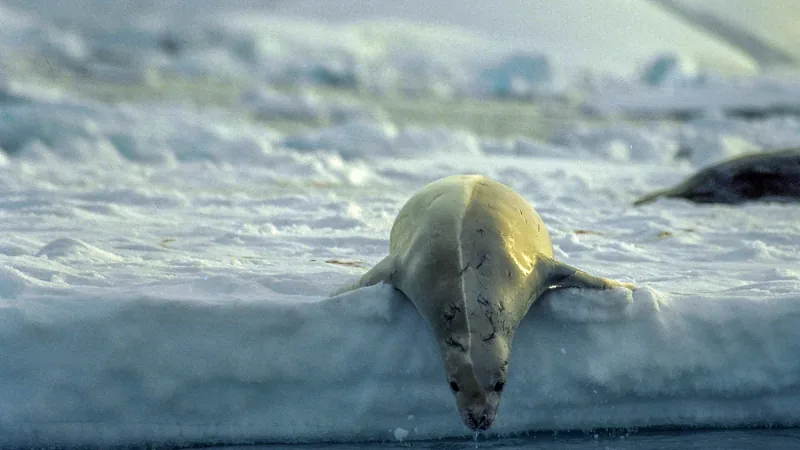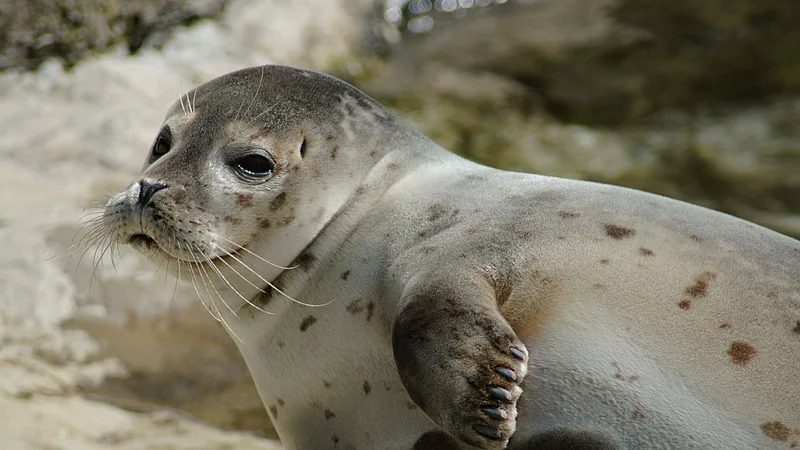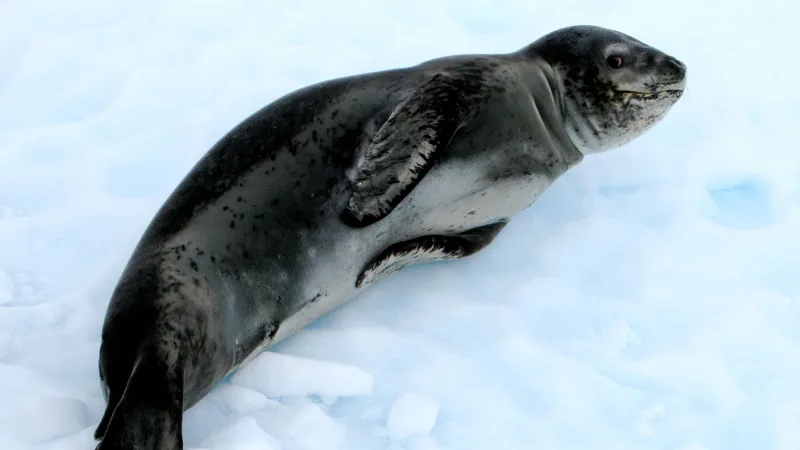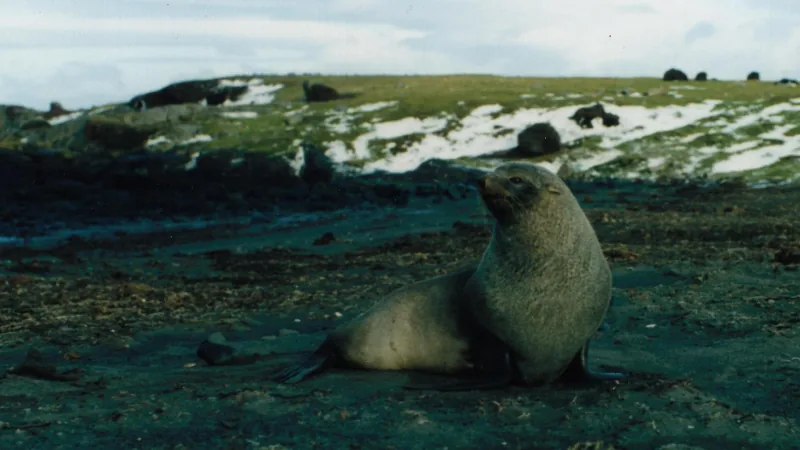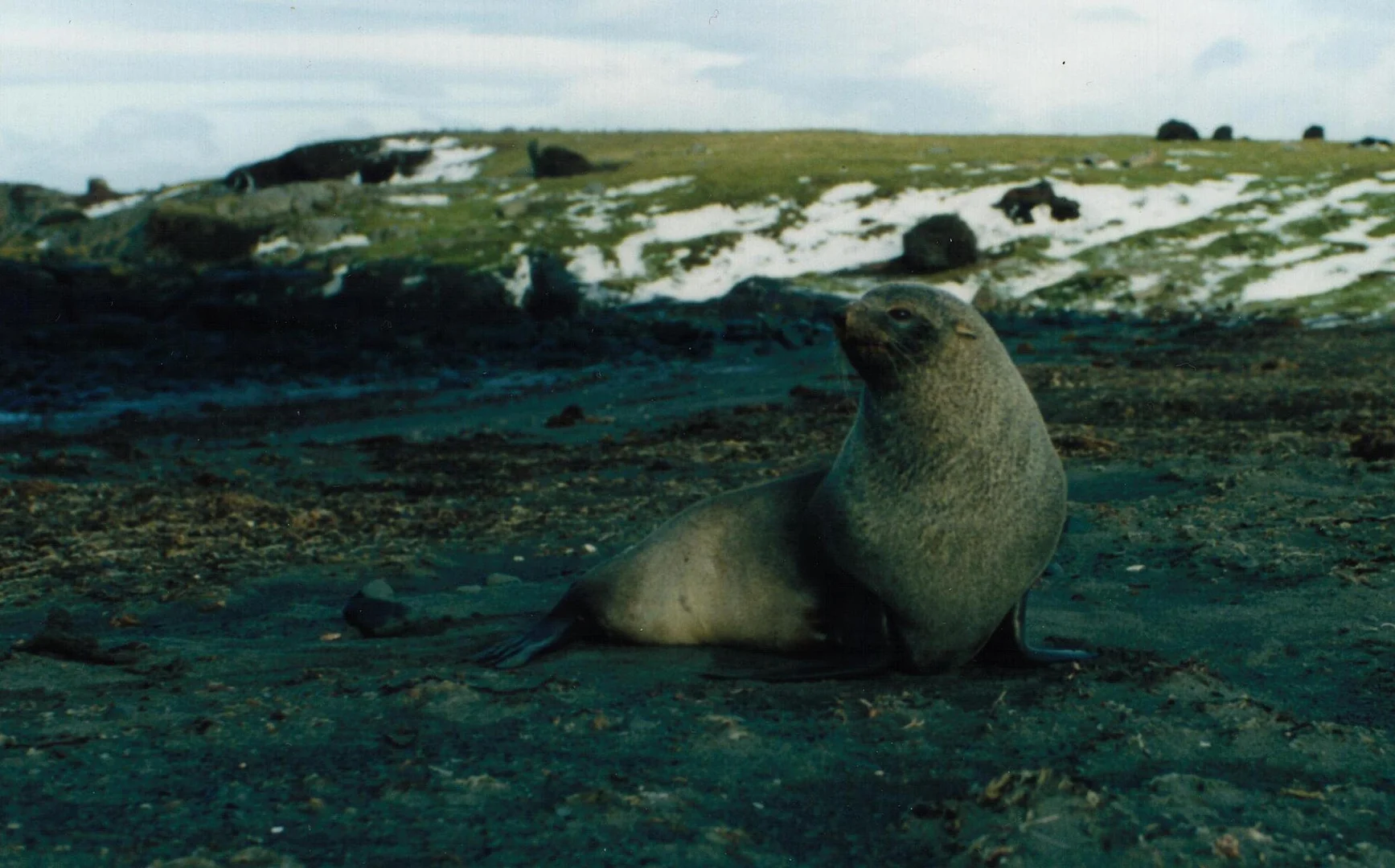
Arctocephalus gazella male
Field
notes
On the rugged, wave-hammered beaches of South Georgia and the South Shetland Islands, the air trembles with the guttural roars and clashing teeth of the Antarctic Fur Seal (Arctocephalus gazella). The only eared seal native to Antarctic waters, this agile predator came back from the edge once, and is sliding again.
Sealers once hunted the species from millions of animals down to commercial extinction. When the hunting stopped, the survivors bred fast on plentiful food and the colonies came roaring back. Then the numbers turned: breeding-age adults worldwide fell from about 2.2 million in 1999 to about 940,000 in 2025, and in 2026 the IUCN Red List listed the species as Endangered. Scientists think climate change is squeezing the food supply around South Georgia, home to more than 90% of the world’s fur seals.
300,000 Hairs Per Inch: How does an eared seal swim through water at zero degrees Celsius without freezing? Its secret is a luxurious double-coat packed with over 300,000 hairs per square inch. The outer guard hairs interlock to keep seawater out, while the crimped underfur traps a permanent envelope of warm, dry air next to the skin.
During the summer breeding season, massive adult bulls haul out to establish beach master territories. Weighing up to four times more than females, bulls engage in vicious physical combat, trading blood-drawing bites and neck-slashes to defend their rocky real estate without eating a single bite of food for two months.
In the foaming sub-Antarctic surf, fur seals are acrobatic torpedos. Propelling themselves with large, wing-like front flippers, they dive through the night to gorge on swarming Antarctic krill and lanternfish.
Published Updated
Traits
Sources
- 01Forcada (2026). Arctocephalus gazella. The IUCN Red List of Threatened Species 2026: e.T2058A293563664.
- 02Forcada (2021). Antarctic Fur Seal (Arctocephalus gazella, Peters 1875). Ecology and Conservation of Pinnipeds in Latin America, Springer (abstract via the British Antarctic Survey).
What the sources say: 10 claims checked word for word against these sources →