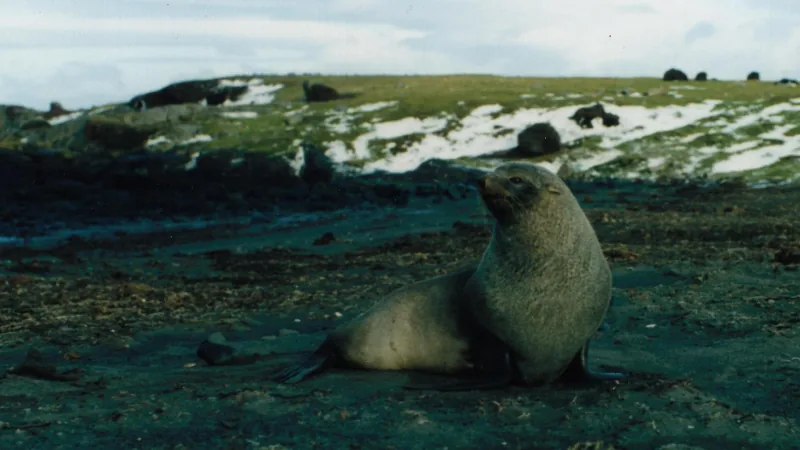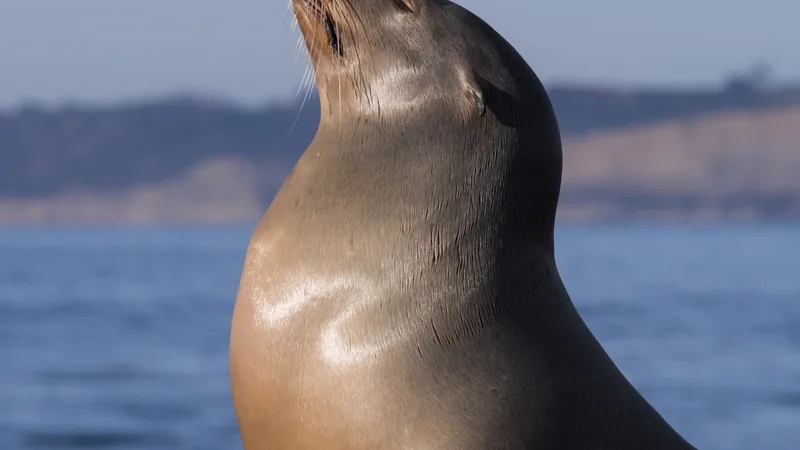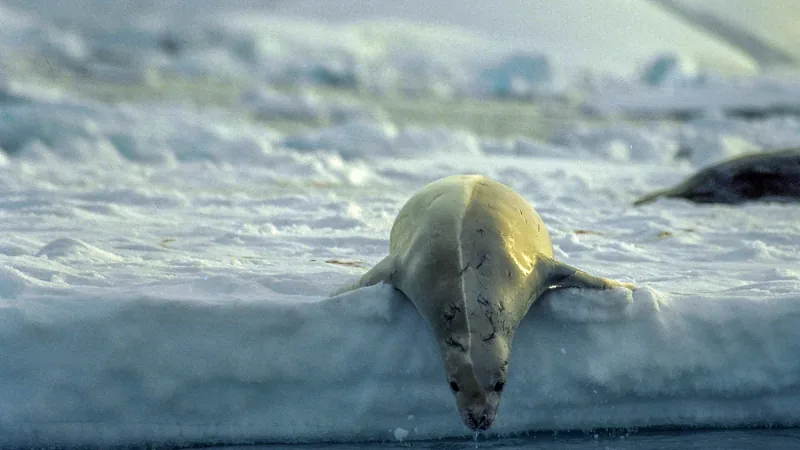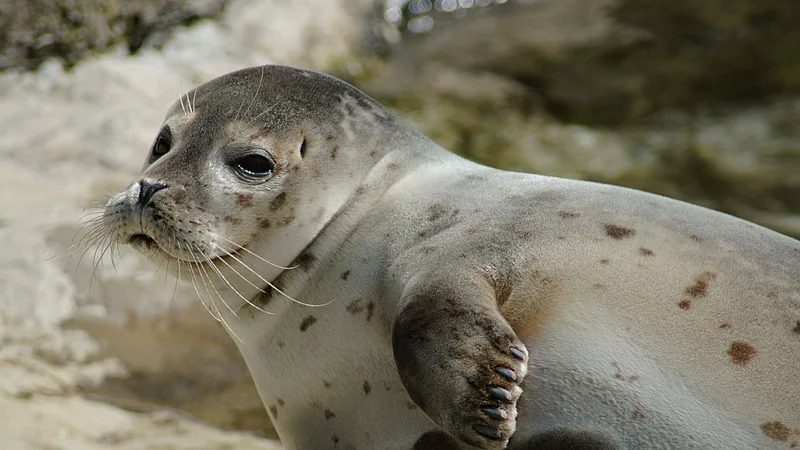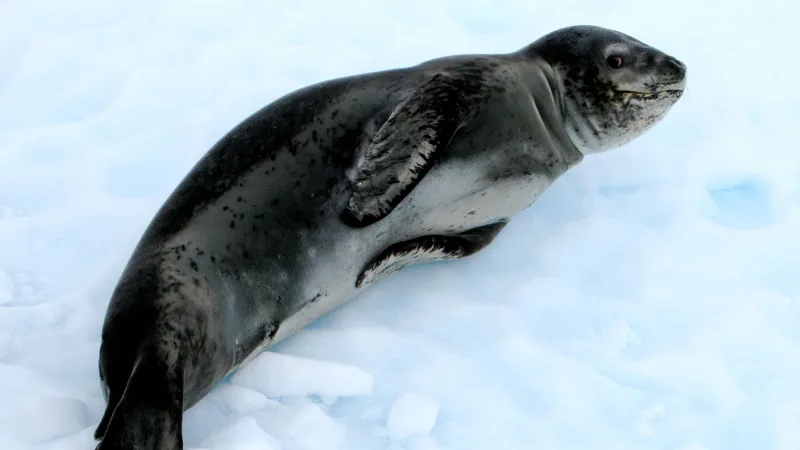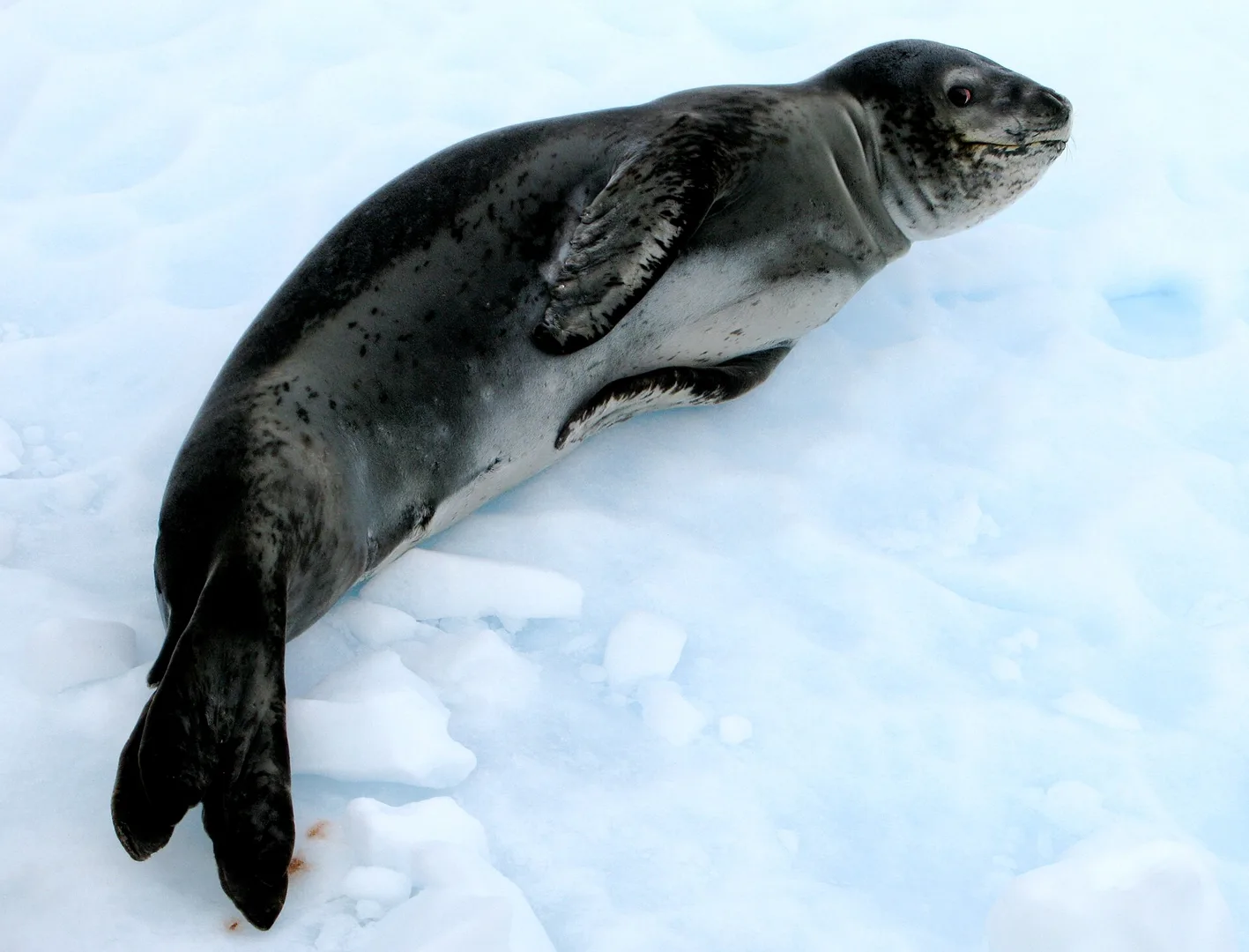
A leopard seal on the ice in the Lemaire Channel, Antarctica.
Field
notes
A Seal Built Like a Sea Serpent
The leopard seal (Hydrurga leptonyx) has a slender body, long fore-flippers and a large head. Its jaws open wide to show exceptionally long canines and sharp, complex molars, and New Zealand’s Department of Conservation says the big head, massive jaws and tremendous gape give it a snake-like appearance. Large females may exceed 3.5 meters in length and weigh over 500 kilograms. Leopard seals may live for 26 years or more.
Females are the heavyweights Among 22 leopard seals tagged off the Western Antarctic Peninsula, adult females averaged 454 kilograms and adult males 302 kilograms. With females 50 percent larger than males, leopard seals are one of the most extreme cases among marine mammals of females outsizing males.
Krill Strainer, Penguin Hunter
Leopard seals are generalist predators. They use their lobodont teeth to filter krill out of the water, the same trick crabeater seals use, and a 2022 study describes them as both krill predators and apex predators. They also eat fish, squid and the pups of other seals, including crabeater, Weddell and southern fur seals.
For bigger prey, leopard seals frequent ice floes and waters next to Adélie penguin colonies, catching penguins after underwater chases or as the birds fall back into the water after missing their footing on the ice. The seal grips a penguin’s skin with its incisor teeth and shakes the bird until the skin tears away. At Seal Island in the South Shetland Islands, researchers found that just one or two seals a year were responsible for an average of 60 percent of the observed fur seal pup captures, with hunting style and success varying seal to seal.
An Antarctic Wanderer
Leopard seals live around the pack ice that rings Antarctica, but they may be the greatest wanderers of any Antarctic seal. Sightings turn up on subantarctic islands, in Tasmania, and even as far north as the Great Barrier Reef’s Heron Island. Some individuals have been known to spend a year or more at a stretch in New Zealand waters. A 2022 tagging study off the Western Antarctic Peninsula recorded one leopard seal diving to 1,256 meters for 25 minutes; before it, the deepest known leopard seal dive was 425 meters.
The Australian Antarctic Division names the killer whale as the leopard seal’s only natural predator. Attacks on people are rare, but one, on a researcher snorkelling in Antarctic waters, was fatal.
Published Updated
Traits
Intel
& FAQ
Guess
first
How big is a Leopard Seal, really? Slide, lock in, and see what the sources say. Every answer is a figure from this page, quoted from where it came from.
Sources
- 01Leopard seal. Australian Antarctic Division.
- 02Leopard seal. New Zealand Department of Conservation.
- 03Hydrurga leptonyx (leopard seal). Animal Diversity Web, University of Michigan.
- 04Hiruki, Schwartz & Boveng (1999). Hunting and social behaviour of leopard seals (Hydrurga leptonyx) at Seal Island, South Shetland Islands, Antarctica. Journal of Zoology.
- 05Kienle et al. (2022). Plasticity in the morphometrics and movements of an Antarctic apex predator, the leopard seal. Frontiers in Marine Science.
- 06Borras-Chavez & Hückstädt (2026). Hydrurga leptonyx. The IUCN Red List of Threatened Species 2026: e.T10340A95969074.
What the sources say: 40 claims checked word for word against these sources →