Pygmy hippopotamus in the water with its nostrils, eyes and ears above the surface, Ho Chi Minh City Zoo, Vietnam
Field
notes
A Different Kind of Hippo
The pygmy hippopotamus (Choeropsis liberiensis) is the smaller of the two living hippo species and the only living species in its own genus, the group of close relatives one step above a species. Pygmy hippos measure 4.9 to 5.7 feet long and stand 30 to 39 inches tall, weighing 350 to 600 pounds; a common river hippo weighs about 10 times as much. San Diego Zoo gives females an average lifespan of 31 years, without saying whether in the wild or in zoos, and lists the male lifespan as unknown. Unlike its social cousin, it usually lives alone, though it is sometimes found in small family groups.
Ghost of the Upper Guinean Forest
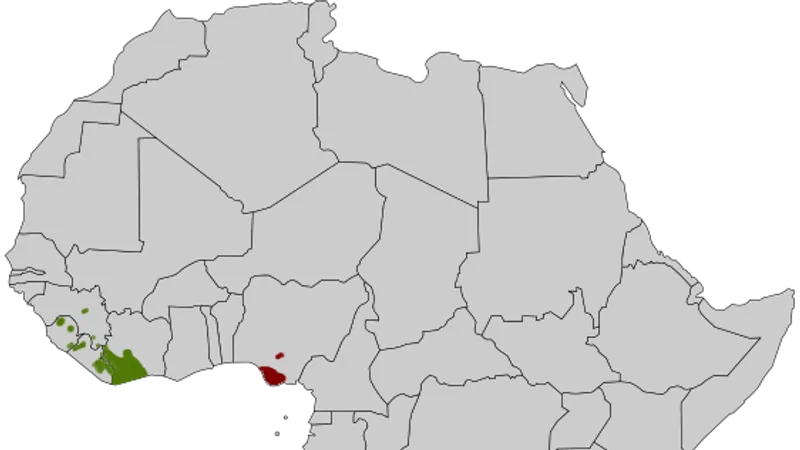
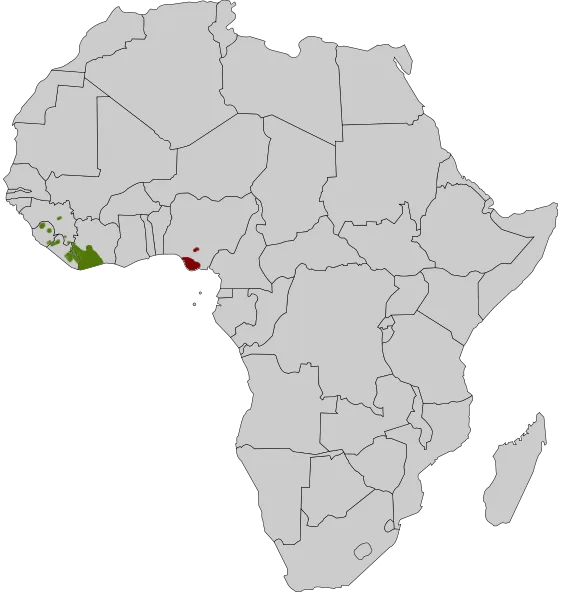
It is found only in the interior forests of West Africa, mainly in Liberia, with small numbers in neighboring Sierra Leone, Guinea and Ivory Coast. San Diego Zoo puts the wild population at possibly fewer than 2,500. Its forests are being cut down or burned, its rivers polluted, and in logged areas people hunt it for meat. The IUCN Red List, the global list of threatened species, rates it Endangered.
Pygmy hippos avoid open ground completely and do most of their travelling along worn, tunnel-like paths through dense vegetation. They rest hidden in swamps, wallows or rivers through the heat of the day, then leave the water to feed on land for a few hours in the cool of the night. Their plant diet includes broad-leaved plants, grasses, semi-aquatic plants, sedges, ferns and fallen fruit, and they can stand on their hind legs to reach food higher up in trees.
Leopards seem to be the only natural predator able to successfully attack them. Pygmy hippos are shy and would rather flee than fight: when startled, they flee a short distance into vegetation and hide. In Ivory Coast’s Taï National Park, a camera-trap study (cameras that fire when an animal passes) estimated pygmy hippos available for the cameras to detect 49% of each 24 hours; the gaps came from resting in the shallows and rivers.
Blood Sweat and River-Bottom Walking
Blood sweat comes from large glands in the dermis, the skin layer beneath the surface. This glossy, brownish-red secretion protects the pygmy hippo’s thin, sensitive skin from the sun, and more of it has been seen during hard exertion such as running or mating. It may have evolved to replace sweat.
Hippos walk along river and lake bottoms rather than swim, a 2007 study of pygmy hippo front legs points out. Dissecting two animals from a Washington, D.C. zoo, its authors found broad anchor points for the chest muscles and a long tendon to bend each toe, because every toe carries weight. Together these give a strong system for pushing the body forward through water.
A Studbook Tilted Toward Daughters
A studbook records the births and parents of a species’ zoo animals. The 2008 pygmy hippo studbook lists 1,089 captive births between 1919 and 2008; of the 1,057 with a known sex, about 42% were male. A 2012 study of ten captive males found one reason in their sperm: every male made more sperm carrying an X chromosome, which produces daughters, than sperm carrying a Y. The researchers think females most probably add a similar tilt, though they could not rule out the males alone. Newborn calves weigh 7.5 to 14 pounds and reach maturity at 4 to 5 years.
Published Updated
Traits
Intel
& FAQ
Guess
first
How big is a Pygmy Hippopotamus, really? Slide, lock in, and see what the sources say. Every answer is a figure from this page, quoted from where it came from.
Sources
- 01Pygmy Hippopotamus. San Diego Zoo Wildlife Alliance.
- 02Hexaprotodon liberiensis (pygmy hippopotamus). Animal Diversity Web, University of Michigan.
- 03Flacke & Decher (2019). Choeropsis liberiensis (Artiodactyla: Hippopotamidae). Mammalian Species.
- 04Fisher, Scott & Naples (2007). Forelimb myology of the pygmy hippopotamus (Choeropsis liberiensis). The Anatomical Record.
- 05Saragusty et al. (2012). Male pygmy hippopotamus influence offspring sex ratio. Nature Communications.
- 06Houa et al. (2022). Animal reactivity to camera traps and its effects on abundance estimate using distance sampling in the Taï National Park, Côte d'Ivoire. PeerJ.
- 07Ransom, Robinson & Collen (2015). Choeropsis liberiensis. The IUCN Red List of Threatened Species 2015: e.T10032A18567171.
What the sources say: 61 claims checked word for word against these sources →