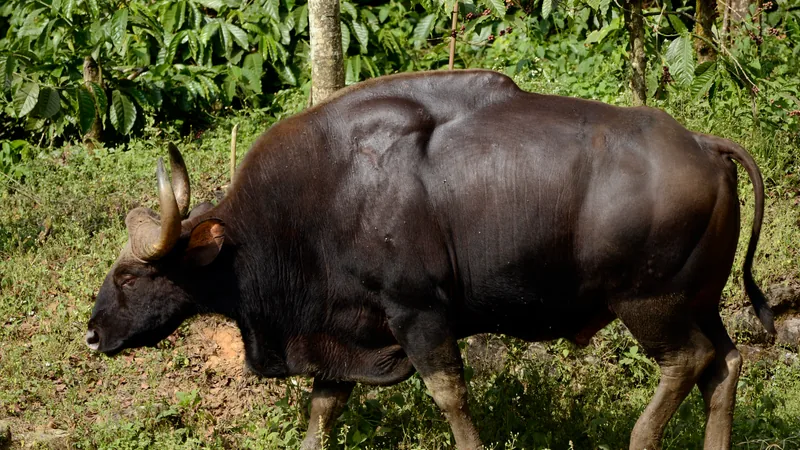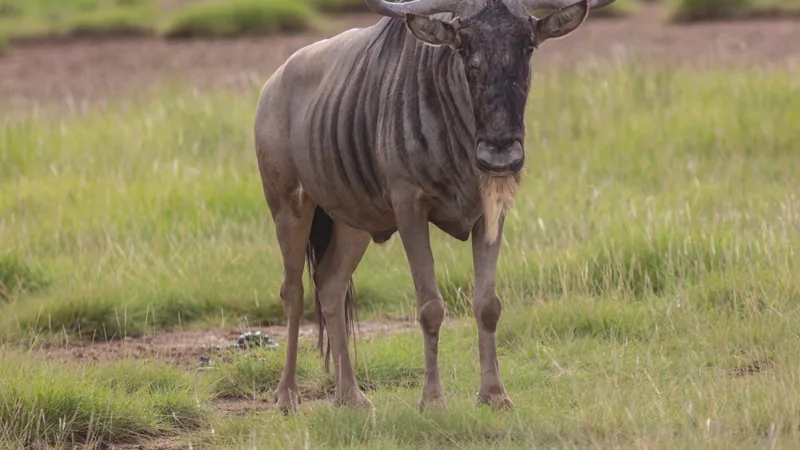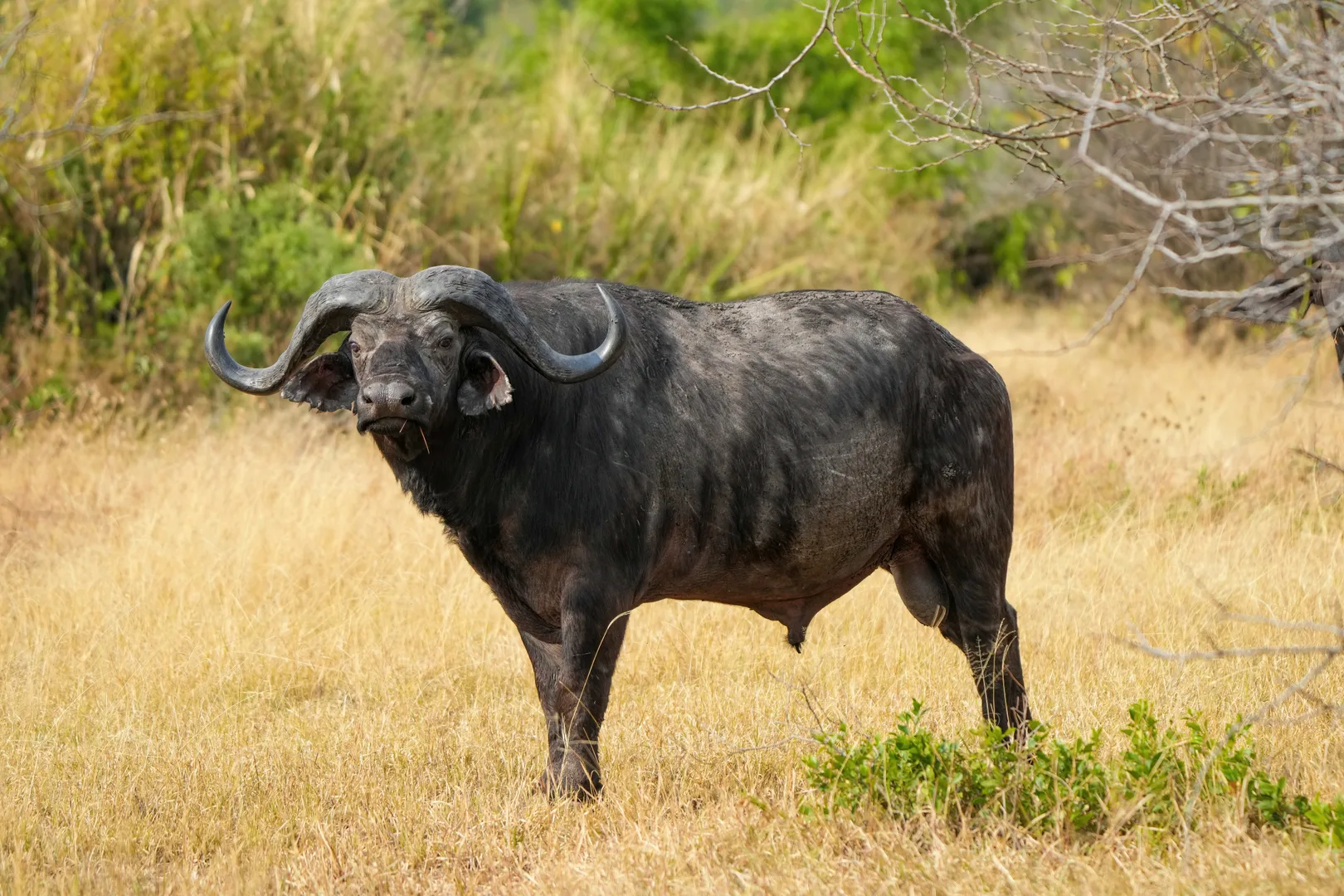
A bull in Serengeti National Park, Tanzania.
Field
notes
The prey that hits back
Lions are the main predators of any buffalo more than a year old, and the buffalo fight back. Males have been known to approach lions from a kilometer away to chase them. They sometimes chase lions up trees and will kill a lion that fails to escape. Bulls have been recorded fending off more than one lion, though they usually come away with severe injuries.
A heavyweight wild cow
The African buffalo, Syncerus caffer, is a very large even-toed ungulate, a hoofed mammal with a stocky build and heavy horns. It weighs about 300 to 835 kilograms (660 to 1,840 pounds) and stands about 1 to 2 meters tall.
How big depends on sex and subspecies. Males of the largest subspecies, the Cape buffalo (S. c. caffer), can top 835 kg, females reach up to 500 kg, and the horns can span 130 cm. The forest buffalo (S. c. nanus) is much shorter, standing only 105 cm at the shoulder.
The African Wildlife Foundation puts the lifespan at 11 to 22 years in the wild. The record in captivity, listed by the AnAge database, is 32.8 years.
Buffalo are grazing ruminants. After a meal of grass and sedges, they have to chew their cud to pull more nutrients out of their food.
Safety in numbers
A herd can be a handful of animals or more than a thousand. A stampede starts with one or a few buffalo and spreads as their neighbours join in. If the threat is confirmed and serious, it can run for up to a kilometer, or until the young buffalo are too tired to keep going.
Buffalo once roamed most of sub-Saharan Africa. Their range is now much smaller, and in many areas it is largely limited to reserves. They can live almost anywhere with permanent water and grass, from dense lowland forest and montane forest to coastal savanna and semi-arid bushland. The IUCN Red List rates the species Near Threatened. Their size, aggressive nature and formidable horns make them dangerous animals.
A hideout for a virus
The long-haul carrier Foot-and-mouth disease virus has been shown to persist in an individual African buffalo for at least five years.
In one small, isolated wild population of 30 to 100 buffalo, two types of the virus kept going for at least 24 years, through several generations of buffalo.
Published
Traits
Intel
& FAQ
Guess
first
How big is a African Buffalo, really? Slide, lock in, and see what the sources say. Every answer is a figure from this page, quoted from where it came from.
Sources
- 01Syncerus caffer. The IUCN Red List of Threatened Species 2019: e.T21251A50195031.
- 02Syncerus caffer (African buffalo). Animal Diversity Web, University of Michigan.
- 03African buffalo. African Wildlife Foundation.
- 04Syncerus caffer. AnAge: The Animal Ageing and Longevity Database.
- 05Condy et al. (1985). The duration of the foot-and-mouth disease virus carrier state in African buffalo (i) in the individual animal and (ii) in a free-living herd. Comparative Immunology, Microbiology and Infectious Diseases.
What the sources say: 30 claims checked word for word against these sources →