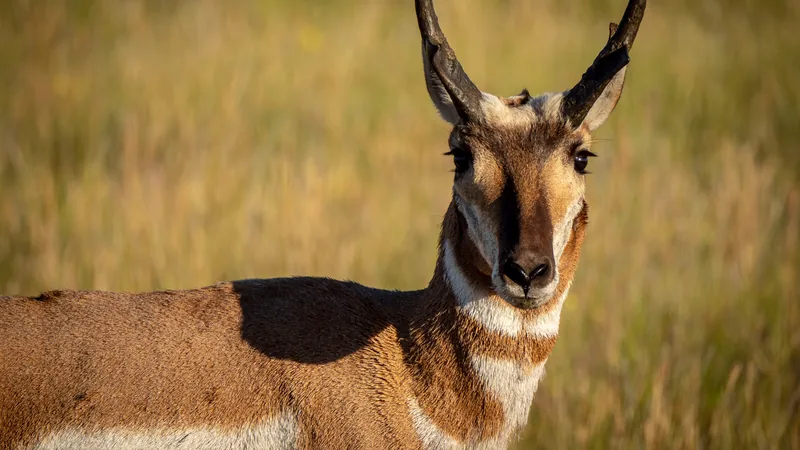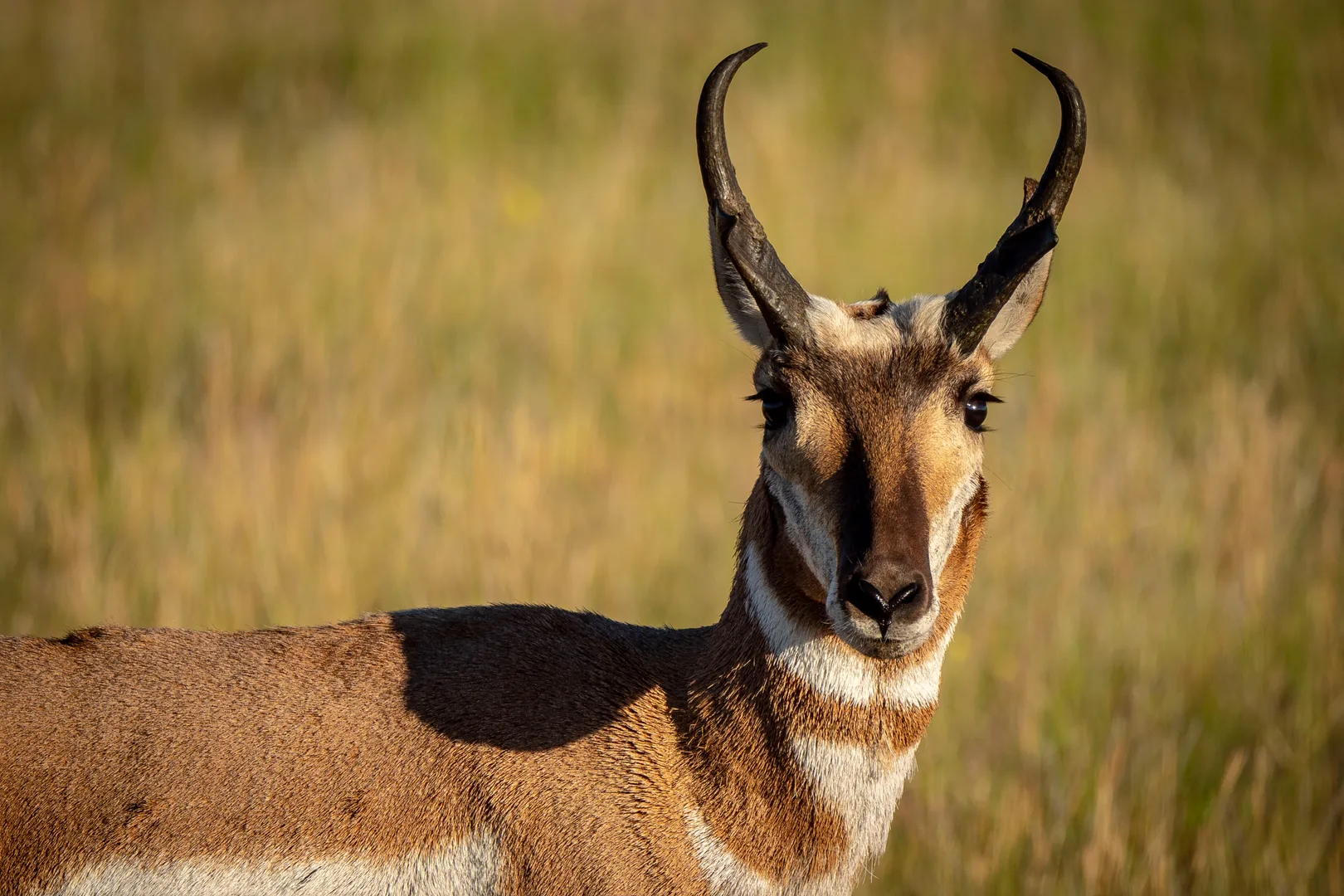
Pronghorn buck, Nevada
Field
notes
Built for the long chase
A cheetah is a sprinter. A pronghorn is a distance runner. Its alleged top speed is 100 km/h, second only to the cheetah among land vertebrates. It can also run 11 km in 10 minutes, an average speed of 65 km/h.
How? Not with special lung structures. Scientists measured the pronghorn’s maximum oxygen uptake and concluded that it has an extraordinary capacity to consume and process oxygen. Their hearts and lungs are large for their body size. Their legs are long and slender, with joints that work like hinges and move only in the line of travel.
Ghosts of predators past John Byers of the University of Idaho attributes this speed and endurance to ancient pronghorn living with faster predators such as the North American cheetah. Those predators vanished from North America more than 10,000 years ago, but the pronghorn kept the speed.
Size, range and menu
An adult is 1.3 to 1.4 m long and 80 to 90 cm tall at the shoulder. It weighs 40 to 59 kg, and males are about 10 percent larger than females. The range runs across the treeless plains, basins and deserts of western North America, from southern Canada to northern Mexico.
Pronghorn eat a wide mix of plants. Forbs, the non-woody flowering plants, are preferred in summer. In winter they lean on shrubs, especially sagebrush. They can go for weeks without a drink, getting moisture from their food.
In the wild they tend to live less than 10 years. One captive animal lived 17.
Odd bits of equipment
Pronghorn are not true antelope. They have their own family and no close relatives on any other continent. They are also the only animals with forked horns that are shed every year. A buck’s horns reach full height at two to three years old, averaging 25 cm.
Their eyes are the largest of any North American hoofed mammal for their body size. When a pronghorn spots a predator, it releases an alarm odour from rump glands while the white fur on its rump stands up. The herd gets the message by sight and smell.
Newborn fawns can take their first steps 30 minutes after birth and can outrun a person at four days old.
Back from the brink
Settlement, unregulated killing and habitat loss cut their numbers by about 99% in the late 1800s. Hunting limits, habitat protection and relocations helped numbers climb past 1 million by the 1980s. The IUCN rates the species Least Concern. One herd in western Wyoming migrates about 100 miles (161 km) south from Grand Teton National Park each autumn and returns along the same corridor in spring.
Published
Traits
Intel
& FAQ
Guess
first
How big is a Pronghorn, really? Slide, lock in, and see what the sources say. Every answer is a figure from this page, quoted from where it came from.
Sources
- 01Lindstedt et al. (1991). Running energetics in the pronghorn antelope. Nature.
- 02Antilocapra americana (pronghorn). Animal Diversity Web, University of Michigan.
- 03Pronghorn. San Diego Zoo Wildlife Alliance.
- 04AnAge entry for Antilocapra americana. AnAge: The Animal Ageing and Longevity Database, Human Ageing Genomic Resources.
- 05White, Barnowe-Meyer, Garrott & Byers. Yellowstone Pronghorn: Recovering from the Brink of Extirpation. National Park Service.
- 06Antilocapra americana. The IUCN Red List of Threatened Species 2016: e.T1677A115056938.
What the sources say: 52 claims checked word for word against these sources →