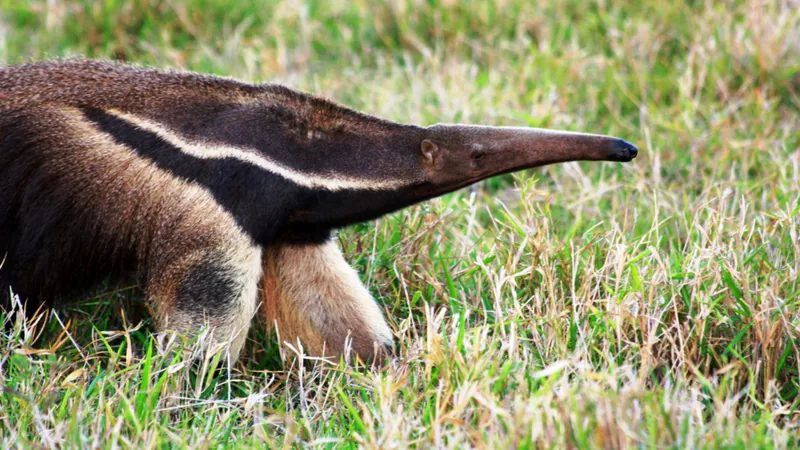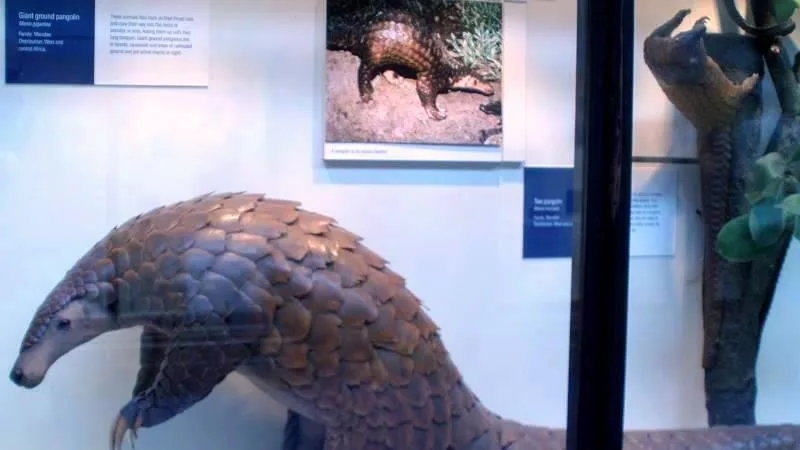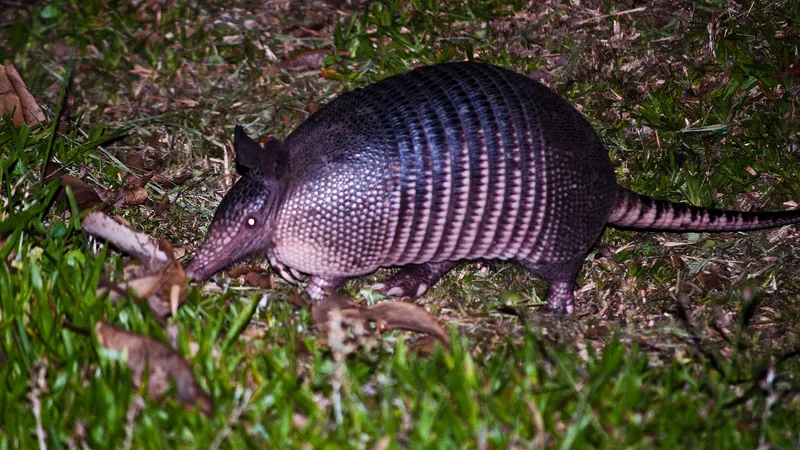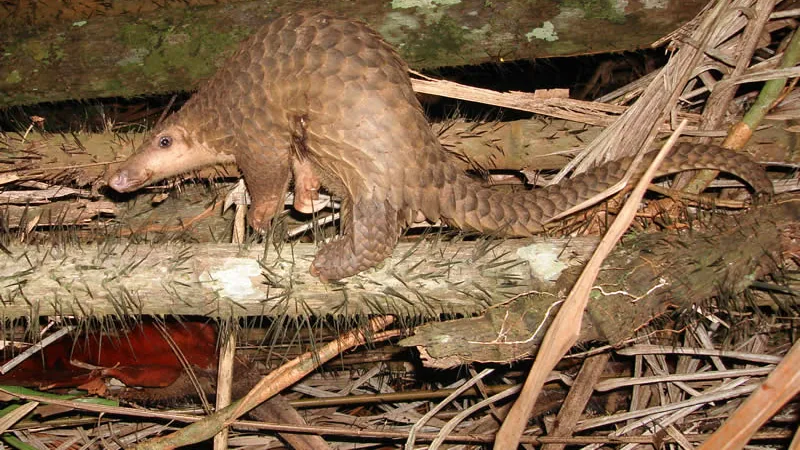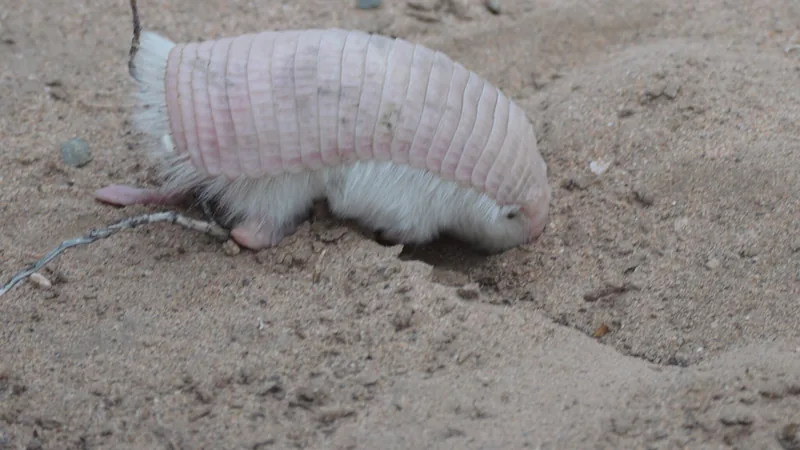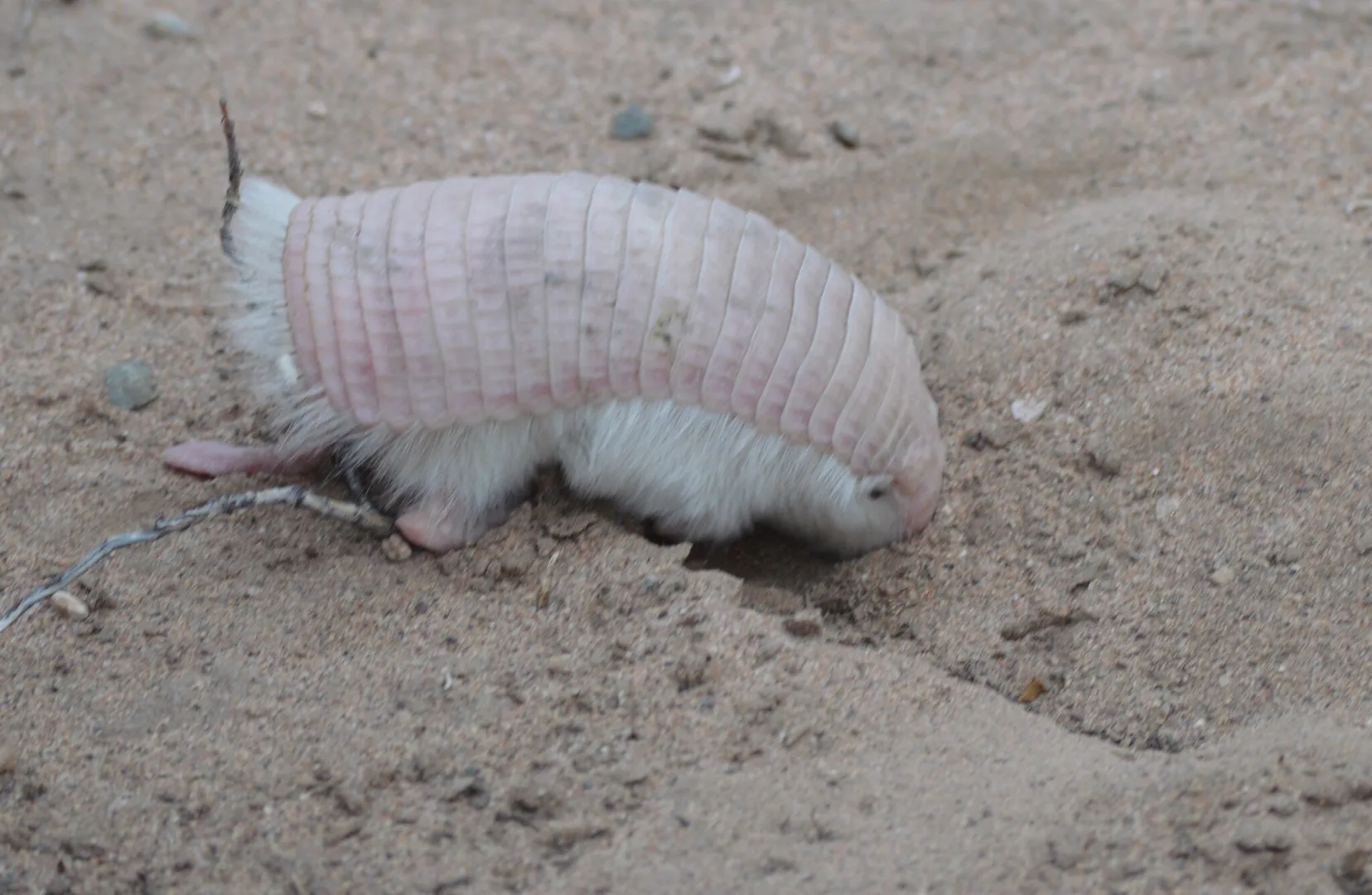
Pink Fairy Armadillo (Chlamyphorus truncatus), General Roca, AR-RN, AR
Field
notes
Argentina’s Smallest Armadillo
The Pink Fairy Armadillo (Chlamyphorus truncatus) is the smallest living armadillo species. It is found only in the deserts and scrublands of central Argentina, mainly in the provinces of Mendoza, San Luis, Buenos Aires, La Pampa and San Juan. It lives mainly in loose sand dunes, along with dry grassland and sandy plains, from sea level up to 1,500 meters.
It measures less than 15 centimeters (6 inches) from head to tail, but its weight depends on which source you ask. Animal Diversity Web gives an average of 120 grams (4 ounces), a 2023 study of its skin says about 100 grams, and the AnAge ageing database lists 44.3 grams. Lifespan is just as uncertain. One captive individual lived 4.3 years, but no maximum has been established, and it may be much longer.
It is generally called an insectivore, but it will eat plants if the right conditions arise, and the main food anyone has observed it eating is ants. It is active at night or at dawn and dusk, and it has digging claws on its front legs.
Armor for a Life Underground This armadillo spends almost its whole life below ground, and it carries a carapace made of bony plates and hardened scales.
An Armor That Isn’t Bolted Down
This armadillo’s light pink carapace is attached to its body only by a thin membrane running down the middle of its back. It has 24 bands, plus an extra vertical plate at the rear that gives the shell its blunt end. A 2023 study of its skin found that almost all of the carapace is flexible, one of several features that set it apart from other armadillos.
Its eyes are small, and its whiskers, or vibrissae, keep the basic armadillo structure but are thinner and shorter, a change researchers think is probably linked to passively monitoring its surroundings. The arrangement of hairs on the armor plates near its rear is modified too, in a way scientists think may help it move through sandy tunnels.
Predators, Rarity and a Question Mark
Its main defense against predators is the carapace covering its back, and its burrows and tunnels give it a refuge. Its greatest predators are domestic cats and dogs.
It is so rarely seen that, according to Animal Diversity Web, the local person known for having seen the most had seen only 12 in 45 years. The IUCN lists it as Data Deficient, meaning there is not enough information yet to judge how threatened it is.
Published Updated
Traits
Intel
& FAQ
Guess
first
How big is a Pink Fairy Armadillo, really? Slide, lock in, and see what the sources say. Every answer is a figure from this page, quoted from where it came from.
Sources
- 01Chlamyphorus truncatus (pink fairy armadillo). Animal Diversity Web, University of Michigan, 2017.
- 02Chlamyphorus truncatus. AnAge: The Animal Ageing and Longevity Database, Human Ageing Genomic Resources.
- 03Superina & Abba (2025). Chlamyphorus truncatus. The IUCN Red List of Threatened Species 2025: e.T4704A244100423.
- 04Delsuc et al. (2012). Molecular phylogenetics unveils the ancient evolutionary origins of the enigmatic fairy armadillos. Molecular Phylogenetics and Evolution.
- 05Krmpotic et al. (2023). The double skin of the pink fairy armadillo, the peculiar integumentary system of Chlamyphorus truncatus Cingulata (Mammalia, Xenarthra). Journal of Zoology.
- 06Superina (2011). Husbandry of a pink fairy armadillo (Chlamyphorus truncatus): case study of a cryptic and little known species in captivity. Zoo Biology.
What the sources say: 48 claims checked word for word against these sources →