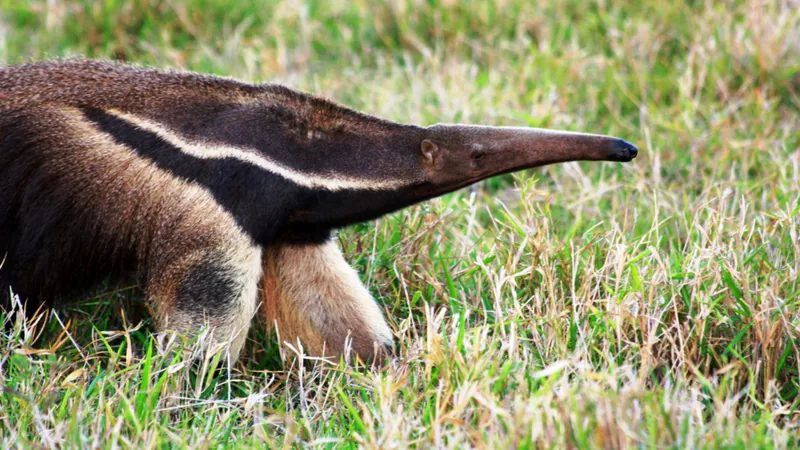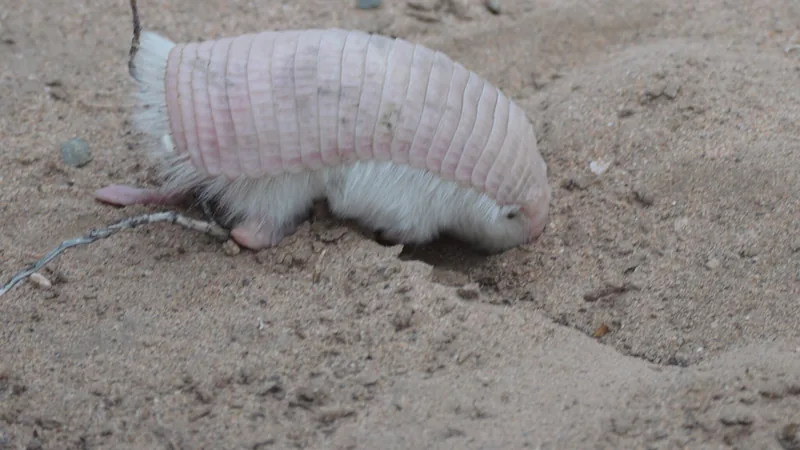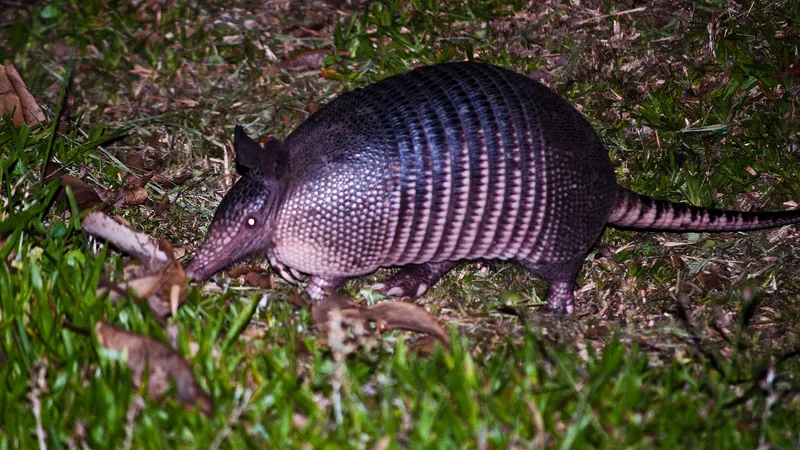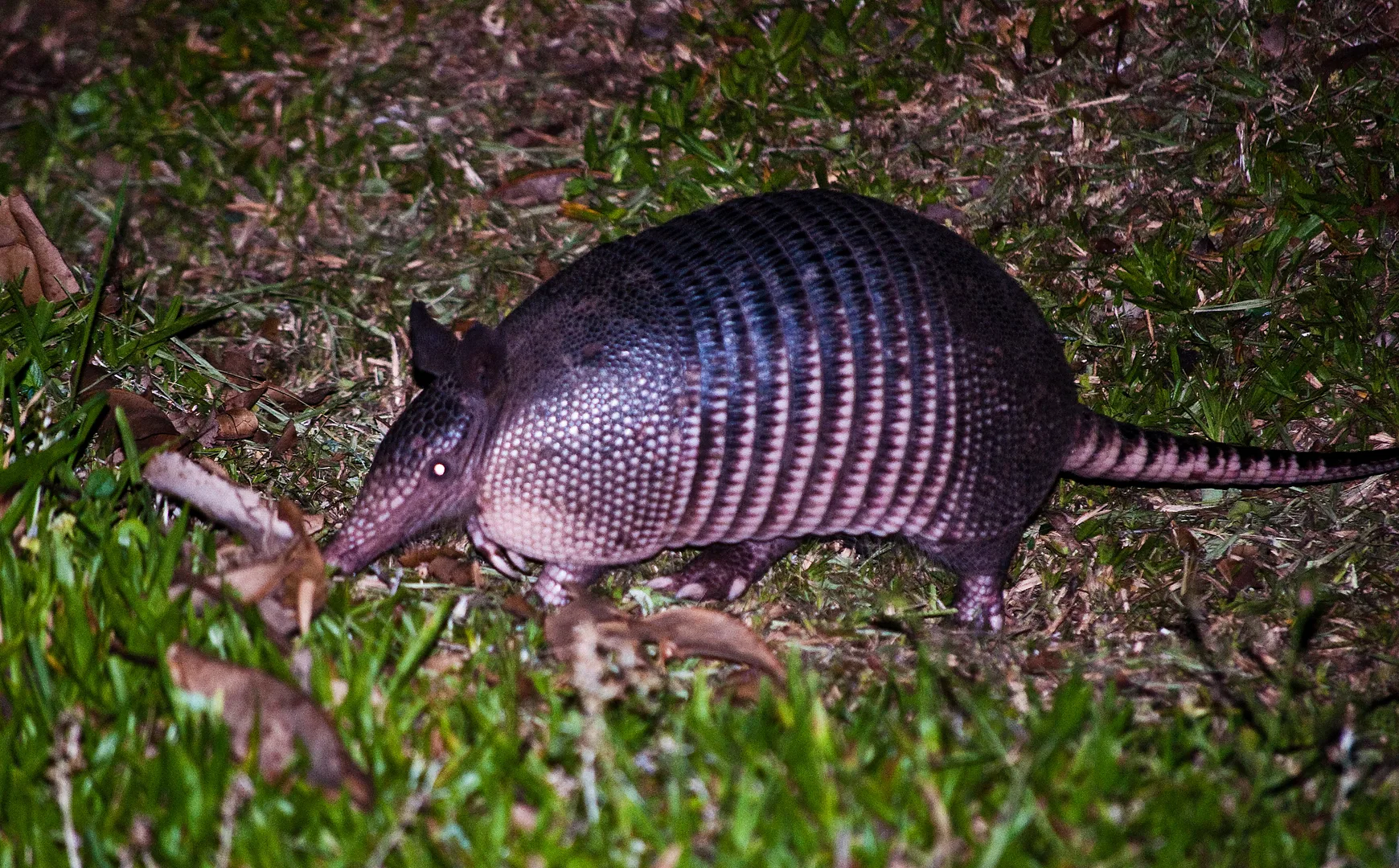
Armadillo, Esteros Del Ibera, Corrientes, Argentina, 2nd.
Field
notes
One Egg, Four Clones
Only a single egg is fertilized. When the embryo implants in the wall of the uterus, it buds into 4 identical embryos, and the birth is almost always four identical quadruplets. They are often born in early spring, after a gestation of about 4 months.
The newborns have no hard armor yet. Their leathery skin does not harden for a few weeks, and the unprotected young are extremely vulnerable to predators.
A Small Tank That Walks on Riverbeds
This armadillo (Dasypus novemcinctus) is about 0.7 meters (2.5 feet) long from nose to tail tip and averages 5 kilograms (12 pounds). Males weigh slightly more than females: the average male weighs 5.5 to 7.7 kilograms, the average female 3.6 to 6.0.
The armor is made of bony plates called osteoderms, covered in leathery skin. It adds up to about 16% of body weight. Despite the name, it typically has 9 visible bands, but the number can vary. This species is not capable of curling into a perfect ball like a three-banded armadillo. When threatened it usually freezes, though it can also jump straight up and sprint short distances. A frightened one usually seeks a burrow, where it arches its back and braces its feet so it is hard to pull out.
Riverbed walker Small streams are no obstacle. An armadillo can hold its breath for up to six minutes, and it can swim across or walk along the bottom of a river.
Nose First
Its eyesight is poor and useless except at close distances, and smell is its main sense. It travels with its nose just above the ground and can smell invertebrates up to 20 cm below the surface. To dig a burrow it loosens the soil with its nose and forelimbs, then kicks the dirt away with its hind legs.
Almost 500 separate food items make up the diet, and over ninety percent of it by volume is animal matter. Adult and larval beetles may be the largest part, but it also eats termites, ants and earthworms. Small reptiles, amphibians and eggs are a smaller part. Its teeth are simple pegs without enamel (the hard outer coat of a tooth) and keep growing for its whole life.
Heading North
The nine-banded armadillo has the largest range of any living armadillo species, from Argentina and Uruguay through Central America and into the southern United States. Beginning in the late 19th century it gradually spread to the northeast, and it is common as far north as Missouri. Cold probably limits how far north it can go: it lacks much hair or body fat, and it begins to shiver below 22 degrees Celsius.
In the wild it typically lives 7 to 20 years, and one captive armadillo reached 23. The IUCN Red List rates the species Least Concern.
It is also naturally infected with the leprosy bacterium, Mycobacterium leprae. In a screening of 645 armadillos from 8 locations in the southeastern United States, 106 (16.4%) had serologic or PCR evidence of infection. Cases of people catching leprosy by handling armadillos are extremely rare.
Published
Traits
Intel
& FAQ
Guess
first
How big is a Nine-Banded Armadillo, really? Slide, lock in, and see what the sources say. Every answer is a figure from this page, quoted from where it came from.
Sources
- 01Dasypus novemcinctus. Animal Diversity Web.
- 02Nine-Banded Armadillo. National Wildlife Federation, Wildlife Guide.
- 03Sharma et al. (2015). Zoonotic Leprosy in the Southeastern United States. Emerging Infectious Diseases.
- 04Arteaga et al. (2026). Dasypus novemcinctus. The IUCN Red List of Threatened Species 2026: e.T268513068A268516717.
What the sources say: 56 claims checked word for word against these sources →