Armored Mammals & Sloths
Keratin scale plate armor, interlocking lumbar vertebrae, and ultra-slow metabolic adaptations.
Xenarthra & Pholidota
Uniting ancient South American xenarthrans (armadillos, anteaters, sloths) and African-Asian pangolins, these mammals specialize in low-calorie diets of insects and foliage. They defend themselves with impenetrable dermal armor plates, massive digging claws, or suspended arboreal stealth.
Key Evolutionary Adaptations
Pangolin scales are made of dense keratin plates that lock into an unyielding armored sphere when threatened.
Pink fairy armadillos use specialized vertical rear armor plates like butt-plugs to seal burrow entrances.
Three-toed sloths run the slowest metabolism of any terrestrial mammal, taking up to a month to digest a single leaf.
All Armored Mammals & Sloths
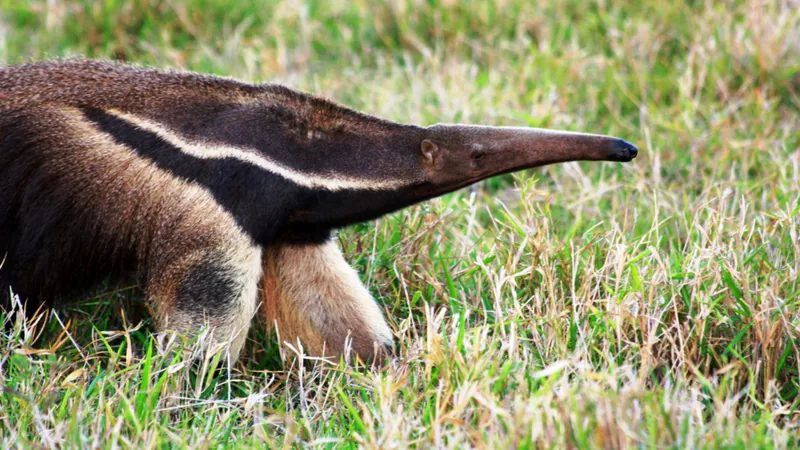
Giant Anteater
A toothless anteater whose 2-foot tongue flicks in and out up to 150 times a minute.
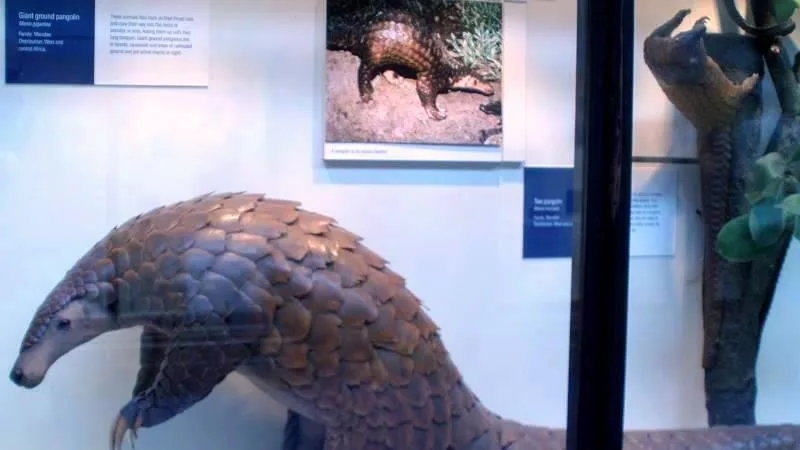
Giant Ground Pangolin
Overlapping keratin scales, a sticky tongue up to 70 centimeters long, and a defensive ball that's next to impossible to pry open.
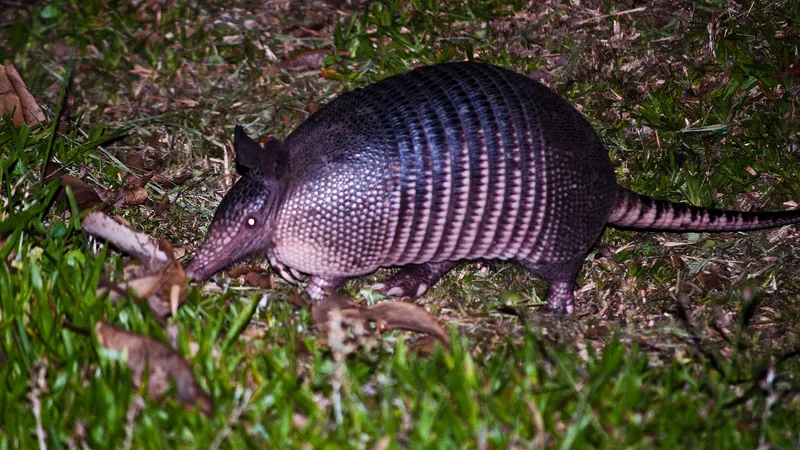
Nine-Banded Armadillo
A bony-plated digger that smells invertebrates up to 20 cm underground and almost always gives birth to identical quadruplets.
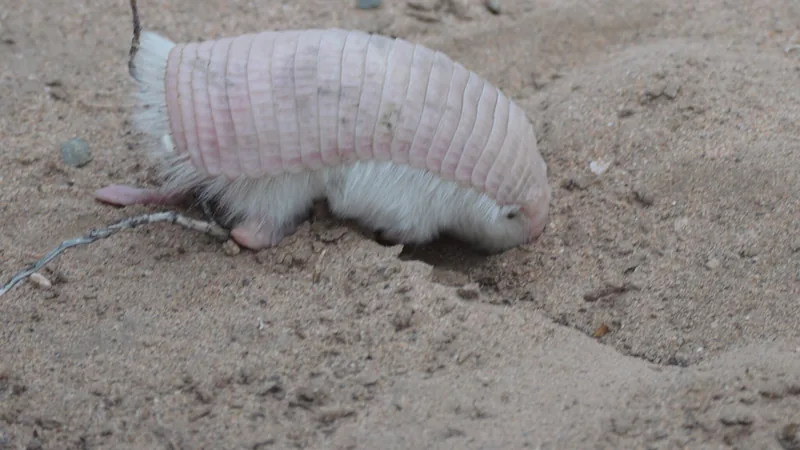
Pink Fairy Armadillo
The world's smallest armadillo, an Argentine sand-burrower wearing a shell of bony plates and hardened scales.
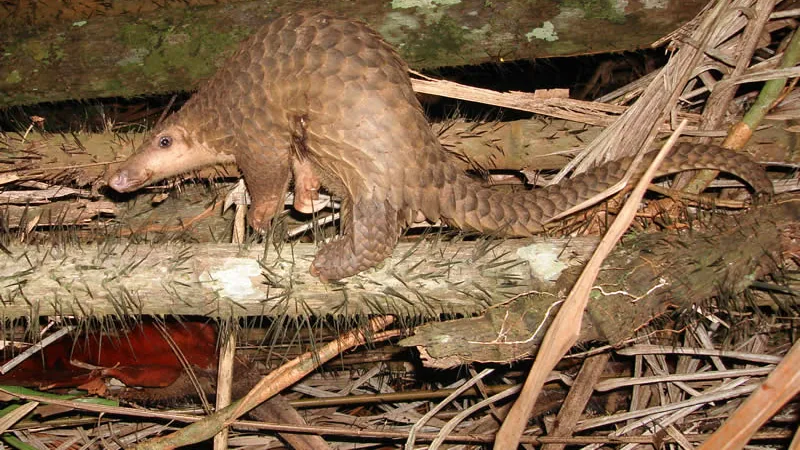
Sunda Pangolin
A scale-armored mammal that swishes its tail with its scales erect, then curls into a near-impregnable ball when threatened.
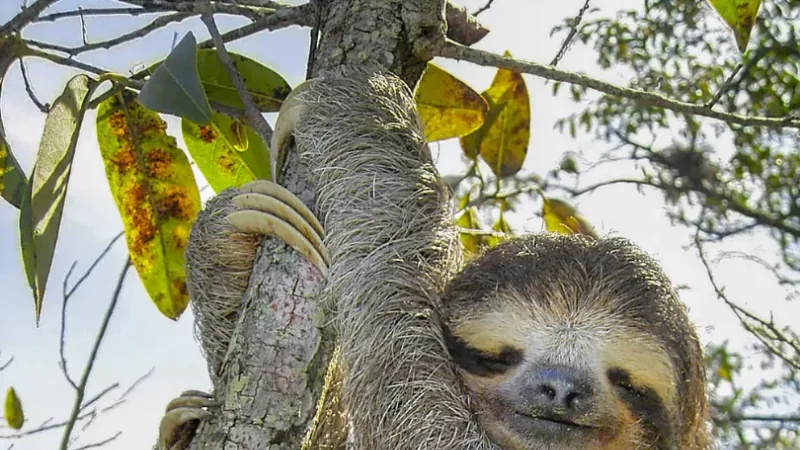
Three-Toed Sloth
A slow-metabolism canopy dweller whose fur hosts its own community of moths and algae.