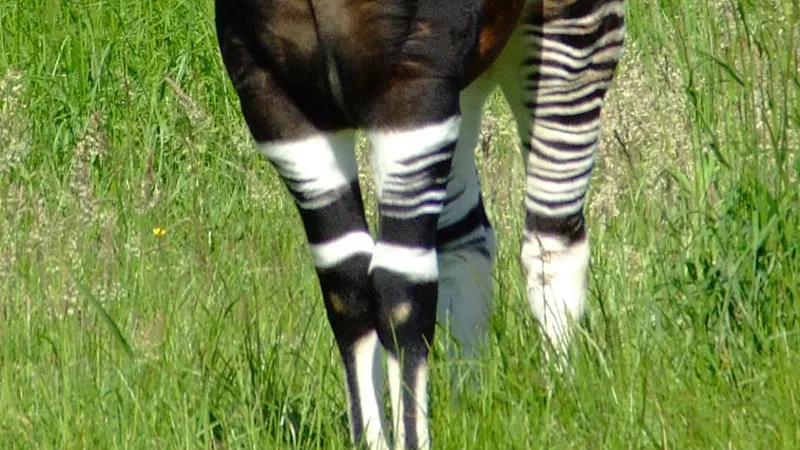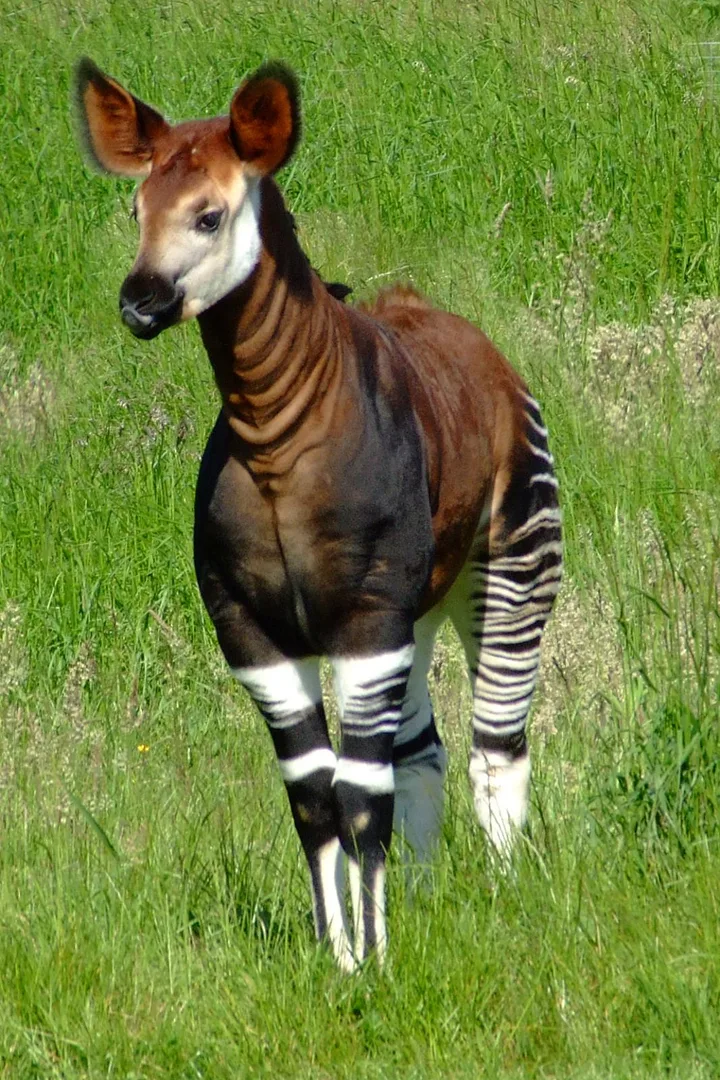
A captive okapi (Okapia johnstoni)
Field
notes
The Giraffe’s Closest Living Relative
With its striking white-and-black striped legs, the okapi (Okapia johnstoni, pronounced oh-KAHP-ee) looks like it could be related to a zebra. But its head resembles a giraffe’s, and the okapi is the giraffe’s only close living relative. The two are the last survivors of Giraffidae, the giraffe family, which once held around 25 members. A 2016 study comparing their genes estimated that giraffes and okapis split from a common ancestor about 11.5 million years ago.
An adult okapi stands about 5 feet (1.5 meters) tall. Females weigh 495 to 770 pounds (225 to 350 kilograms) and males 440 to 660 pounds (200 to 300 kilograms), and okapis live 17 years on average. Indigenous people of the Ituri Forest knew of okapis for generations, but scientists did not know of them until 1901.
A Tongue Built for the Understory
The okapi’s long, dark tongue is prehensile, which means it can grip, and it can reach over 12 inches (30 centimeters). Like a giraffe’s tongue, it helps the okapi strip buds and young leaves from the understory brush, the low plants beneath the rainforest trees. Each day okapis eat 40 to 65 pounds (18 to 29 kilograms) of leaves, twigs, fruit, and fungi. They also eat clay, likely for the minerals it contains, and some have been seen eating burnt charcoal and licking bat guano (droppings) off hollow trees.
Striped Legs, Velvet Coat
An okapi’s dark brown or reddish-brown coat is dense and feels like velvet. It is also oily, so water slides right off, keeping the okapi dry on rainy days. The stripes on its legs make great camouflage when it stands in the partial sunlight filtering through the dense rainforest. Males have two bony bumps called ossicones near their ears, like giraffes do, and females have swirls of hair in their place.
A scent gland on each foot leaves a sticky, tar-like substance wherever an okapi walks, marking its territory. An okapi can tell if another okapi has been there by sniffing out these marks.
A Ghost With a Secret Language
Okapis live alone, except for mothers caring for calves. Their huge ears pick up even the softest sounds, and each ear can rotate on its own, so an okapi can listen both in front and behind. They listen for leopards, which hunt adult okapis, and for smaller wild cats, which can attack a young calf. Okapis are not known to have any special defenses, but they do kick at predators.
Scientists recording okapis often heard coughs, bleats, and whistles, but when they studied the recordings closely they found other calls pitched so low that humans cannot hear them at all. One explanation is that these calls let a mother out foraging check in with her calf without alerting potential predators, which cannot hear sounds that low either.
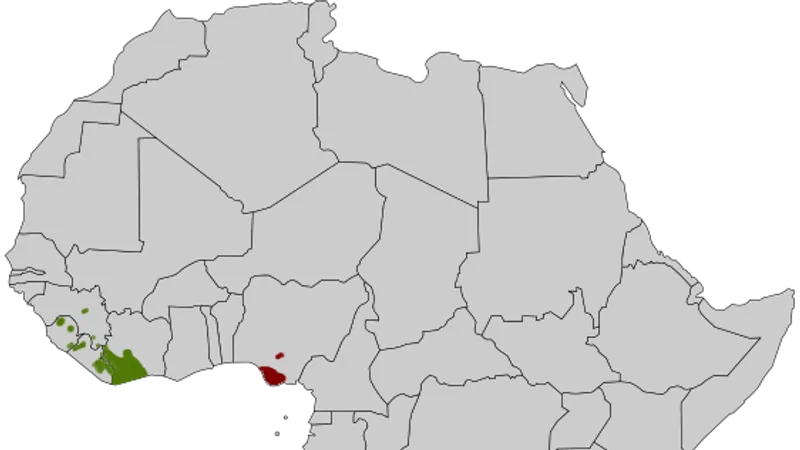
Okapis live in tropical rainforest in the northeastern Democratic Republic of the Congo, and a 2014 study using DNA from their dung confirmed them in scattered spots south-west of the Congo River. Poaching, habitat loss, and the changing politics of Central Africa have led to a severe decline: scientists estimate that numbers have fallen by more than half over three generations. The IUCN Red List of Threatened Species lists the okapi as Endangered.
Published Updated
Traits
Intel
& FAQ
Guess
first
How big is a Okapi, really? Slide, lock in, and see what the sources say. Every answer is a figure from this page, quoted from where it came from.
Sources
- 01Okapia johnstoni (okapi). Animal Diversity Web, University of Michigan.
- 02Okapi. San Diego Zoo Wildlife Alliance.
- 03Mallon et al. (2015). Okapia johnstoni. The IUCN Red List of Threatened Species 2015: e.T15188A51140517.
- 04Danowitz & Solounias (2015). The Cervical Osteology of Okapia johnstoni and Giraffa camelopardalis. PLOS ONE.
- 05Agaba et al. (2016). Giraffe genome sequence reveals clues to its unique morphology and physiology. Nature Communications.
- 06Stanton et al. (2014). Non-invasive genetic identification confirms the presence of the Endangered okapi Okapia johnstoni south-west of the Congo River. Oryx.
What the sources say: 56 claims checked word for word against these sources →