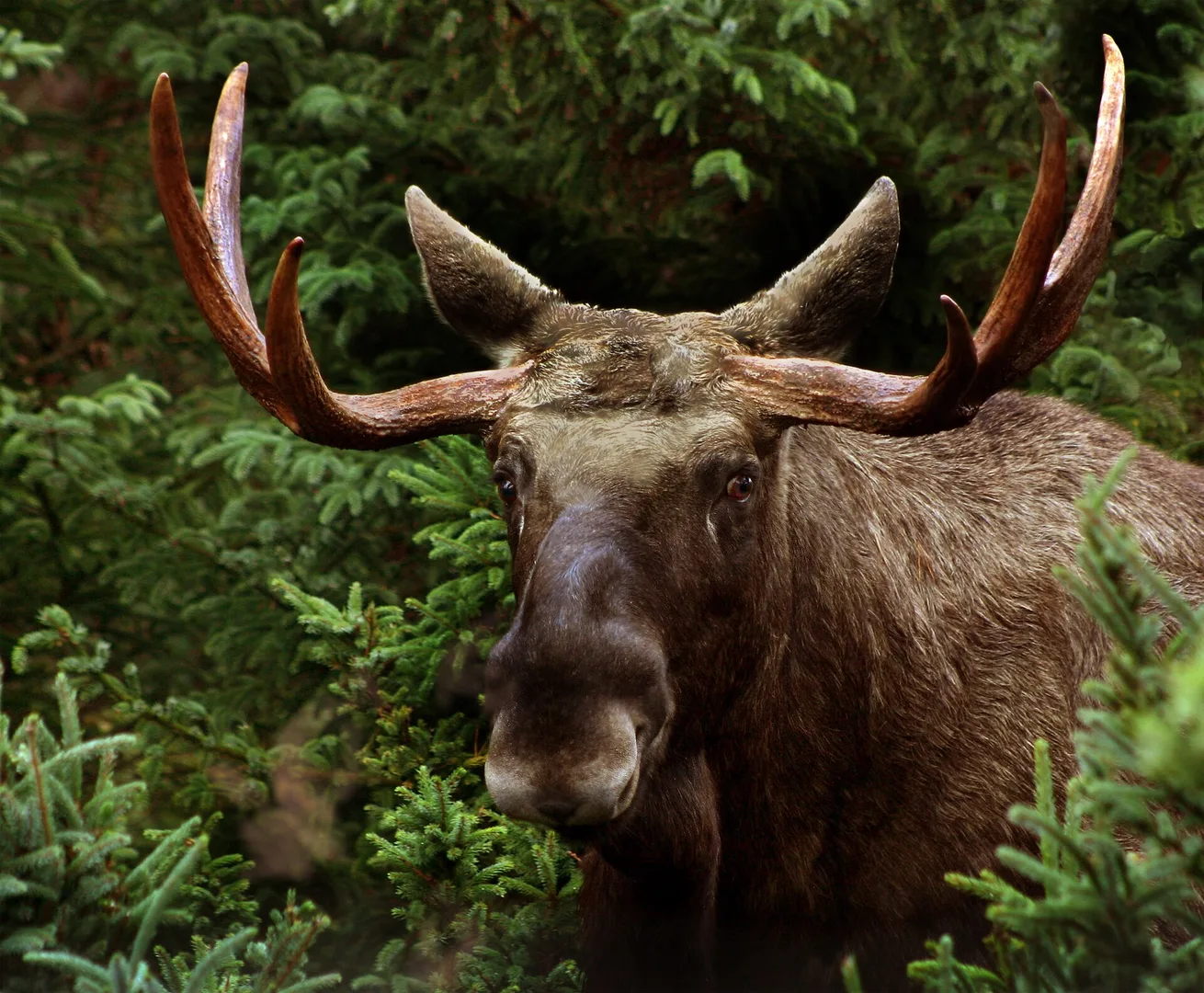
Portrait of a male moose (Alces alces), photo taken at Smålandet Markaryds Älgsafari in Småland, Swe
Field
notes
The Boreal Heavyweight
Call it a moose in North America and an elk in Europe: same animal, Alces alces, the largest species in the deer family alive today. Don’t mix it up with the North American elk, Cervus canadensis, a different species that just happens to share a name across the Atlantic. Adult bulls weigh 360 to 600 kilograms and cows 270 to 400 kilograms, but the Alaska-Yukon race is the biggest of all: bulls there can weigh near 1,500 pounds, about 680 kilograms.
A Rack Rebuilt From Bone Every Summer
Bulls shed their antlers each winter and grow new ones in spring. Antler is the fastest-growing tissue of any mammal, and a big bull can grow an 80-pound rack in one summer, adding about a pound of bone and an inch a day. A bull’s antler spread rarely tops 65 inches, and 55 inches already counts as a big rack.
A pound of bone a day A big bull moose can add a pound of bone and an inch of antler a day through the summer, then shed the whole rack in winter.
Long Legs, a Deep-Snow Edge Over Wolves
Long legs sometimes let a moose move through deep snow more easily than a wolf can. A moose can run as fast as 35 miles an hour. But that edge has a ceiling: wolf predation on moose climbs in winters when the snow gets deep enough to slow a moose down too. Healthy adults don’t have many predators, though: a face full of antlers or hooves is usually enough to deter bears and wolves.
The Only Deer Known to Dive
Moose feed on aquatic plants such as pondweed and water lilies, which have a higher sodium content than woody plants. One study found them high in sodium and iron compared with the leafy browse moose eat. No other member of the deer family is known to submerge its whole body to feed. How deep they actually go is murkier than the campfire stories suggest. The famous claim that moose dive five to six meters traces back to one eyewitness account in a moose reference book, and its author doesn’t say how he confirmed the depth. A separate moose reference book states that they can stay underwater for up to 50 seconds.
Published Updated
Traits
Intel
& FAQ
Guess
first
How big is a Moose, really? Slide, lock in, and see what the sources say. Every answer is a figure from this page, quoted from where it came from.
Sources
- 01Alces alces (Eurasian elk). Animal Diversity Web, University of Michigan.
- 02Moose Species Profile. Alaska Department of Fish and Game.
- 03Mooz (Moose). National Park Service, Grand Portage National Monument.
- 04Species Spotlight - Moose. National Park Service.
- 05How Wildlife are Responding to a Warming Climate. National Park Service, Alaska Park Science.
- 06Moose. Maine Department of Inland Fisheries and Wildlife.
- 07Can Moose Really Dive? Teton Science Schools.
- 08Fraser et al. (1980). Aquatic feeding by moose Alces alces in a Canadian lake. Ecography.
What the sources say: 39 claims checked word for word against these sources →