Uitkerkse Polders, Belgium
Field
notes
Born furry, then left alone
Baby European hares are called leverets, and they arrive precocial, a word for young that are well developed at birth. Their fur is already long and silky. The mother scatters them across a fairly wide patch, so a predator is less likely to find the whole litter, then goes from one to the next to feed them.
A litter holds 1 to 8 leverets, 3 to 5 on average, and a female has two to several litters a season. Pregnancy lasts 30 to 42 days, and the breeding season runs from midwinter (January or February) to midsummer. Leverets reach sexual maturity at eight months to a year.
A dent in the grass
By day a hare crouches in a dip in the ground called a form, partly hidden, with its back on show. European hares mostly live alone outside the mating season, and they do most of their feeding at night, between 7 p.m. and 7 a.m.
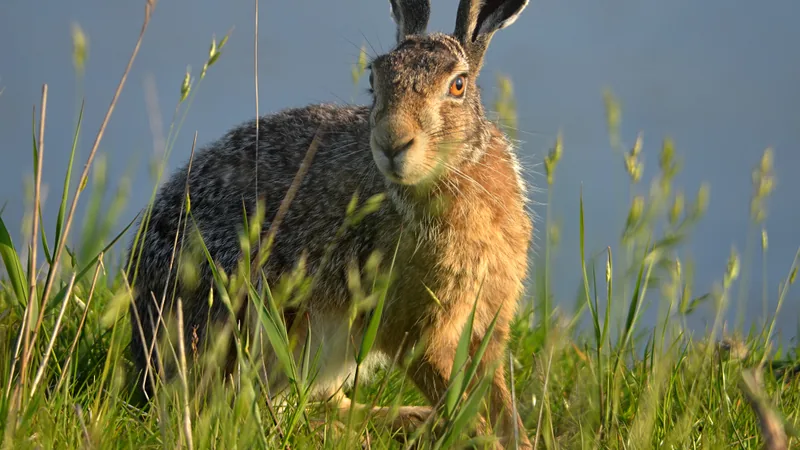
The coat is yellowish-brown to greyish-brown with a greyish-white underbody, and the long ears have black tips. It has an excellent sense of sight, smell and hearing. Faced with a predator, a hare flees, and when it has to it can dodge and switch direction fast. If needed it will also plunge into a stream, since European hares are decent swimmers. The known predators include red foxes, larger hawks and owls.
Recycling lunch
Second helping European hares commonly swallow their own soft, green droppings a second time, a habit called coprophagia.
Summer meals are grasses, herbs and field crops. Winter switches the diet to twigs, buds, small trees and the bark of shrubs and young fruit trees. Just two or three adults put away as much greenery as a sheep does.
People introduced the hare to Argentina and Australia, where it is a huge pest and its arrival was an agricultural disaster. It breeds quickly and wrecks farmland, especially young apple orchards.
Size, range and years
An adult weighs 3 to 5 kg and measures 600 to 750 mm in total length, with an average of 680 mm. The AnAge database lists an average adult weight of 4,175 g.
Its home turf stretches from Great Britain and western Europe across the Middle East to Central Asia. People brought the species to Canada, the United States, South America and Australia; Ontario’s hares came from Germany in 1912. The IUCN Red List rates it Least Concern.
AnAge’s maximum longevity record is about 10.7 years in captivity, from a hare born in the wild. The database also cites an estimate of up to 10.7 years in the wild, and calls it doubtful.
Published
Traits
Intel
& FAQ
Guess
first
How big is a European Hare, really? Slide, lock in, and see what the sources say. Every answer is a figure from this page, quoted from where it came from.