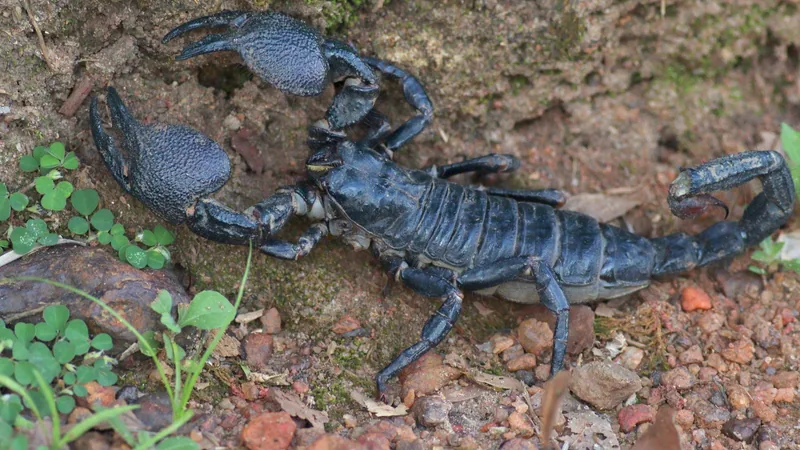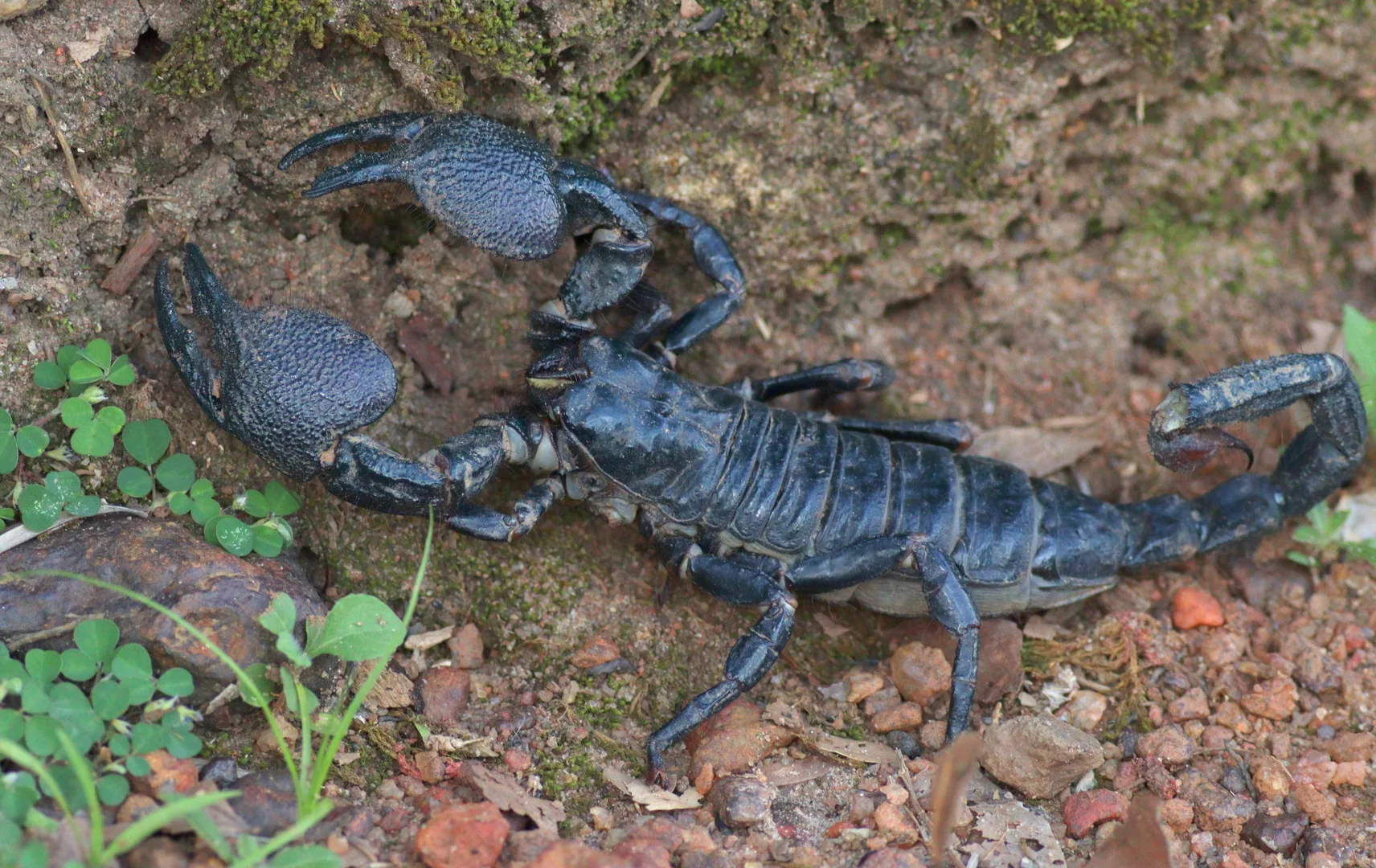
Emperor scorpion in Twifo Hemang, Ghana
Field
notes
A West African Heavyweight
The emperor scorpion (Pandinus imperator) is one of the largest scorpions in the world, measuring an average of 20 centimeters long. Emperor scorpions also tend to be heavier than other scorpions, and a pregnant female can weigh more than 28 grams. In captivity they usually live 5 to 8 years, and their lifespan in the wild is thought to be shorter. They are native to West Africa and are found mainly in the forests of Nigeria, Togo, Sierra Leone, Ghana and the Congo region. There they shelter under leaf litter, forest debris, logs and rocks, and in the mounds of termites, their main prey.
Power in the Pincers
They typically eat insects and other arthropods and occasionally hunt down small vertebrates too, and termites are a common meal. Juveniles depend on their stinger to kill prey. Adults do it differently.
Claws Before Venom The emperor scorpion’s venom is mild and mainly used for defense. To kill, an adult generally skips the stinger and tears its prey apart with its two huge pedipalps.
A sting is generally mild and not fatal, but a pinch from those pincers is known to be painful. When threatened, an emperor scorpion usually flees rather than fights, but corner one in a small space and it turns aggressive, dropping into a defensive posture with its stinger ready.
A Surprisingly Social Scorpion
Emperor scorpions have been observed living in colonies of up to 15 individuals, though cannibalism has been observed in the species and is rare. Courtship is elaborate: usually the male grasps the female by her pincers and the pair go through behaviors that include stinging and cheliceral “kissing” before he deposits his sperm. Afterward, she may kill and eat him. After a gestation that averages 9 months, she gives birth to 10 to 12 live young. The defenseless newborns ride on her back until they are old enough to be on their own, and females are generally more aggressive after giving birth. Emperor scorpions reach sexual maturity by 4 years of age.
A Green Glow and a Venom Worth Studying
Emperor scorpions have very poor eyesight, but their other senses are well developed: they detect their surroundings and prey with body hairs and with pectines, sensory structures behind their legs. Shine an ultraviolet light on one, though, and its shiny black body gives off a fluorescent bluish-green glow, a trait shared with other scorpions. Its venom is also studied: it is rich in interesting peptides. Scientists isolated one called scorpine from emperor scorpion venom, and it showed antibacterial activity and a potent inhibitory effect on two stages in the development of Plasmodium berghei, a malaria parasite.
Published Updated
Traits
Intel
& FAQ
Guess
first
How big is a Emperor Scorpion, really? Slide, lock in, and see what the sources say. Every answer is a figure from this page, quoted from where it came from.