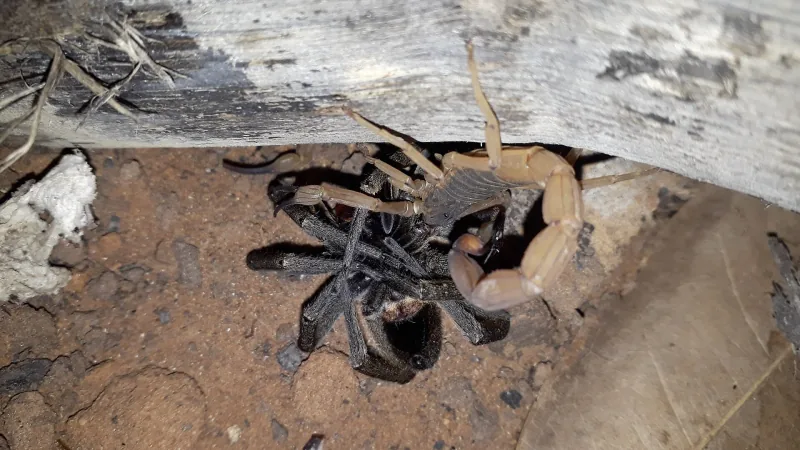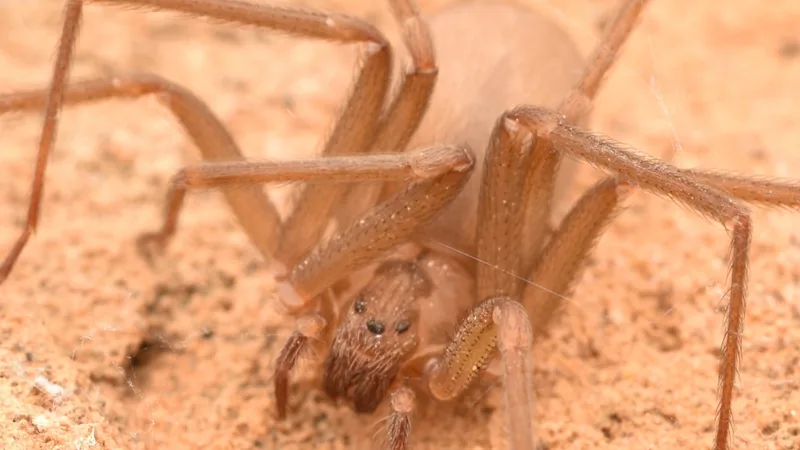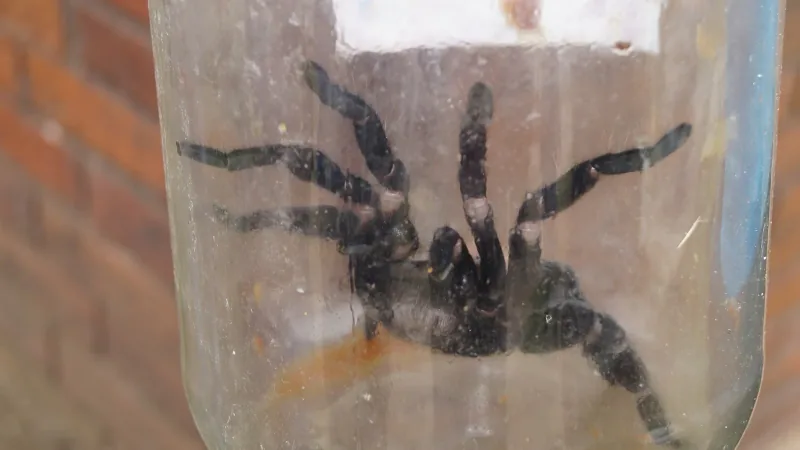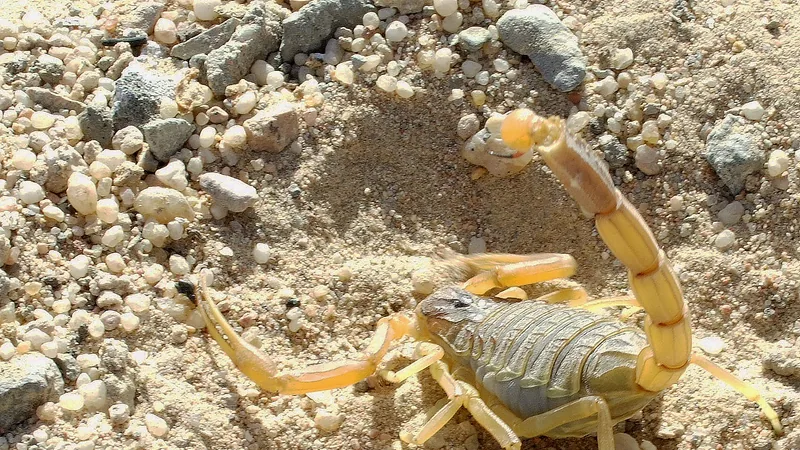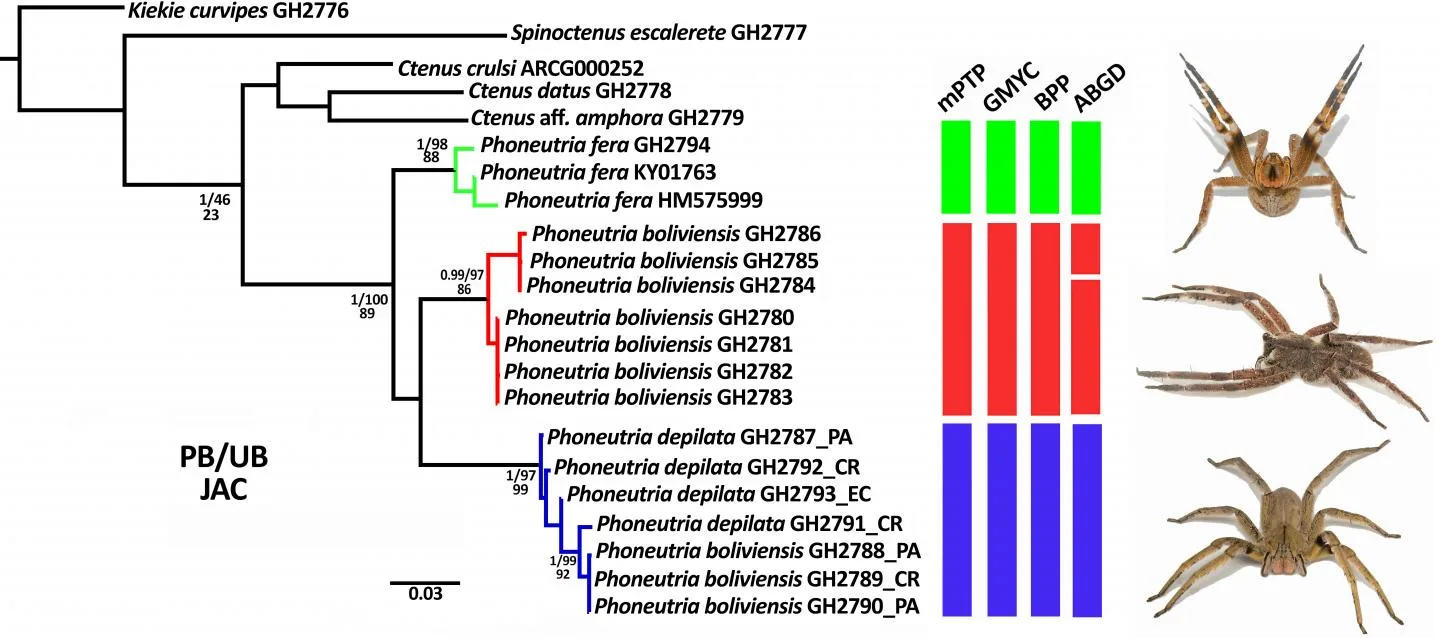
Brazilian Wandering Spider (Rodrigo Tetsuo Argenton).
Field
notes
No Web, Just Legs
The Brazilian wandering spider (Phoneutria nigriventer), called aranha-armadeira (“armed spider”) in Brazil, does not spin a web and wait. A Brazilian public-health leaflet on the genus puts it plainly: it has nocturnal habits, is wandering, and “does not weave a web,” sheltering under vegetation or on the ground in forested areas, and sometimes moving into houses and banana plantations. The genus revision says where the feeding happens: Phoneutria species live on trees under natural conditions and hunt among the vegetation, and banana plantations come second.
The 2001 revision that sorted the genus out counted five species in it, and gave one body-length range for all of them: 17 to 48 millimeters, with no separate figure for P. nigriventer. Lifespan is a suborder figure rather than a species one: araneomorphs, the “modern spiders” that make up more than 90% of all living spider species, typically have a shorter lifespan than their tarantula cousins, often 1 to 2 years against the tarantulas’ 20-plus.
Despite the jungle reputation, this is not an Amazon animal: the revision sorts the genus into four distribution groups, and the Amazonian one is P. fera and P. reidyi. P. nigriventer holds central and south-eastern Brazil, Paraguay, northern Argentina, and Uruguay. Specimens have turned up in Montevideo and Buenos Aires, probably introduced with imported bananas, part of how the genus is often called “banana spider” too.
Stand Up And Sway
The whole genus shares one defensive display: rearing into an erect posture, raising the front legs, and swaying the body from side to side. It is distinctive enough that taxonomists use it as one of the two features that separate Phoneutria from Ctenus and other ctenid spiders. The wandering habit brings the genus indoors, where it has been found lodged in shoes, behind furniture, and among stacked construction materials, and although Phoneutria are essentially wandering, nocturnal spiders, most of the Campinas bites happened during the day and mainly in urban homes.
Venom Built for Ion Channels
Phoneutria nigriventer venom is highly complex compared with other neurotoxin-rich venoms, packed with peptides that jam voltage-gated sodium and calcium channels along with the nicotinic acetylcholine receptor, the switches nerve and muscle cells use to fire. Brazil sees roughly 4,000 envenomation cases from this species a year, with symptoms that can include priapism (a prolonged, unwanted erection), high blood pressure, blurred vision, sweating, and vomiting.
Most bites barely register, medically speaking. A 13-year study of 422 Phoneutria bite patients in Campinas classified 89.8% as mild, 8.5% as moderate and 0.5% as severe. The two severe cases were children, nine months and three years old, and the older of the two died nine hours after the bite.
That same venom is now studied for something else entirely: its peptides show therapeutic effects in a range of disease models including chronic pain, Huntington’s disease and glaucoma.
Published Updated
Traits
Intel
& FAQ
Sources
- 01Simó & Brescovit (2001). Revision and cladistic analysis of the Neotropical spider genus Phoneutria Perty, 1833 (Araneae, Ctenidae), with notes on related Cteninae. Bulletin of the British Arachnological Society 12(2): 67-82.
- 02Bucaretchi et al. (2000). A clinico-epidemiological study of bites by spiders of the genus Phoneutria. Revista do Instituto de Medicina Tropical de São Paulo.
- 03Cardoso et al. (2023). Holistic profiling of the venom from the Brazilian wandering spider Phoneutria nigriventer by combining high-throughput ion channel screens with venomics. Frontiers in Molecular Biosciences.
- 04Série Educativa da Fauna Sinantrópica: Aranha Phoneutria nigriventer. Coordenadoria de Vigilância em Saúde, Prefeitura de São Paulo, 2020.