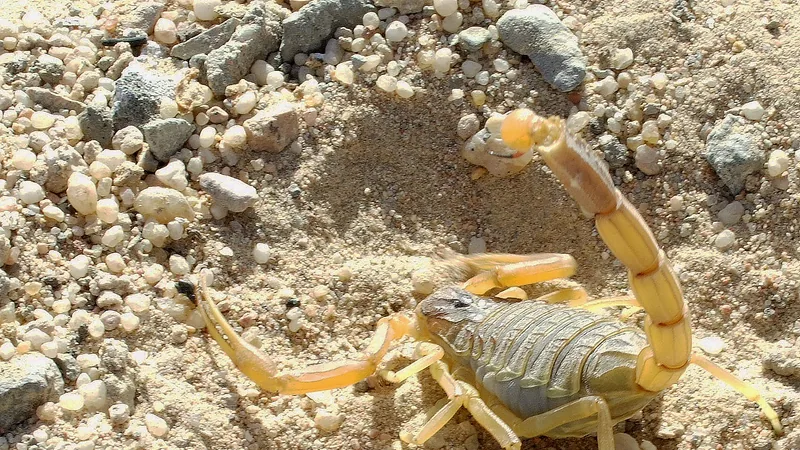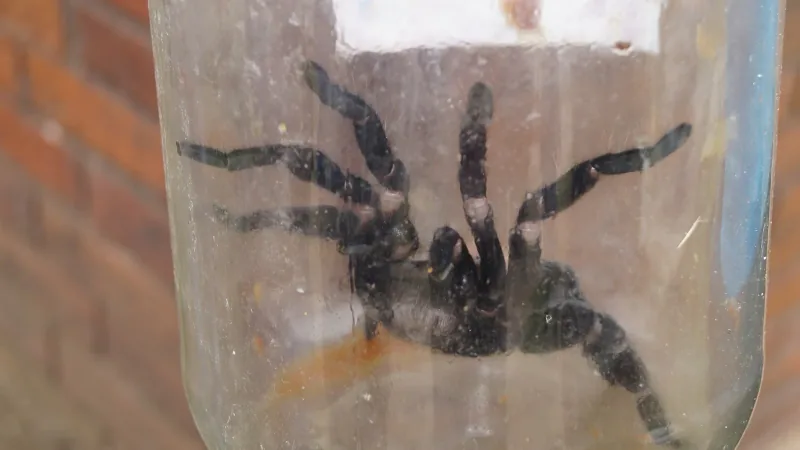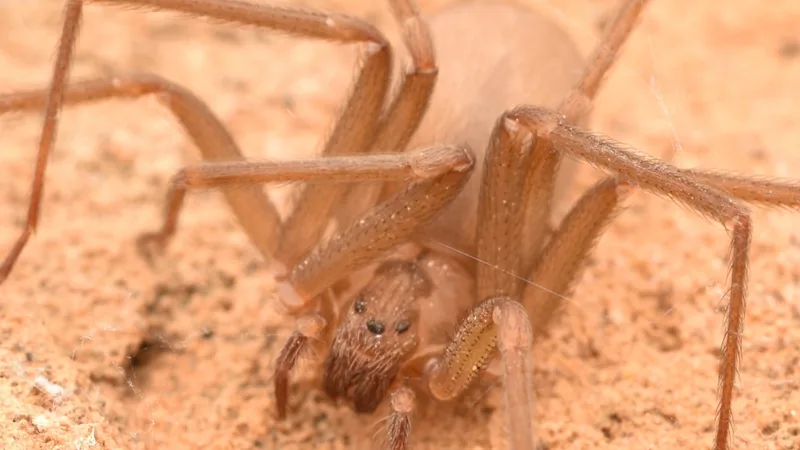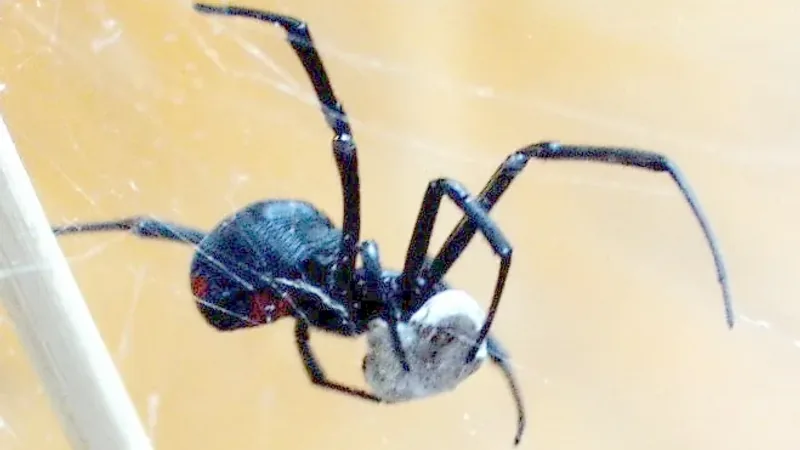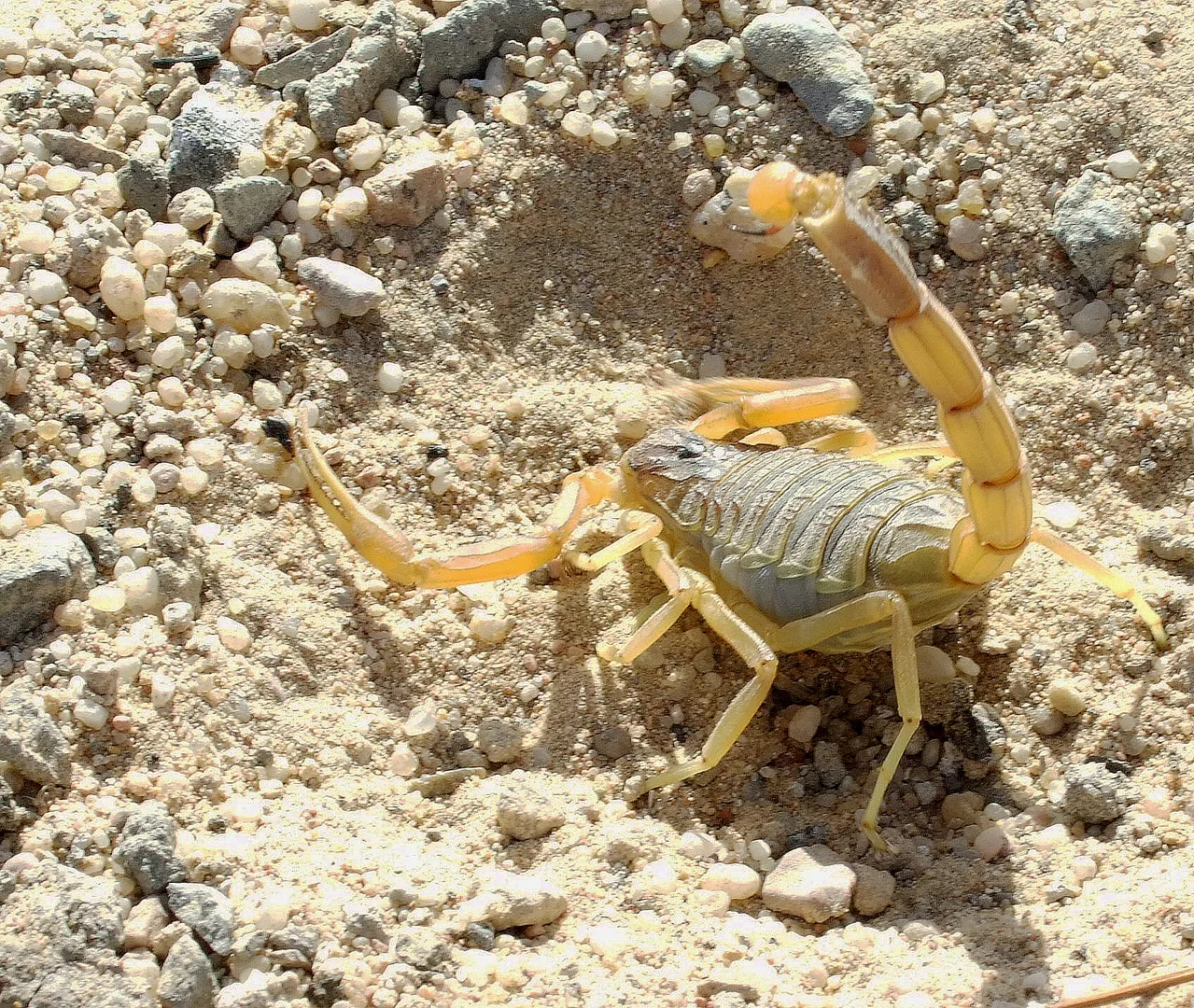
Deathstalker (Leiurus quinquestriatus) in the wild near Ras Gharib, Red Sea coast, Egypt.
Field
notes
A Small Hunter With an Outsized Reputation
The deathstalker (Leiurus quinquestriatus) is a scorpion in the family Buthidae, yellowish in color with brown spots on its tail. An adult runs 80 to 110 millimeters long, about the length of a credit card or a little more, and weighs just 1 to 2.5 grams, about as much as a few paperclips. Animal Diversity Web calls it one of the most dangerous scorpions on Earth because of its potent venom. In north-east Africa it is recorded from Algeria and Niger to Sudan and Somalia, where it lives in arid and hyper-arid desert. Its Middle Eastern subspecies was raised to a separate species, Leiurus hebraeus, in 2014.
Deathstalkers are nocturnal, a habit that helps them manage heat and water balance in dry habitats. They shelter under rocks, move into another animal’s abandoned burrow, or dig one of their own, about 20 centimeters below a rock. Scorpions do not see well, and deathstalkers hunt by touch: tiny slit-shaped sensory organs near the tips of their legs pick up vibrations in the sand or soil, which help them judge the direction and distance of prey. They generally eat small insects, spiders, centipedes, earthworms, and other scorpions, using their pincers to crush a catch and pull it toward the mouth.
Its Venom’s Second Career: Finding Tumors
Chlorotoxin, a toxin originally isolated from deathstalker venom, is used in cancer research. It is a peptide, a short chain of the same building blocks that make up proteins. It binds to the surface of glioma cells, a type of brain tumor, and impairs their ability to invade nearby tissue. Researchers traced that binding to a protein called matrix metalloproteinase-2, or MMP-2, which gliomas make more of than usual but the healthy brain does not normally make.
A toxin that paints its target Attach a near-infrared fluorescent dye to chlorotoxin, and the probe marks tumors apart from the healthy tissue next to them. In mouse experiments published in 2007, it outlined gliomas and four other kinds of cancer.
A version for people followed: tozuleristide, which pairs chlorotoxin with a near-infrared dye called indocyanine green. In a phase 1 trial, an early test of a drug’s safety in people, 17 adults with suspected gliomas each received a single dose before surgery. No dose-limiting side effects were seen, no reported problems were blamed on the drug, and the tumors gave off a fluorescent signal. The researchers, publishing in 2019, concluded the dye may be useful for fluorescence-guided surgery, in which a glowing marker helps surgeons tell tumor from healthy tissue.
Built to Multiply, Built to Be Eaten
Little is known about how deathstalkers breed, but a female gives birth to 35 to 87 live young. Deathstalkers are themselves commonly eaten by members of their own species and by other scorpions, and centipedes and vertebrates prey on them too. Death rates are high right after birth.
Published Updated
Traits
Intel
& FAQ
Guess
first
How big is a Deathstalker Scorpion, really? Slide, lock in, and see what the sources say. Every answer is a figure from this page, quoted from where it came from.
Sources
- 01Leiurus quinquestriatus. Animal Diversity Web, University of Michigan.
- 02Lowe, Yağmur & Kovařík (2014). A review of the genus Leiurus Ehrenberg, 1828 (Scorpiones: Buthidae) with description of four new species from the Arabian Peninsula. Euscorpius.
- 03Deshane, Garner & Sontheimer (2003). Chlorotoxin Inhibits Glioma Cell Invasion via Matrix Metalloproteinase-2. Journal of Biological Chemistry.
- 04Veiseh et al. (2007). Tumor Paint: A Chlorotoxin:Cy5.5 Bioconjugate for Intraoperative Visualization of Cancer Foci. Cancer Research.
- 05Patil et al. (2019). Phase 1 Safety, Pharmacokinetics, and Fluorescence Imaging Study of Tozuleristide (BLZ-100) in Adults With Newly Diagnosed or Recurrent Gliomas. Neurosurgery.
What the sources say: 41 claims checked word for word against these sources →