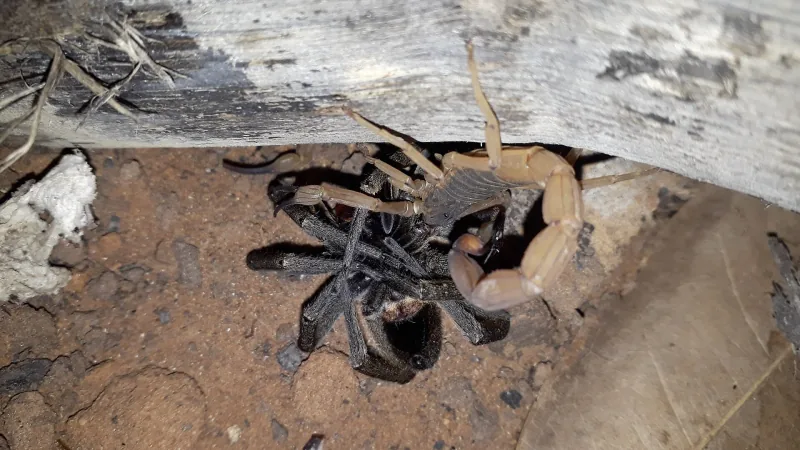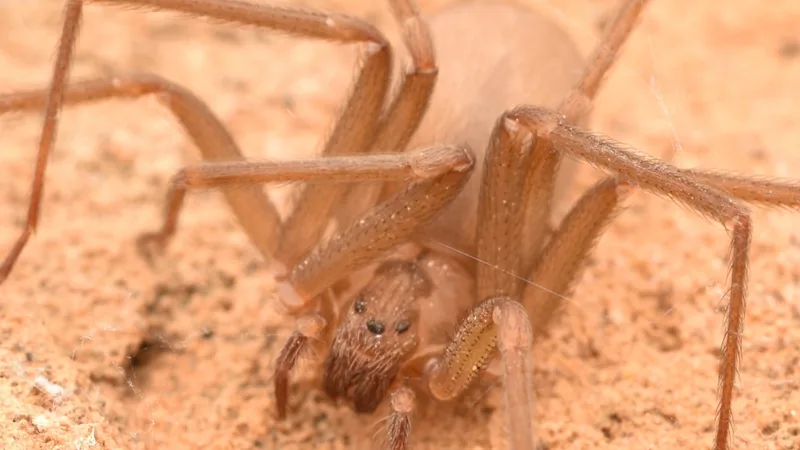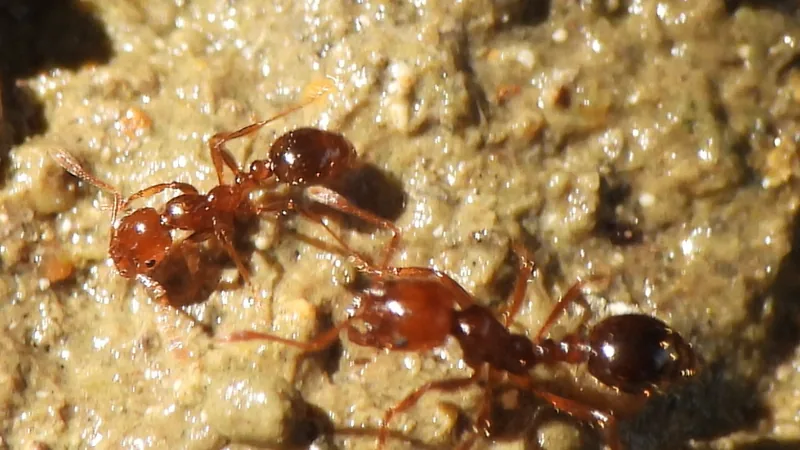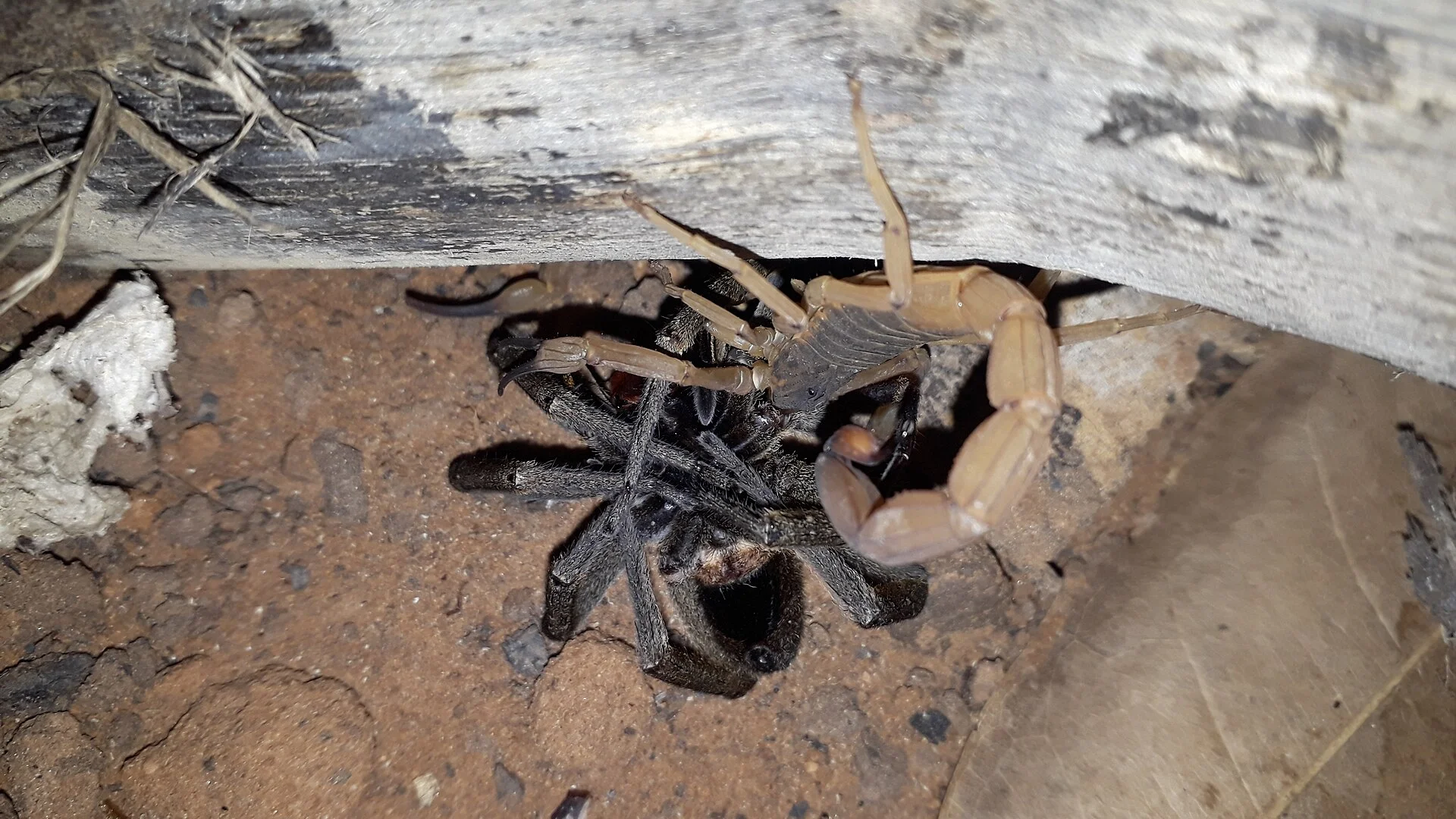
Brazilian yellow scorpion (Tityus serrulatus) feeding on a wandering spider (Phoneutria sp.)
Field
notes
In the storm drains and rubble piles of Brazilian cities lives an arachnid that does not need a mate to breed. The Brazilian yellow scorpion (Tityus serrulatus) grows about 5 to 7 centimeters long (2 to 2.75 inches), with pale yellow legs and pedipalps, a darker trunk, and a row of saw-like teeth on its tail that gave the species its scientific name.
One Mother, an Army of Daughters
Brazilian yellow scorpions are usually female. The species is mainly parthenogenetic, reproduction without a mate: a female’s unfertilized eggs develop directly into daughters. Scientists have found a few scattered populations that still seem to have males, though these appear to be rare exceptions. A mother gives birth to roughly 20 to 25 live young about twice a year, and unlike other scorpion species, which breed mainly in the hot, rainy months, she can do it in any month.
No Mate Required The species usually colonizes towns and cities, and it is easily carried from old ones to new ones by human transport. Brasília was invaded and colonized in less than 15 to 20 years.
Built to Wait Out a Famine
T. serrulatus was once believed to be restricted to Minas Gerais, in southeastern Brazil. There are now records of it in every other Brazilian region, plus Argentina and Bolivia, and transport by road or rail is one of the main ways it spreads. One specimen stung a supermarket worker handling a load of fruit sent from the southeast, and two more turned up at a trucking company. Endurance may be what gets it through those journeys. Laboratory scorpions with water but no food lasted up to 400 days, and some gave birth after 209 days of starvation. It eats cockroaches, crickets, and spiders, sheltering in drains, rubble, and scrubland and waiting for prey to pass instead of hunting it down.
A Sting Worth Taking Seriously
Tityus serrulatus is considered the most dangerous scorpion in South America, and this one species causes over 90,000 cases of envenomation a year. In Brazil, scorpion stings are recorded more often than bites from any other venomous animal, including snakes. The venom’s neurotoxins act on sodium channels in nerve cells and disrupt the nerves and muscles, the heart, and breathing. Not every sting is a disaster: across Brazil the majority of scorpion sting cases are clinically mild, though most of the fatal ones are linked to Tityus serrulatus. About 1.77 percent of scorpion stings in children up to 14 years old end in death, even though most stings happen to adults. Local health teams search for the scorpions at night with ultraviolet flashlights, which make the animals easier to see, then collect and remove them from inside and around buildings.
Published Updated
Traits
Intel
& FAQ
Guess
first
How big is a Brazilian Yellow Scorpion, really? Slide, lock in, and see what the sources say. Every answer is a figure from this page, quoted from where it came from.
Sources
- 01Pimenta et al. (2019). Selected to survive and kill: Tityus serrulatus, the Brazilian yellow scorpion. PLOS ONE.
- 02Lourenço (2015). What do we know about some of the most conspicuous scorpion species of the genus Tityus? A historical approach. Journal of Venomous Animals and Toxins including Tropical Diseases.
- 03Mario da Rosa et al. (2015). New record and occurrence map of Tityus serrulatus Lutz & Mello, 1922 (Scorpiones, Buthidae) in the state of Rio Grande do Sul, southern Brazil. Check List.
- 04Cologna et al. (2009). Tityus serrulatus Scorpion Venom and Toxins: An Overview. Protein & Peptide Letters.
- 05Horta et al. (2014). Molecular, Immunological, and Biological Characterization of Tityus serrulatus Venom Hyaluronidase: New Insights into Its Role in Envenomation. PLoS Neglected Tropical Diseases.
- 06Reckziegel & Pinto (2014). Scorpionism in Brazil in the years 2000 to 2012. Journal of Venomous Animals and Toxins including Tropical Diseases.
- 07Escorpião: Controle de escorpiões de importância em saúde. Instituto Butantan.
What the sources say: 50 claims checked word for word against these sources →