Melbourne, Vic.
Field
notes
Venom with a built-in clotting engine
This venom comes with a machine already assembled. Pseutarin C is a prothrombinase complex (a pair of proteins that together convert prothrombin to thrombin) and it sits preassembled in the snake’s venom gland. One structural study calls this kind of complex the molecular engine of blood coagulation.
Borrowed blood chemistry The venom’s clotting protein pseutarin C is the first venom procoagulant protein that is structurally and functionally similar to mammalian factor Xa-Va complex.
A proteomic study called the venom the second most toxic snake venom known. The Australian Museum says it contains powerful presynaptic neurotoxins, procoagulants (which trigger clotting), cardiotoxins and nephrotoxins. Successful envenomation can result in progressive paralysis and uncontrollable bleeding. Yet compared with other elapids its size, the fangs are quite small, around 3 mm, and the average venom yield is around 4 mg, although the record was 67 mg.
How big, how old, how far
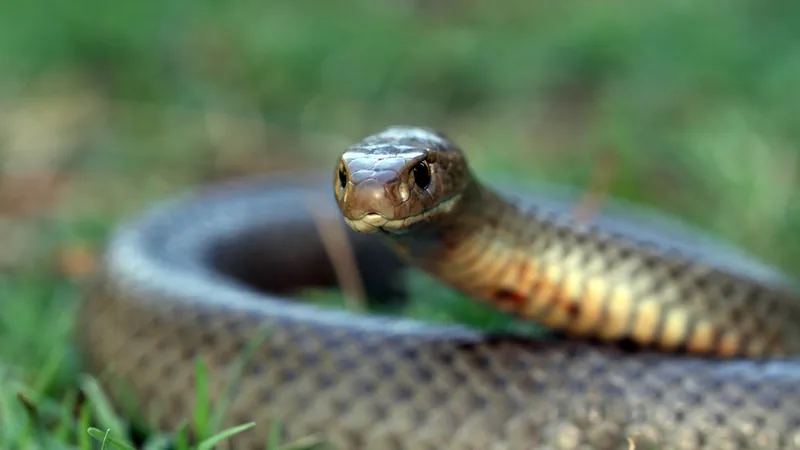
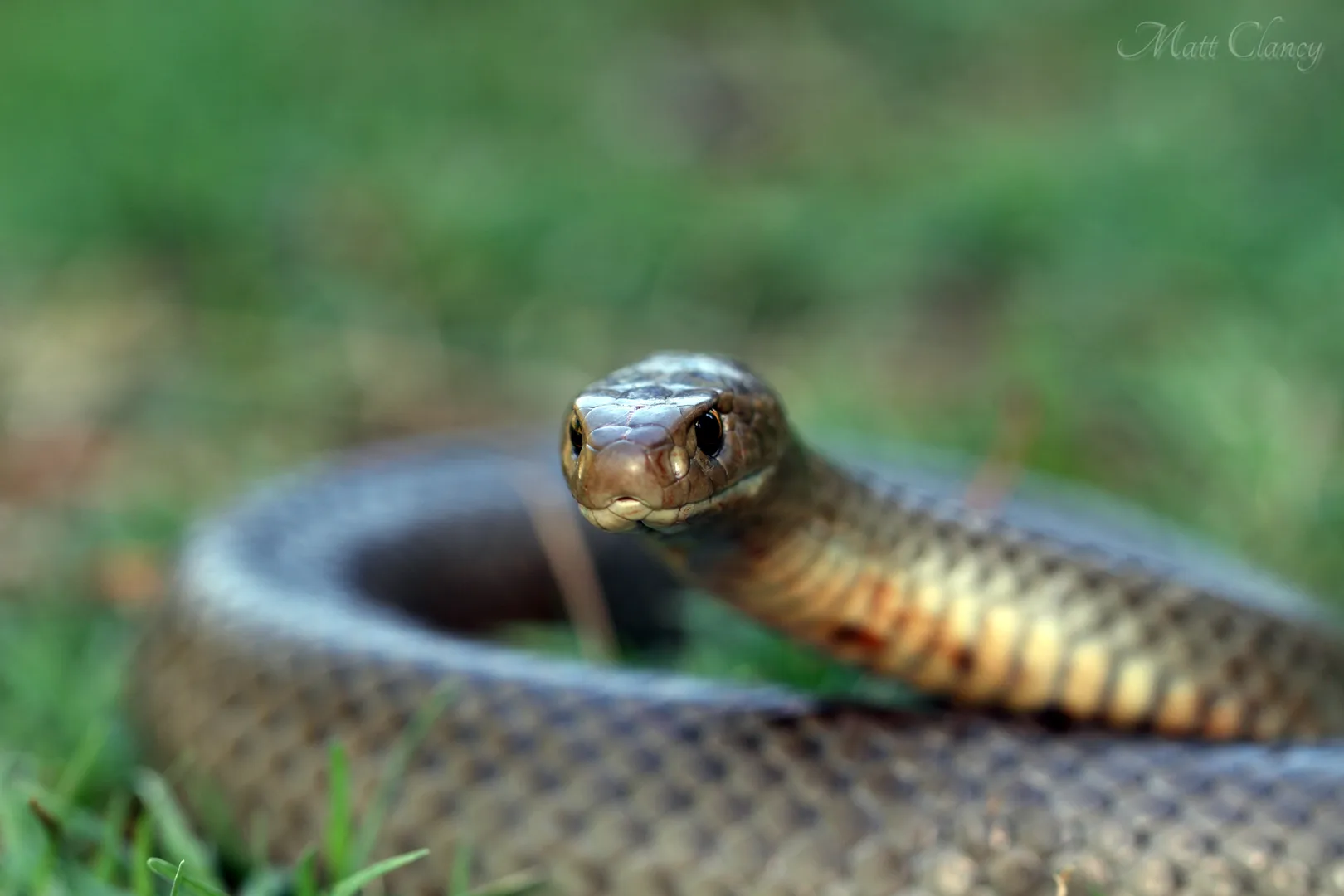
Eastern browns average around 1.5 m in total length. The largest specimen reliably measured was 2,013 mm. The life span of wild Eastern Browns is unknown, but they have been recorded living as long as 7 years in captivity. The species is widespread throughout eastern Australia, from northern Queensland to South Australia, with isolated populations in central and western Northern Territory. It can be found across a wide range of habitats, excluding rainforest and alpine regions, but it seems to prefer open woodland, scrub and savannah grassland. Farming has been a boon, and their numbers have proliferated thanks to the ready supply of rodents that followed.
A hunter that chases
Brown snakes hunt by actively looking for prey and searching in likely hiding places. They have good eyesight, and once prey is detected they will give chase. They subdue it using both venom and constriction. The menu includes frogs, reptiles and reptile eggs, birds and mammals, particularly introduced rats and mice. Larger snakes tend to eat more warm-blooded prey.
Two kinds of threat
In its strong threat display, the snake raises the front of its body well off the ground in an s-shaped coil, mouth slightly open, ready to strike. Both of its displays spread the neck. In captive trials, strike speeds ranged 0.25 to 1.80 metres per second, with a mean of 1.11. Speed did not correlate with temperature, which is unexpected in an ectotherm (a cold-blooded animal). If approached over a distance, they will usually flee or stay still. They appear to be immune to the venom of the mulga snake, a would-be predator, but they rapidly die from eating cane toads. The Australian Museum says the species causes more deaths from snake bite than any other snake in Australia.
Published
Traits
Intel
& FAQ
Guess
first
How big is a Eastern Brown Snake, really? Slide, lock in, and see what the sources say. Every answer is a figure from this page, quoted from where it came from.
Sources
- 01Eastern Brown Snake. Australian Museum.
- 02Tallowin et al. (2018). Pseudonaja textilis. The IUCN Red List of Threatened Species 2018: e.T42493315A42493324.
- 03Lechtenberg et al. (2013). Crystal structure of the prothrombinase complex from the venom of Pseudonaja textilis. Blood.
- 04Birrell et al. (2006). Molecular Diversity in Venom from the Australian Brown Snake, Pseudonaja textilis. Molecular & Cellular Proteomics.
- 05Rao & Kini (2002). Pseutarin C, a Prothrombin Activator from Pseudonaja textilis Venom: Its Structural and Functional Similarity to Mammalian Coagulation Factor Xa-Va Complex. Thrombosis and Haemostasis.
- 06Whitaker (1999). Behavioural ecology of the eastern brownsnake, Pseudonaja textilis, and implications for human envenomation. PhD thesis, University of Sydney.
What the sources say: 51 claims checked word for word against these sources →