Molluscs & Sea Slugs
Mineral-secreting muscular mantles, ribbon-like radula teeth, and stolen solar chloroplasts.
Mollusca (Gastropoda & Bivalvia)
Beyond the high-speed cephalopods, the broader mollusc phylum includes shelled gastropods, bivalves, and nudibranchs. Armed with ribbon-like radulae containing microscopic chitin teeth, they scrape rock surfaces, drill through shells, or sequester toxins and chloroplasts from prey.
Key Evolutionary Adaptations
Geography cone snails fire venomous radula harpoons carrying over 100 conopeptides that shut down nervous signaling instantly.
Blue sea dragon nudibranchs consume Portuguese man o wars and store the intact stinging cells in finger-like cerata.
Scaly-foot snails live near deep hydrothermal vents, embedding iron sulfide minerals into their shells and foot scales.
All Molluscs & Sea Slugs
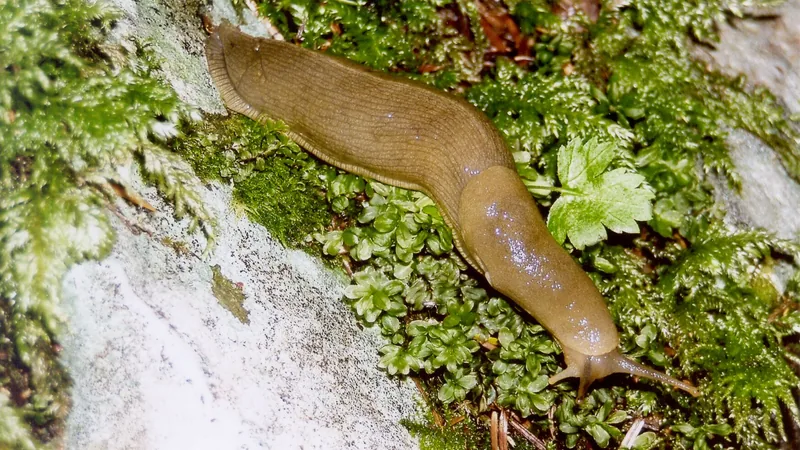
Banana Slug
A forest slug that may grow 20 cm long or more, coated in slime that numbs the mouth and tongue if swallowed.
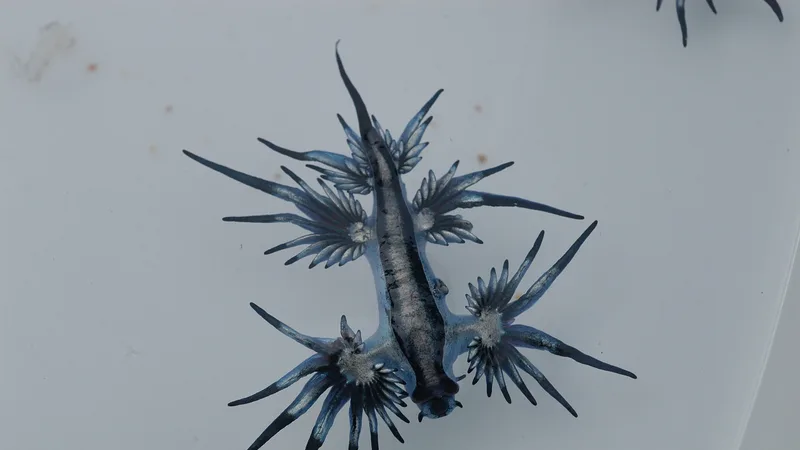
Blue Sea Dragon
Air-bubble buoyancy, blue-and-silver countershading, and a sting borrowed from the Portuguese man o' war.
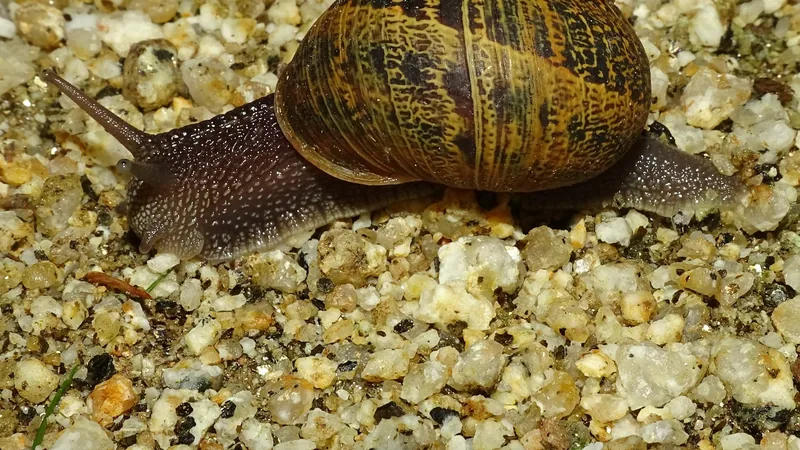
Garden Snail
A night-feeding garden snail that seals itself shut to wait out hot, dry weather.

Geography Cone Snail
Reef hunter whose venom insulin, released into the water, appears to disorient schools of small fish before the snail engulfs them and harpoons them with a hollow venom tooth.

Giant Clam
The largest living bivalve gets most of its nutrients from algae living in its flesh.
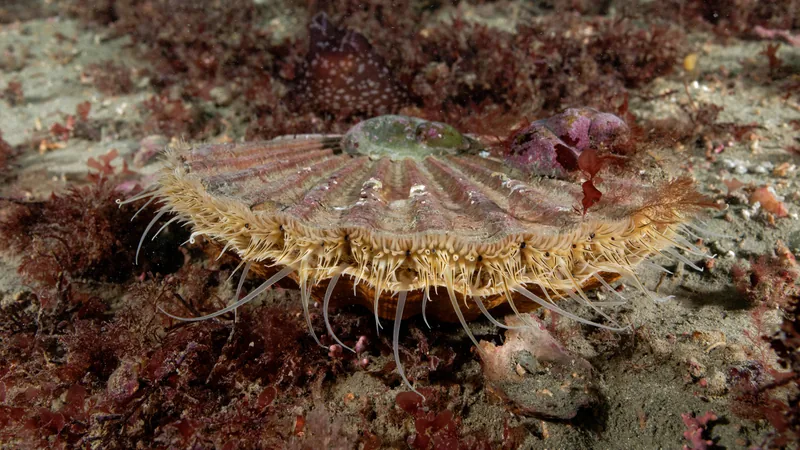
Great Scallop
Edges its mantle with tiny blue-green eyes and swims by clapping its shell
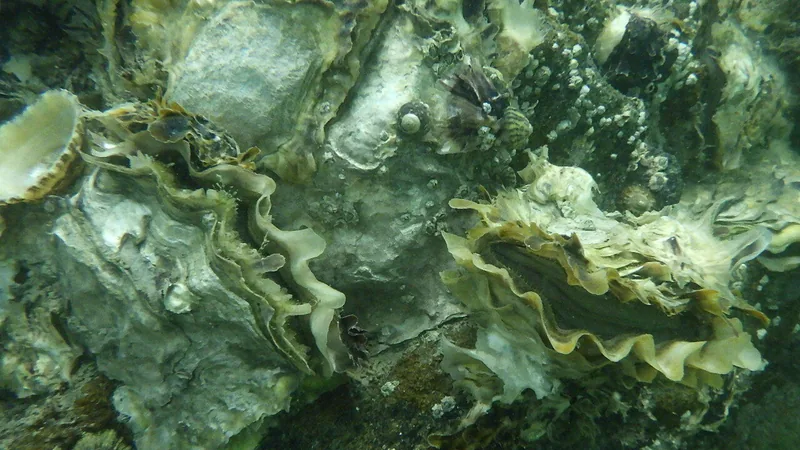
Pacific Oyster
A stay-put oyster that starts life male, hears underwater sound and filters up to 50 gallons of seawater a day.
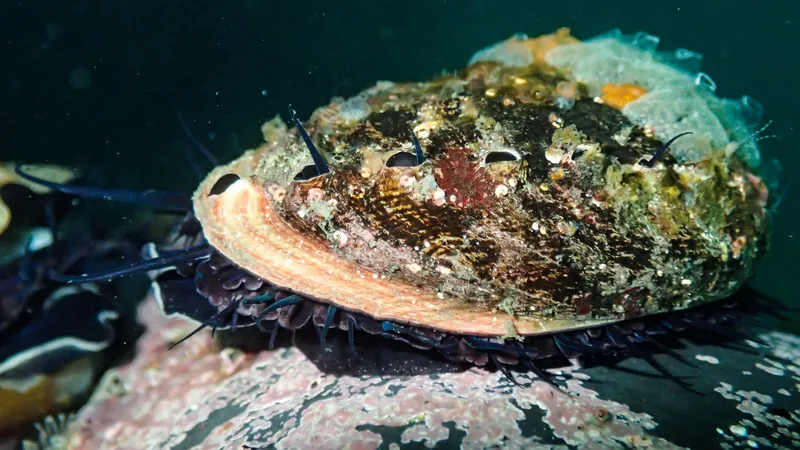
Red Abalone
A one-shell snail relative that clamps onto rock with a muscular foot and builds mother-of-pearl 3000-fold tougher than the mineral it is mostly made of.
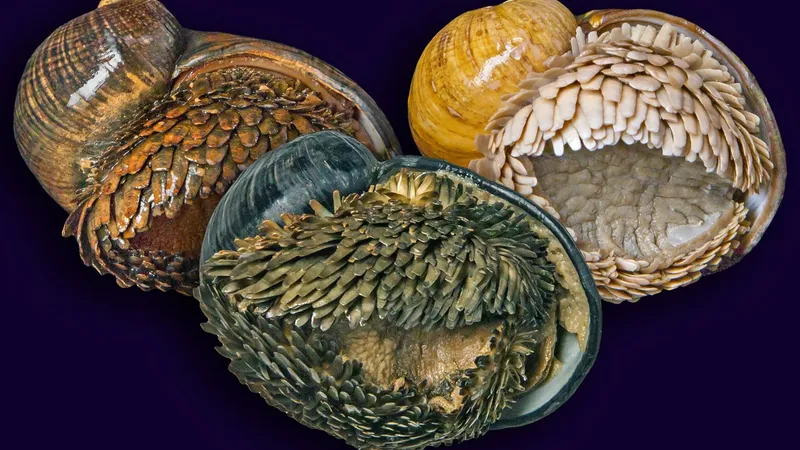
Scaly-foot Snail
The hydrothermal vent gastropod whose foot scales and shell are often mineralised with iron sulfide, with a heart that takes up about 4% of its body volume.