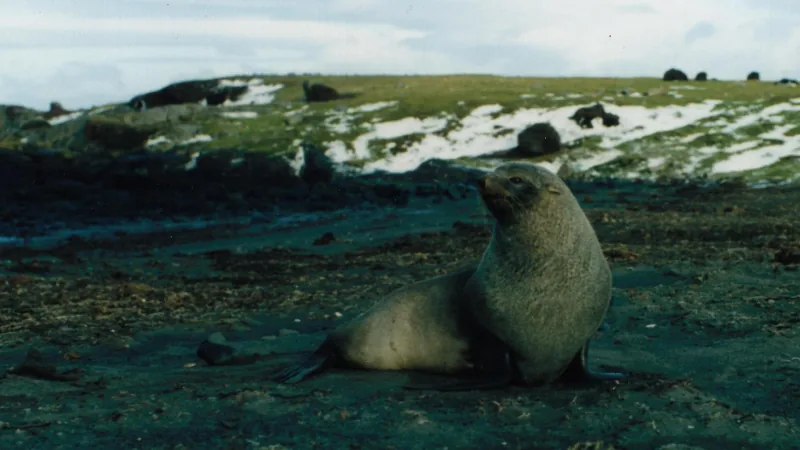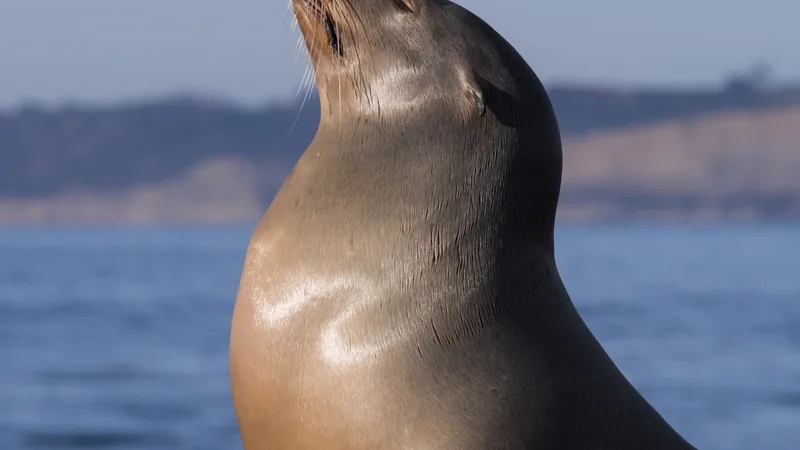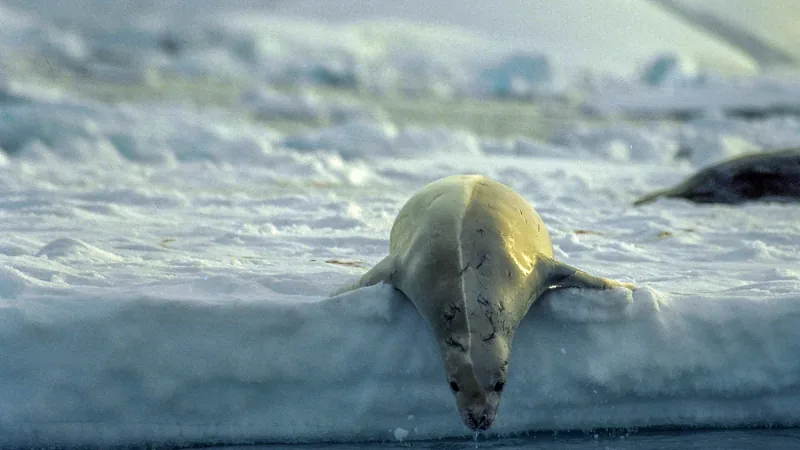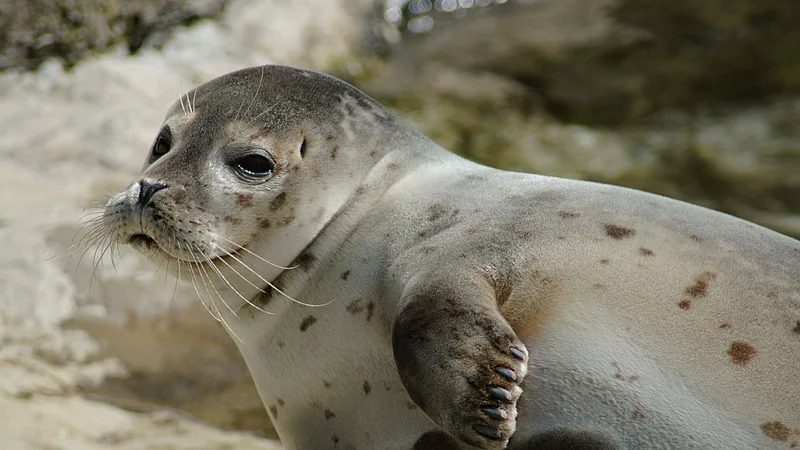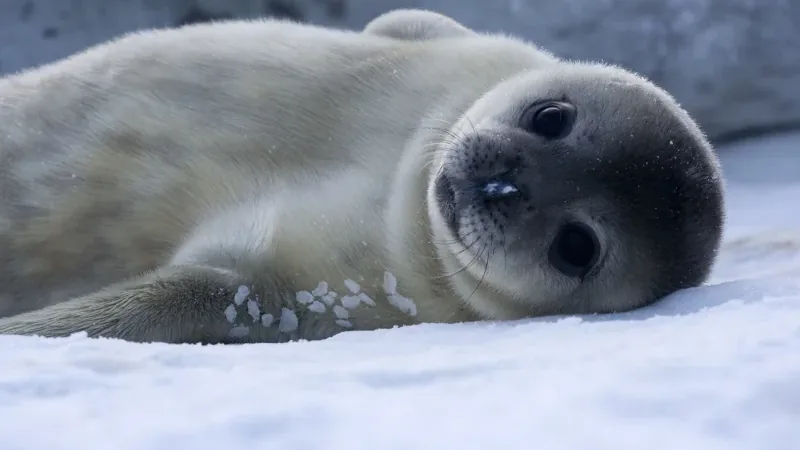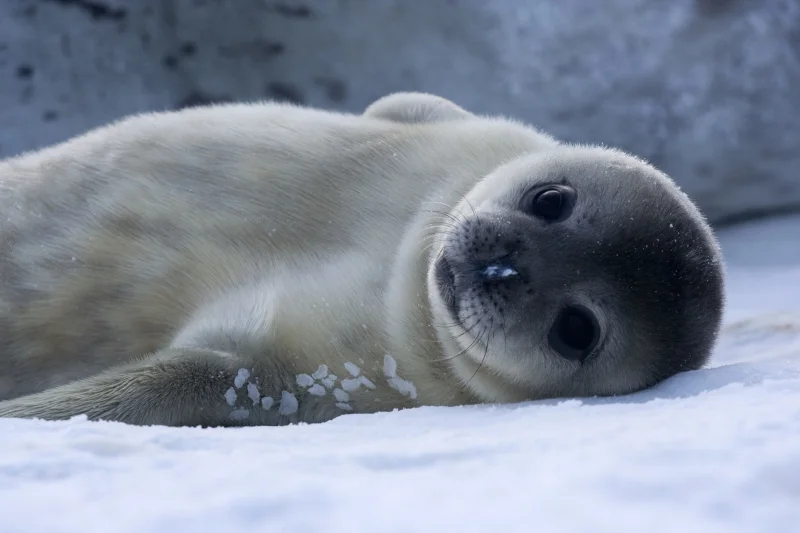
Baby Weddell Seal in Adélie Land, Antarctica
Field
notes
Living at the Bottom of the World
Of all the mammals that live permanently in Antarctica, none ranges further south than the Weddell seal (Leptonychotes weddellii), which lives on and around the fast ice all the way round the continent’s coast. Adults of both sexes are about 3 metres long and weigh around 400 to 500 kg. Weddell seals stay coastal, venturing only 15 to 20 km into the Southern Ocean to feed, and return to the same area of fast ice each year to rest, moult and give birth.
Rasping Through the Ice to Breathe
In the warmer summer months the ice has many cracks to breathe through. In winter those openings freeze over, and Weddell seals keep their air supply the hard way, using their canines and incisors to rasp open the new ice and maintain a breathing hole. It is a trade-off: the constant grinding wears those teeth down, and enough wear may eventually leave a seal unable to feed or keep its holes open.
Deep Dives, Safe Hunting
Under the ice, Weddell seals are serious divers. Hunting dives can last up to 45 minutes and reach depths as great as 720 metres, though their bodies can do more.
No Blackout Zone A Weddell seal can stay underwater for more than 90 minutes with no neurological or behavioural impairment, even though its blood oxygen falls to levels that would leave a human unconscious.
The reward down there is a diet of pelagic and bottom-dwelling fish, squid, octopus and prawns; one seal was repeatedly observed to capture a fish weighing more than 40 kg. Staying under the ice also pays off in defence: the space beneath it is relatively safe from air-breathing predators such as killer whales and leopard seals.
An Alien Soundtrack and a Long Antarctic Life
Recorded Weddell seal calls include repeated chirps, a long high whistle falling in tone, or a single, slowly descending tone. Both sexes call, and males may do so to hold their underwater territories. Females aged six and over give birth to one pup a year, in October. A newborn weighs 25 to 30 kg; after six weeks of its mother’s care it has grown to 110 to 140 kg. National Geographic gives the species’ average life span in the wild as 30 years.
Published Updated
Traits
Intel
& FAQ
Guess
first
How big is a Weddell Seal, really? Slide, lock in, and see what the sources say. Every answer is a figure from this page, quoted from where it came from.
Sources
- 01Weddell seal. Australian Antarctic Program, 2018.
- 02Weddell Seal. National Geographic.
- 03Williams et al. (2007). Running, swimming and diving modifies neuroprotecting globins in the mammalian brain. Proceedings of the Royal Society B: Biological Sciences.
- 04Hückstädt (2026). Leptonychotes weddellii. The IUCN Red List of Threatened Species 2026: e.T11696A95969474.
What the sources say: 38 claims checked word for word against these sources →