AnimalTracks.wiki

Swordfish

Xiphias gladius

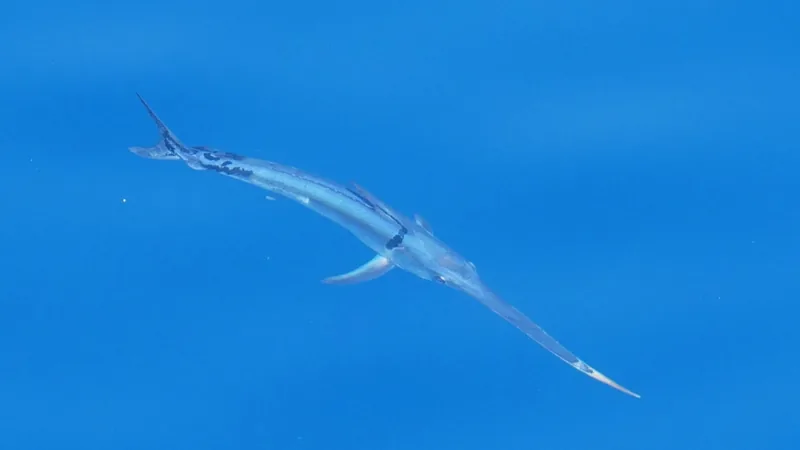
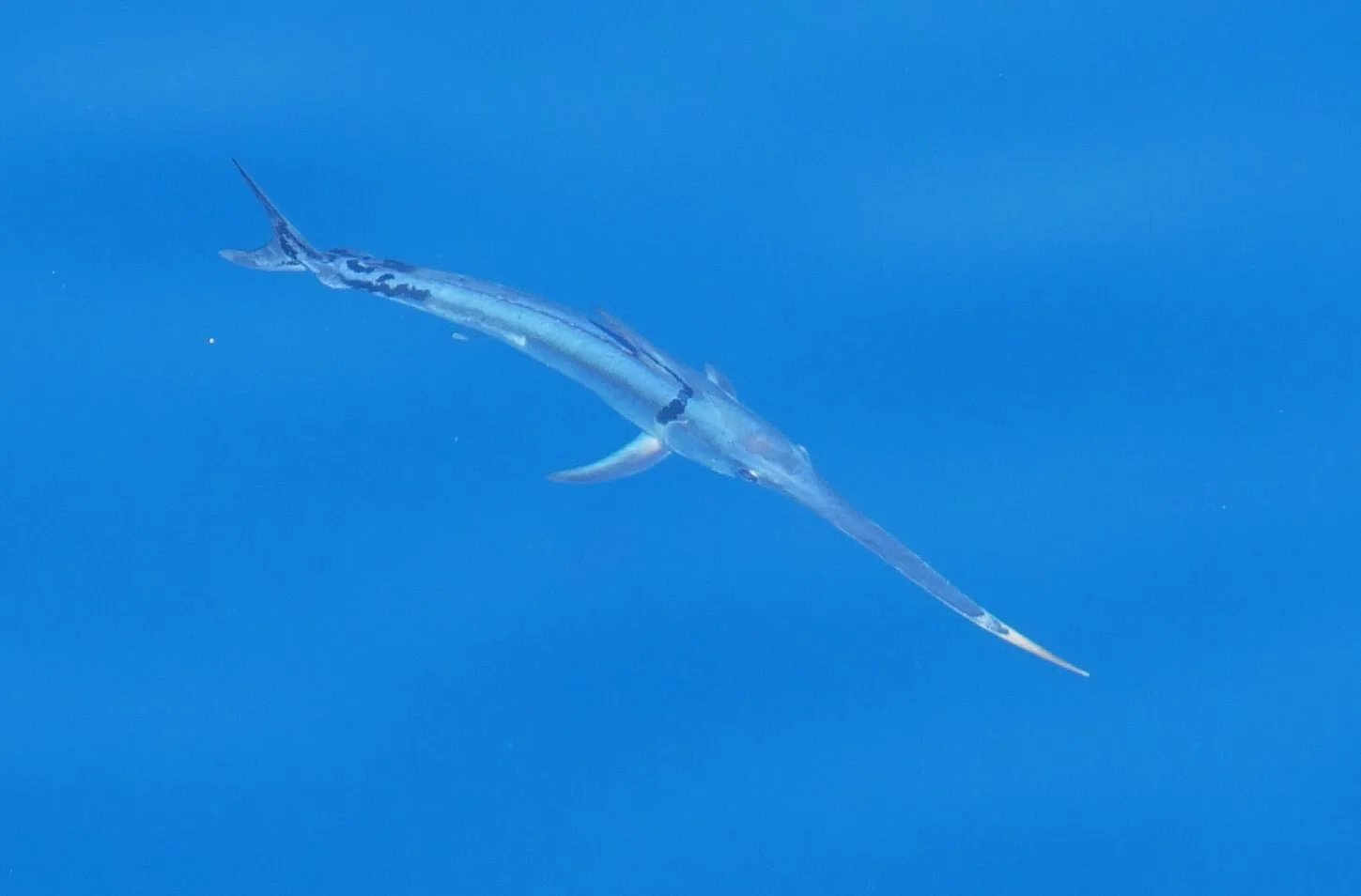
A fish with a heater for its brain and a flattened bill it apparently uses to slash prey.

Danger tierLowEffectively harmless to people.
IUCN status [NT]Near ThreatenedClose to qualifying for a threatened category in the near future.Source: IUCN Red List
Vibe checkSquarepusherDrum & Bass / Precision JungleListen ↓

Field
notes

Checked against 4 sources ↓

A heater for the brain

Swordfish are believed to swim down to 2,100 feet (650 m) or deeper, where the water may be just above freezing. One adaptation that lets them swim in such cold water is a “brain heater”: a large bundle of tissue associated with one of the eye muscles. It warms the eyes and brain up to 10 to 15 degrees C above the water around them.

One study showed that in fast-swimming predatory fish such as the swordfish, warming the retina improves temporal resolution, and so the detection of rapid motion. Depending on dive depth, it can be more than ten times higher in these fish than in fishes whose eyes match the water temperature.

Eggs by the million A female swordfish may carry from 1 million to 29 million eggs, and estimates vary a lot.

The sword

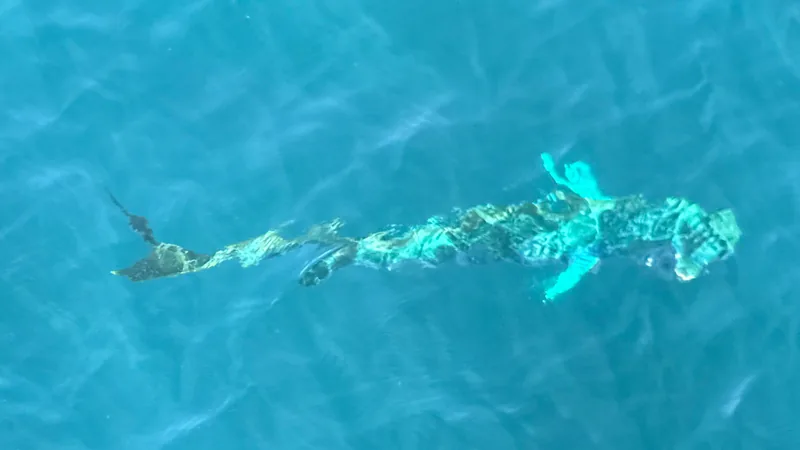
The bill is long, even for a billfish, and in cross section it appears as a flattened oval. Adults have no teeth and no scales. Young swordfish have scales, but they lose them by about 3 feet (1 m) long. Swordfish feed mostly on pelagic fishes (fish of the open sea) and occasionally on squid.

The sword is apparently used to catch prey. Squid and cuttlefish pulled from swordfish stomachs often carry slashes, and in one study most large fish prey had been slashed, while small prey were eaten whole.

Size and lifespan

Swordfish reach a maximum of 177 inches (455 cm) and 1,400 pounds (650 kg). Nearly all of those over 300 pounds (140 kg) are female. The ones caught by the North Atlantic fishery average 50 to 200 pounds, and NOAA says North Atlantic swordfish live about 9 years. Females there can reproduce between 4 and 5 years of age.

Predators of adult swordfish include killer whales. Swordfish also host 49 species of parasites, from tapeworms in the gut to flukes on the gills.

Where they roam

Swordfish live in the Atlantic, Pacific and Indian Oceans, from about 60 degrees north to 45 degrees south. They migrate, generally moving to warmer water in winter and cooler water in summer, and they often turn up in frontal zones, where ocean currents collide and productivity is high.

Published

Traits

Intel
& FAQ

01Can a swordfish live in cold water?

Yes. Of all the billfish, the swordfish has the widest temperature tolerance, and it turns up in water from 41 to 80 degrees F (5 to 27 degrees C). It is mainly a warm-water fish, but its brain heater helps it swim in cold depths.

Source: Florida Museum of Natural History, Discover Fishes

02How fast can a swordfish swim?

NOAA calls Atlantic swordfish one of the fastest predators in the ocean and says their streamlined bodies let them swim at speeds of up to 50 mph.

Source: NOAA Fisheries

03Is the swordfish endangered?

The IUCN Red List rates the swordfish Near Threatened, which is a different category from Endangered.

Source: Collette et al. 2022

Guess
first

How big is a Swordfish, really? Slide, lock in, and see what the sources say. Every answer is a figure from this page, quoted from where it came from.

  1. ?
  2. ?
  3. ?

Sources

More Ray-Finned Fishes

Actinopterygii & Sarcopterygii

Hydrodynamic aquatic rulers with lateral line pressure sensors, swim bladders, and electrical weaponry.

A captive African lungfish resting on aquarium gravel, its long thread-like fins trailing from a mottled olive body

African Lungfish

Protopterus annectens

A fish that breathes air through two lungs and can live for over a year inside a cocoon of its own dried slime.

Obligate air breathing through two lungs, and over a year inside a cocoon of dried slimeView →
▸ ElderHeavy Psych & Desert Rock
Close view of an alligator gar's diamond-scaled back and blunt snout breaking a marsh surface

Alligator Gar

Atractosteus spatula

Described as a 100-million-year-old living fossil, armored in interlocking ganoid scales, with two rows of fang-like teeth in its upper jaw and a swim bladder that can work as a lung.

Interlocking ganoid scale armor with a hard outer layer over a tough bony base, two rows of fang-like teeth in the upper jaw, and a vascularized swim bladder that can work as a lungView →
▸ Creedence Clearwater RevivalClassic Hard Rock & Southern Blues
American paddlefish from below in murky green water, the pale bars of its gill rakers showing inside the open gill slit

American Paddlefish

Polyodon spathula

An ancient river giant that carries 50,000 to 70,000 electroreceptor organs, the largest number of any living vertebrate species.

Paddle and head covered in ampullary organs: 50,000 to 70,000 electroreceptors per adult, the largest number of any living vertebrate speciesView →
▸ Blackberry SmokeDelta Blues & Swamp Rock
Live blackfin icefish, a close relative, seen from above in a pale holding tank at Palmer Station

Antarctic Icefish

Champsocephalus gunnari

A Southern Ocean fish with no working red blood cells, whose nearly clear blood carries oxygen dissolved in plasma, along with its own antifreeze.

Belongs to the only vertebrate family that lacks working hemoglobin genes and working red blood cells: its blood carries oxygen dissolved in the plasma instead.View →
▸ BiosphereGlacial Ambient & Drone Soundscapes

Clade factLateral line sensory systems detect water displacement and pressure waves from surrounding swimming creatures.

Explore all 53 →

Head-to-head showdowns

Simulated face-offs, biological power gauges, and 3-round combat

Down the Rabbit Hole

Associative matches based on weird shared evolutionary traits