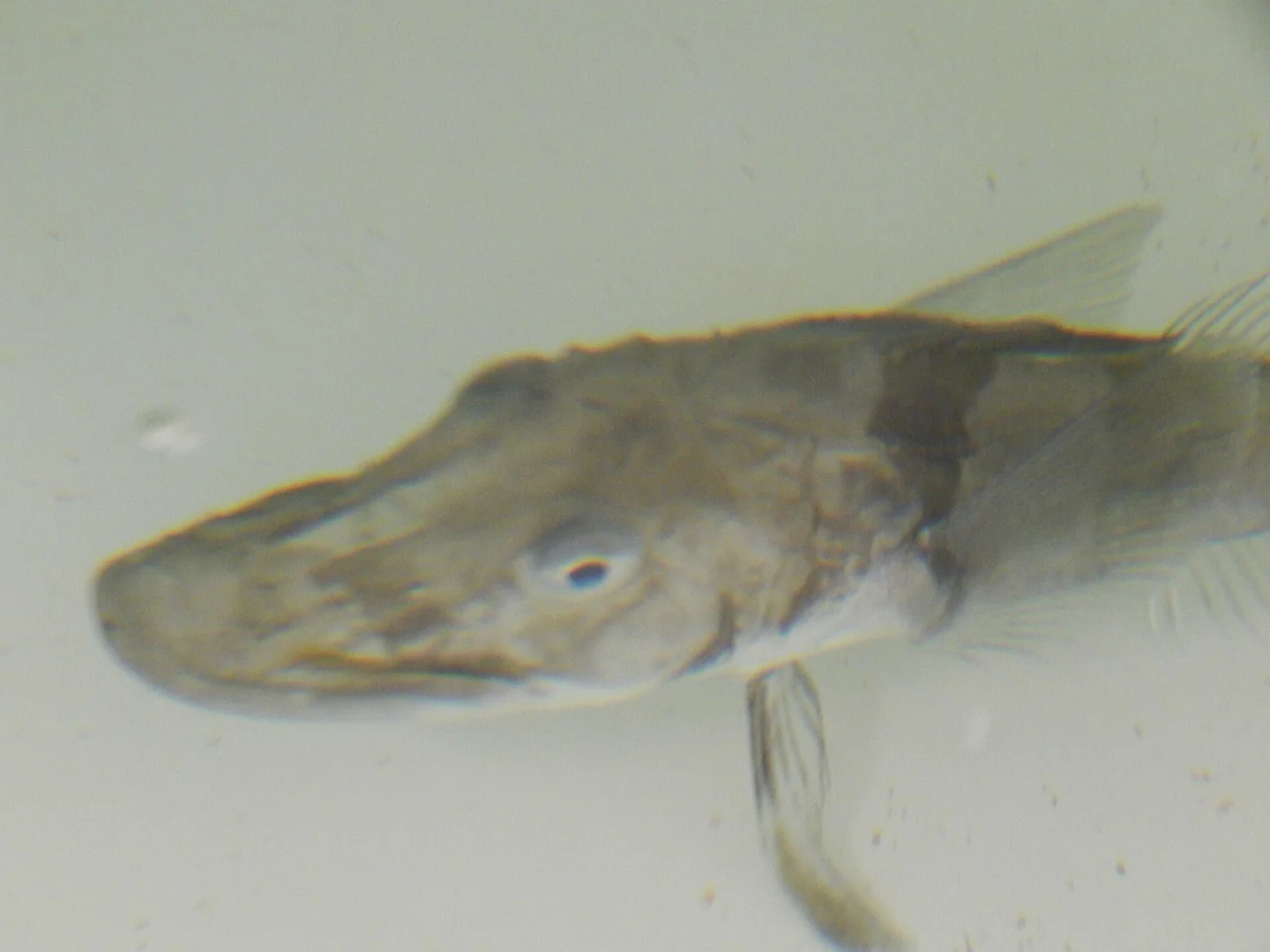
Blackfin icefish (Chaenocephalus aceratus), a close relative of the mackerel icefish, at Palmer Station, Antarctica
Field
notes
Almost Clear Blood
Cut into an Antarctic Icefish (Champsocephalus gunnari, the mackerel icefish) and its blood looks nearly colorless. It belongs to Channichthyidae, the icefish family, the only vertebrates that lack functional red blood cells and functional hemoglobin genes. Hemoglobin is the red pigment that carries oxygen in blood. Without it, icefish blood carries oxygen only dissolved in the plasma. That gives it under 10 percent of the oxygen-carrying capacity of a closely related red-blooded Antarctic fish’s blood.
An Expensive Trait Losing hemoglobin, and in some icefish species myoglobin, another oxygen-binding protein, does not appear to have given these fish any advantage. Losing hemoglobin raised the energy cost of circulating blood, and losing myoglobin reduced heart performance, yet the losses are fixed traits in icefishes: every fish of an affected species inherits them.
Building Around the Loss
Icefish evolved what appear to be ways to make up for the missing proteins: enormous hearts that pump more blood per beat for their body size, enhanced networks of blood vessels, and changes to their mitochondria, the tiny structures inside cells that use oxygen to release energy. Icefish are also among the Antarctic fish groups that became more buoyant by cutting back on heavily mineralized bones and scales and storing more fat, which let them feed in the food-rich open water. A mackerel icefish’s blood carries compounds that prevent it from freezing in the Southern Ocean’s sub-zero water, and it lacks myoglobin as well as hemoglobin.
Home Waters and Size
Mainly found around Heard Island, the McDonald Islands, Kerguelen and South Georgia, the mackerel icefish is a schooling fish of the Southern Ocean’s island shelves. It has a long, spindle-shaped body, a large head with an elongated snout, a large mouth with small teeth, and a bluish-silver body with whitish gills. Around Heard Island, CCAMLR, the international commission that manages Antarctic fishing, gives its maximum as around 45 centimeters and 6 years. Australia’s fisheries authority lists the species at up to 66 centimeters, 2 kilograms and 15 years, though it is commonly found at about 35 centimeters. It usually lives at depths of 30 to 250 meters and has been found down to 700. Schools spend the day near the seafloor and the night in midwater, a round trip made every 24 hours.
Hunting, Being Hunted, and a Managed Fishery
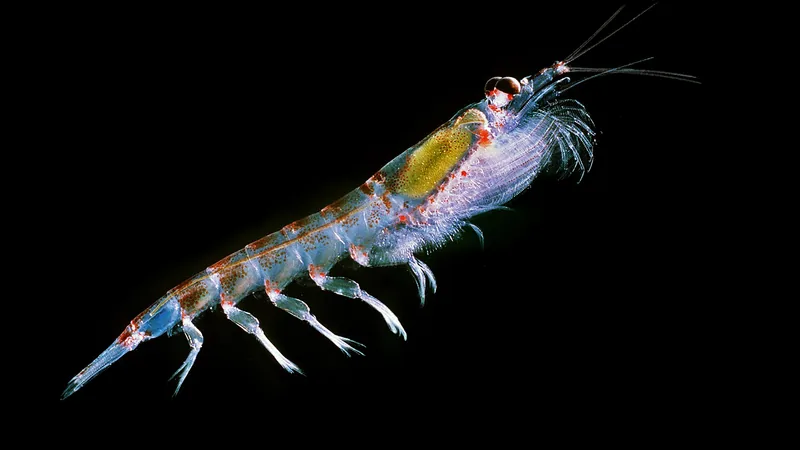
Mackerel icefish eat krill and mysids, small shrimp-like crustaceans, along with small fish, including young icefish. Other fish prey on them, and their predators also include gentoo penguins and Antarctic fur seals. They reach reproductive maturity at three to four years old, and adults move inshore to spawn over two to three months in autumn and winter. Females lay 10,000 to 20,000 eggs, which stay near the seabed for about three months before hatching. Australia’s Heard Island and McDonald Islands Fishery targets the species with bottom trawls. Its catch limit for the 2024-25 season was 1,824 tonnes, and the fisheries authority’s page, last updated in July 2025, lists the stock as not overfished and not subject to overfishing.
Published Updated
Traits
Intel
& FAQ
Guess
first
How big is a Antarctic Icefish, really? Slide, lock in, and see what the sources say. Every answer is a figure from this page, quoted from where it came from.
Sources
- 01Kim et al. (2019). Antarctic blackfin icefish genome reveals adaptations to extreme environments. Nature Ecology & Evolution.
- 02Sidell & O'Brien (2006). When bad things happen to good fish: the loss of hemoglobin and myoglobin expression in Antarctic icefishes. Journal of Experimental Biology.
- 03Mackerel icefish. Australian Fisheries Management Authority.
- 04Antarctic fish. Australian Antarctic Program.
- 05Species Description 2023: Champsocephalus gunnari. CCAMLR Secretariat, 2023.
- 06Antarctic wildlife. British Antarctic Survey.
What the sources say: 55 claims checked word for word against these sources →