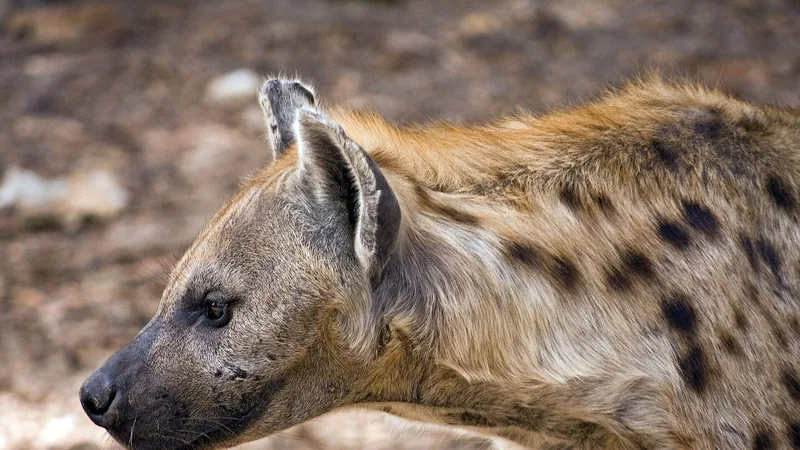
Striped hyena at Bhigwan, Maharashtra, India
Field
notes
A Family of Its Own
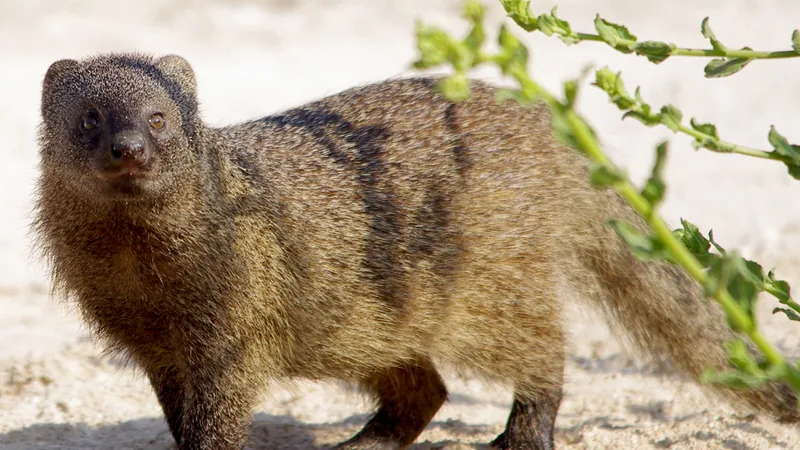
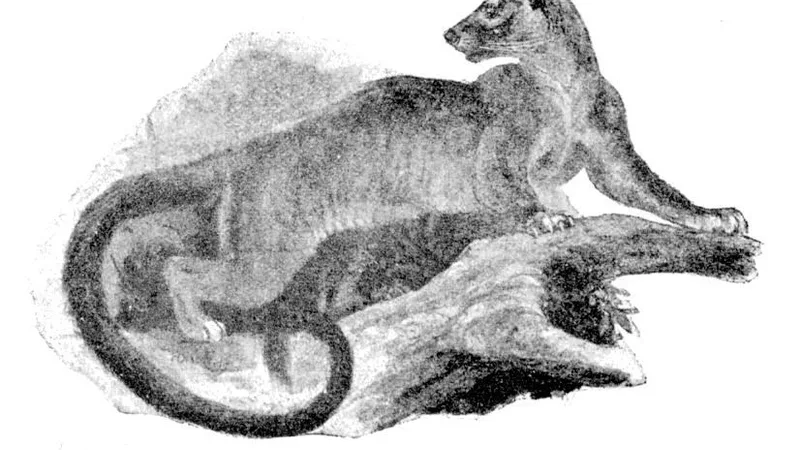
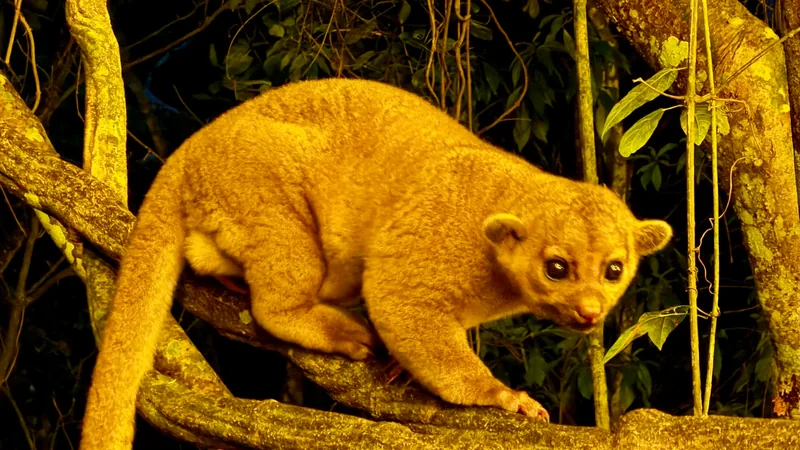
Striped hyenas (Hyaena hyaena) aren’t dogs or cats. They belong to their own family, Hyaenidae, and their closest relatives are mongooses and meerkats. They stand 66 to 75 centimeters (26 to 30 inches) at the shoulder and measure 100 to 115 centimeters (39 to 45 inches) long, and the tail is 30 to 40 centimeters (12 to 16 inches). Females weigh 26 to 34 kilograms (57 to 75 pounds), males 26 to 41 kilograms (57 to 90 pounds). The San Diego Zoo gives their life span as 10 to 12 years.
The Bone-Crushing Scavenger
A striped hyena’s massive jaws crush and swallow bones, teeth, horns and hooves, the body parts other predators leave uneaten, and its digestive system is adapted to maximize the nutrition it gets from its food. Only the horns, hooves and hair are brought back up. Its diet is mainly carrion (dead animals) and human refuse. It scavenges zebras, wildebeest, gazelles and impalas, even eating the bones once the meat has been picked off. Hyenas also have a reputation for raiding crops for dates, melons, cucumbers and peaches. Striped hyenas eat insects too, and occasionally kill hares, rodents, reptiles and birds.
Some striped hyenas prey on sheep, goats, donkeys and horses. In India’s Kanha–Pench forests, a study of five carnivores recorded no reports of hyenas killing livestock, unlike wolves, dholes, jackals and foxes there. The authors say this may fit observations that hyenas are scavengers that do not actively hunt domestic animals. In Nepal’s lowlands, though, a study of hyena droppings found livestock made up 17.3 percent of the diet by biomass (the weight of food eaten), and wild boar was the most preferred prey.
Scent made by bacteria In some areas, striped hyenas leave anal-gland scent marks near feeding sites and well-used paths. A study of wild spotted and striped hyenas found the bacteria in their scent glands are mostly fermenting types, and that the mix of bacteria changes along with the volatile fatty acids (smelly chemicals) in their scent. The authors say the results suggest bacteria are behind each species’ own smell.
The Mane Bluff
When threatened, a striped hyena raises the mane of long hair along its back and can appear to nearly double in size in an instant. The San Diego Zoo says this is not an act of aggression but the hyena’s last effort to pretend to be brave and, it hopes, keep predators farther away. Striped hyenas usually keep around 50 meters from lions and tigers, and they behave submissively toward the larger spotted hyena and let it steal their food.
Alone, or in Small Groups
Striped hyenas were once thought to be solitary, but recent studies show that in some areas they live in small groups of one female and several males. They forage mostly at night, each travelling alone at an average of 2 to 4 km/h and occasionally trotting at 8 km/h. The spotted hyena lives in complex, ranked groups of up to 90 animals. A brain-scan study found it has the largest brain relative to body size of the four living hyena species.
Striped hyenas live in semi-deserts, rocky scrubland and savanna across northern Africa, the Middle East and India. They avoid true deserts and need a water source within 10 kilometers (6 miles). The IUCN lists the species as Near Threatened.
Published Updated
Traits
Intel
& FAQ
Guess
first
How big is a Striped Hyena, really? Slide, lock in, and see what the sources say. Every answer is a figure from this page, quoted from where it came from.
Sources
- 01Hyaena hyaena (striped hyena). Animal Diversity Web, University of Michigan.
- 02Striped Hyena. San Diego Zoo Wildlife Alliance.
- 03AbiSaid & Dloniak (2015). Hyaena hyaena. The IUCN Red List of Threatened Species 2015: e.T10274A45195080.
- 04Srivathsa et al. (2019). Examining human–carnivore interactions using a socio-ecological framework: sympatric wild canids in India as a case study. Royal Society Open Science.
- 05Bhandari et al. (2020). The diet of the striped hyena in Nepal's lowland regions. Ecology and Evolution.
- 06Theis et al. (2013). Symbiotic bacteria appear to mediate hyena social odors. Proceedings of the National Academy of Sciences.
- 07Sakai et al. (2011). Brain Size and Social Complexity: A Computed Tomography Study in Hyaenidae. Brain, Behavior and Evolution.
What the sources say: 48 claims checked word for word against these sources →