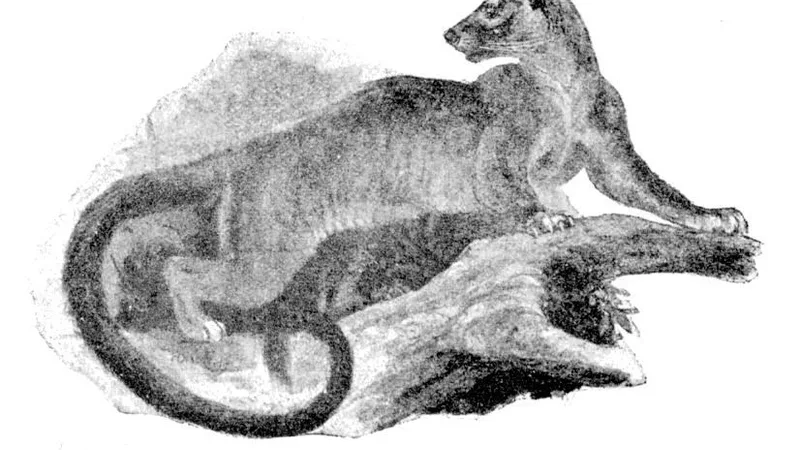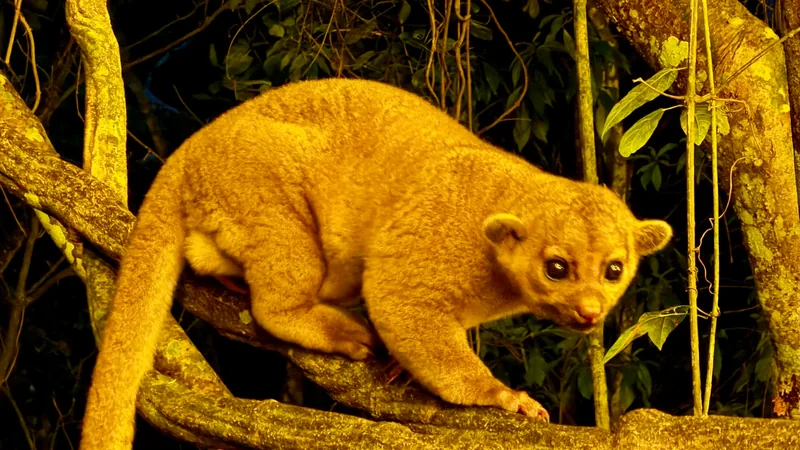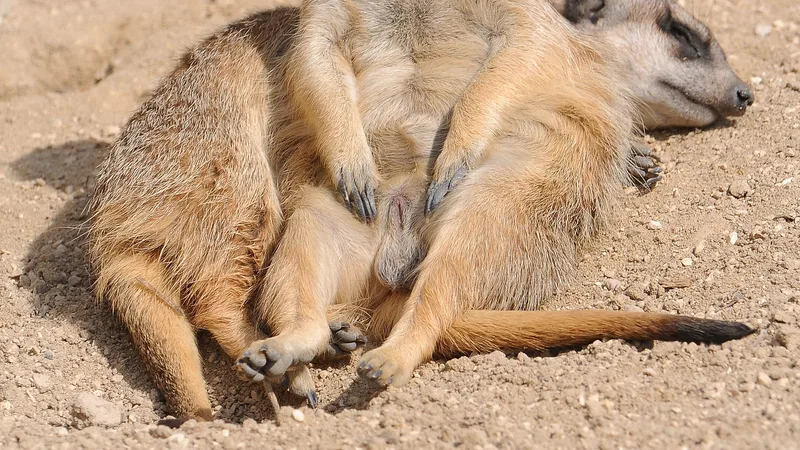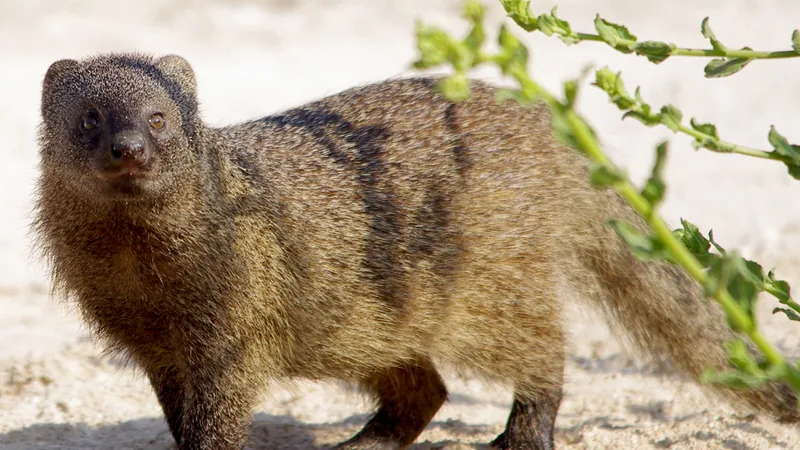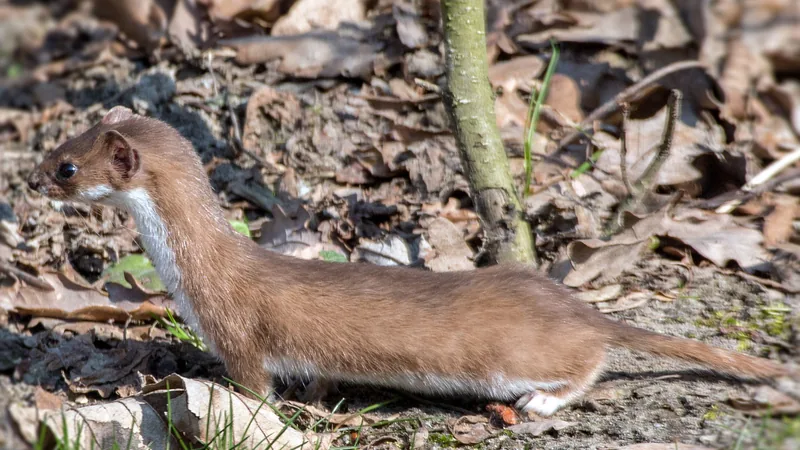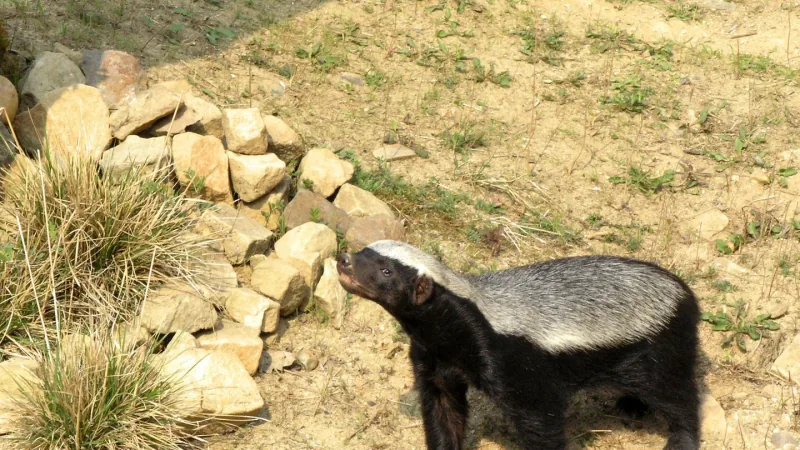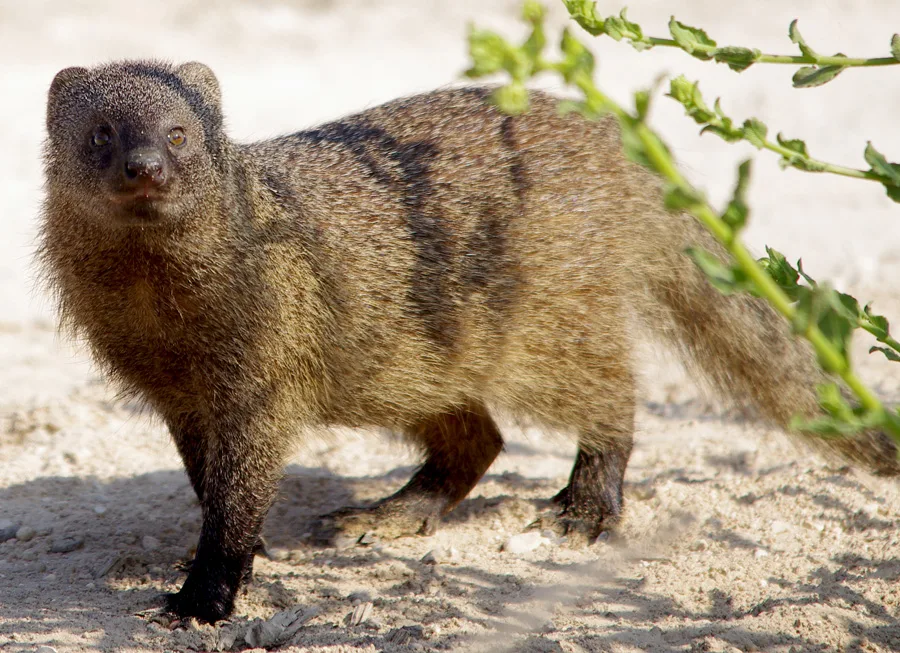
Egyptian mongoose (Herpestes ichneumon) in Ma'agan Michael, Israel.
Field
notes
Faster Than the Strike
The Egyptian mongoose, which Animal Diversity Web also calls the ichneumon, has a reputation for snake killing. Facing a snake, it can predict and dodge the strike, then catch the snake’s head before another strike comes. If excited, it can bristle its hair and arch its back to appear twice its actual size, and erecting its hair on the attack is thought to confuse the snake. Animal Diversity Web says the common belief that mongooses are immune to snake poisons “is not so”. Not immune, then, but this species is resistant to α-bungarotoxin, a neurotoxin found in cobra venom. That is one toxin: snake venoms typically contain dozens.
Resistant, not immune In this mongoose the receptor that cobra neurotoxins latch onto carries a sugar group that gets in the toxin’s way. It was the earliest recognized example of that defence, and it was later identified as an ancestral trait of the mongoose and meerkat family.
Built Low and Built to Dig
A body 48 to 60 centimetres long trails a bushy tail that ends in a black tassel and runs another 33 to 54 centimetres, a long, low-slung form that appears reptilian from a distance. It weighs 1.7 to 4 kilograms. Each short leg carries five digits, and the front claws are sharp and curved for digging. A narrow strip of bare skin rings each eye, and its 35 to 40 teeth include carnassials well developed for shearing flesh. The ageing database AnAge says it may live up to 12 years in the wild.
A Loner That Sometimes Isn’t
A two-year study in Spain’s Doñana National Park found average group sizes of anywhere from one to seven, with adults seen alone or in pairs all year and food the main pressure preventing large, stable groups. When one mongoose follows another, it keeps its nose on the leader’s anus for orientation, a habit that starts when the young follow their mothers closely. Scent marks from the same anal glands could signal a female’s readiness to breed or mark an individual or a pack. Its diet runs from invertebrates, fish and amphibians to reptiles, birds and mammals, with fruit now and then. Eggs are a favored delicacy, and Animal Diversity Web says mongooses crack them by throwing them through their hind legs against something hard, like a rock or wall.
Sacred to the Pharaohs
Animal Diversity Web says Egyptian mongooses appear in Egyptian paintings going back to around 300 B.C. It says the animal was known as the “Pharaoh’s Cat” and considered holy, housed in temples and set against snakes in arenas. Skulls have been found in tombs, and mummified remains have been discovered. Today the IUCN lists the species as Least Concern. In Portugal, a study published in 1996 found its northern limit had extended well beyond the Tagus River across most of its Portuguese range, indicating a probable expansion in the years before.
Published Updated
Traits
Intel
& FAQ
Guess
first
How big is a Egyptian Mongoose, really? Slide, lock in, and see what the sources say. Every answer is a figure from this page, quoted from where it came from.
Sources
- 01Herpestes ichneumon (Egyptian mongoose). Animal Diversity Web, University of Michigan.
- 02Herpestes ichneumon. AnAge: The Animal Ageing and Longevity Database, Human Ageing Genomic Resources.
- 03Borralho et al. (1996). The distribution of the Egyptian Mongoose Herpestes ichneumon (L.) in Portugal. Mammal Review.
- 04Gaubert et al. (2025). Herpestes ichneumon. The IUCN Red List of Threatened Species 2025: e.T41613A278643105.
- 05Jansa & Voss (2011). Adaptive Evolution of the Venom-Targeted vWF Protein in Opossums that Eat Pitvipers. PLoS ONE.
- 06Chandrasekara et al. (2024). High-Voltage Toxin’Roll: Electrostatic Charge Repulsion as a Dynamic Venom Resistance Trait in Pythonid Snakes. Toxins.
What the sources say: 41 claims checked word for word against these sources →