Belize
Field
notes
Twisting Through the Canopy
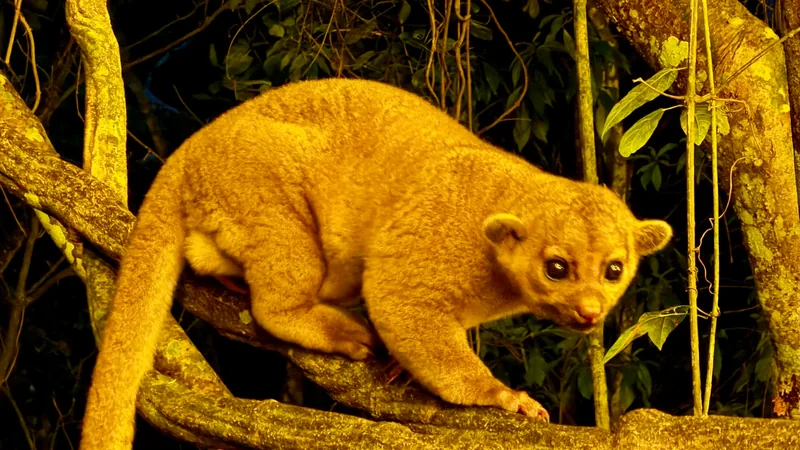
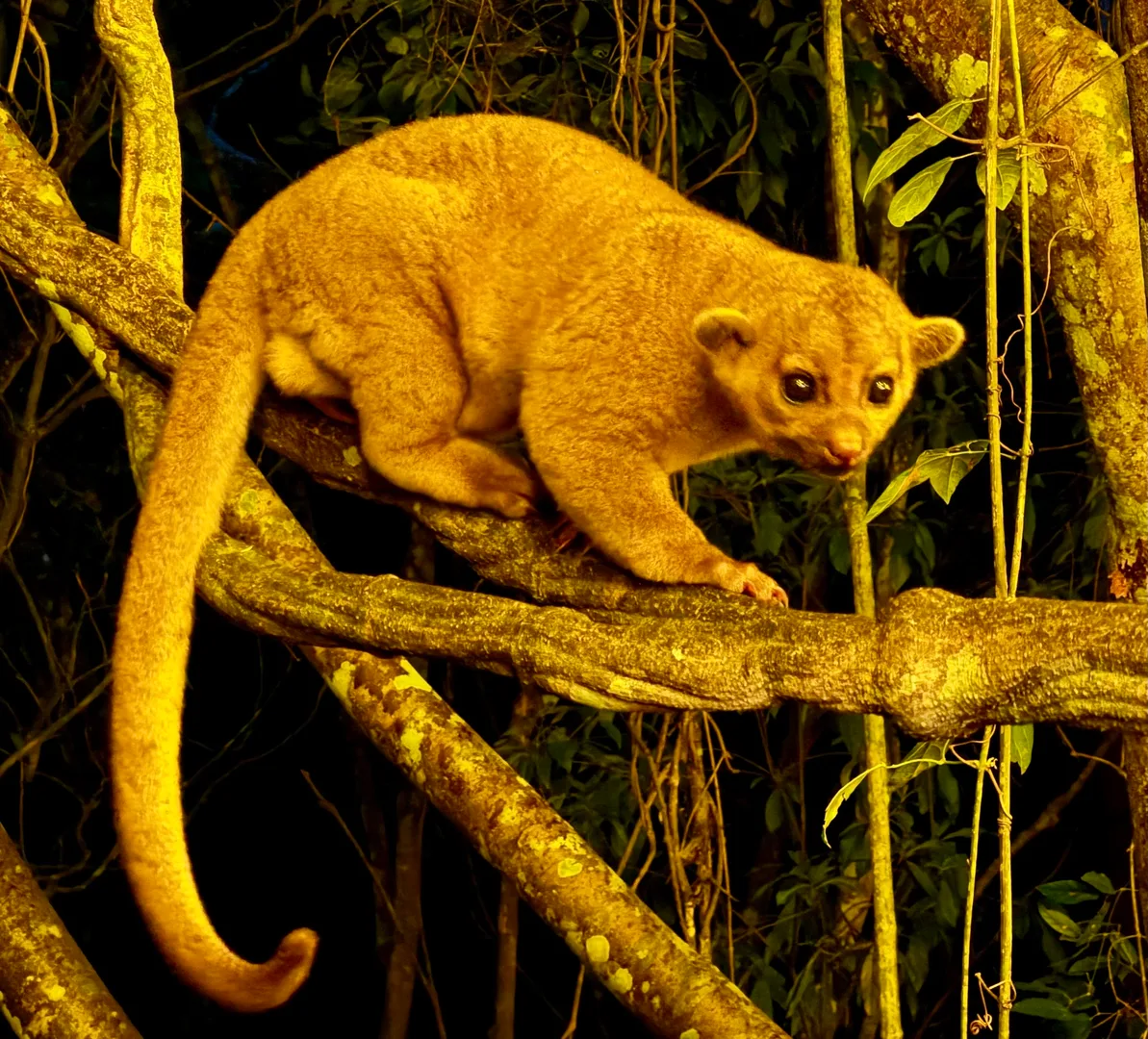
A kinkajou can rotate its body 180 degrees between its pelvis (hips) and its head. That extreme spinal flexibility helps it work along tree limbs to reach food at the tips of branches. By rotating its hind ankles, it can also climb down a trunk headfirst.
Tail-climb trick Kinkajous can hang by the tip of their strong tail, then turn their body in such a way that they can climb back up their own tail.
Kinkajous and binturongs are the only two carnivores with a prehensile tail, which is a tail that can grip.
Monkey Look, Raccoon Family
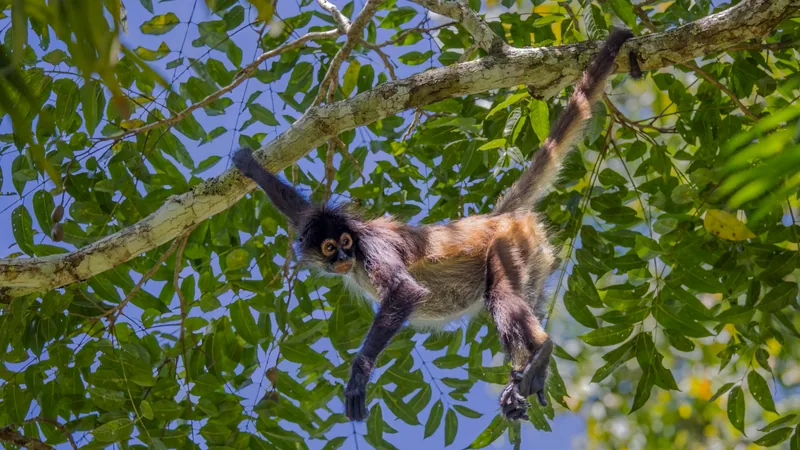
Kinkajous look a bit like monkeys and are often called primates. They are not. They are carnivores in the family Procyonidae, along with raccoons, coatis, ringtails and olingos.
A kinkajou weighs 1.4 to 4.5 kilograms and is 42 to 76 centimeters long, with a tail of 40 to 57 centimeters. It lives in forests from southern Mexico to southern Brazil. It is strictly nocturnal (active at night) and arboreal (tree-living). By day it sleeps in a hollow or a crook of a tree.
A Sweet Tooth With a Long Tongue
The name kinkajou comes from a word meaning “honey bear”, and kinkajous raid beehives. A 13 cm tongue can reach inside flowers and hives, and short, dense fur gives natural protection from bee stings. As a kinkajou drinks nectar, pollen sticks to its face and smears off at the next flower.
Most of its diet is fruit and nectar. Several studies suggest figs can make up as much as half of it. In feeding trials on captive kinkajous, food took 2.5 hours on average to pass through the gut, which is quick for an animal that eats mostly plants.
Long Nights, Long Lives
The San Diego Zoo gives an average lifespan of 20 years. AnAge, a database of animal lifespans, lists a maximum of 38.4 years in captivity. They screech and bark all around the forest, earning another nickname: la llorona, Spanish for “the crying woman”. At night they set out to forage, and before sunrise they are back at a safe resting spot.
Published
Traits
Intel
& FAQ
Guess
first
How big is a Kinkajou, really? Slide, lock in, and see what the sources say. Every answer is a figure from this page, quoted from where it came from.
Sources
- 01Helgen, Kays & Schipper (2016). Potos flavus. The IUCN Red List of Threatened Species 2016: e.T41679A45215631.
- 02Kinkajou. San Diego Zoo Wildlife Alliance.
- 03Potos flavus (kinkajou). Animal Diversity Web, University of Michigan.
- 04Lambert et al. (2014). Binturong (Arctictis binturong) and Kinkajou (Potos flavus) Digestive Strategy: Implications for Interpreting Frugivory in Carnivora and Primates. PLoS ONE.
- 05AnAge entry for Potos flavus. AnAge: The Animal Ageing and Longevity Database, Build 15, Human Ageing Genomic Resources.
What the sources say: 39 claims checked word for word against these sources →