A fossa grips a slim tree trunk in Madagascar with its forefeet and peers round it.
Field
notes
A Predator With an Identity Crisis
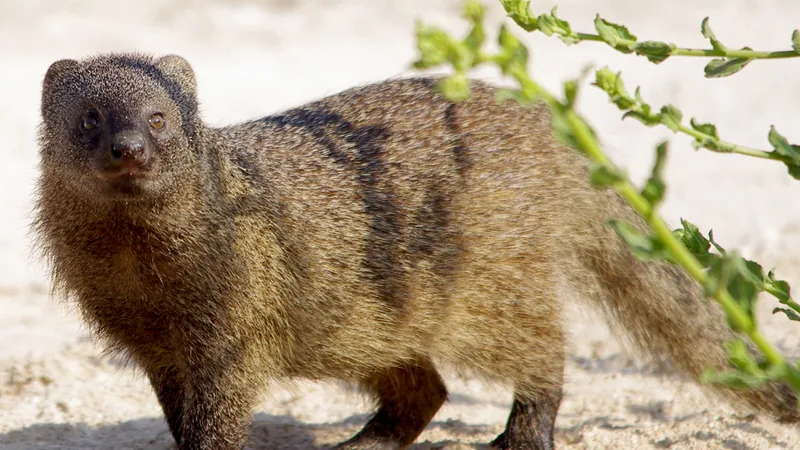
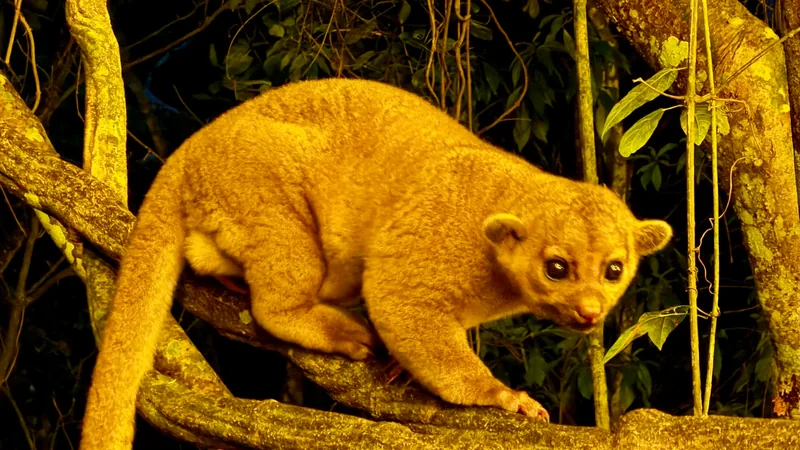
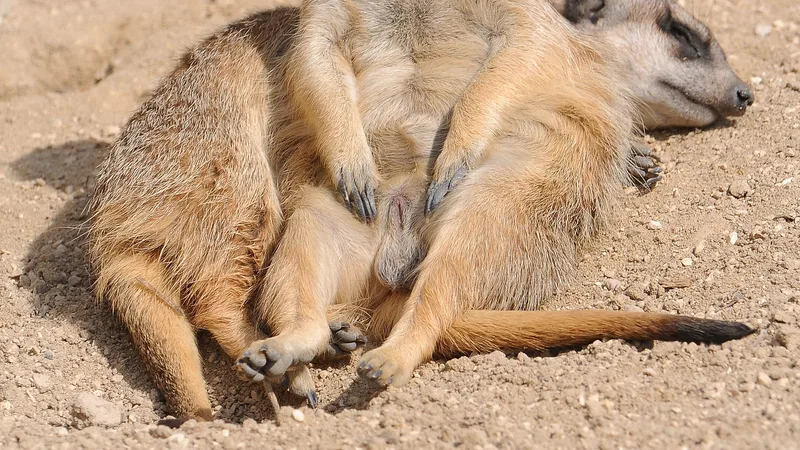
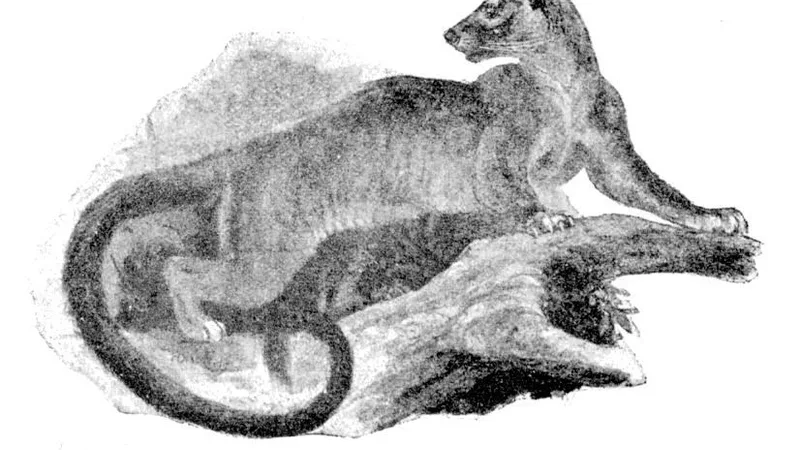
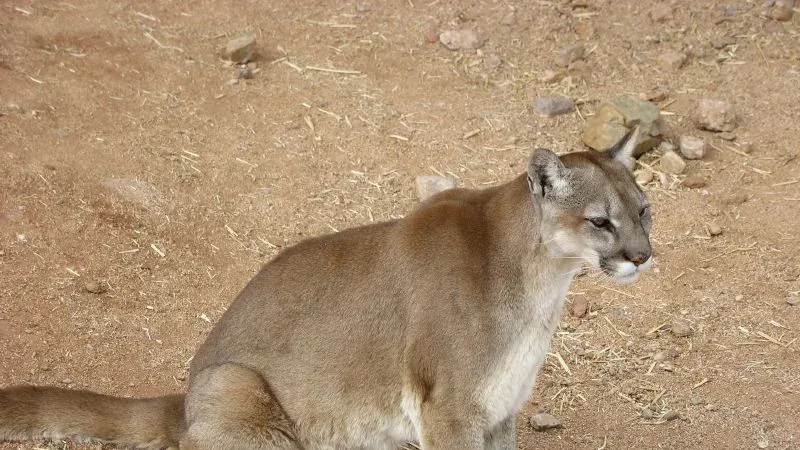
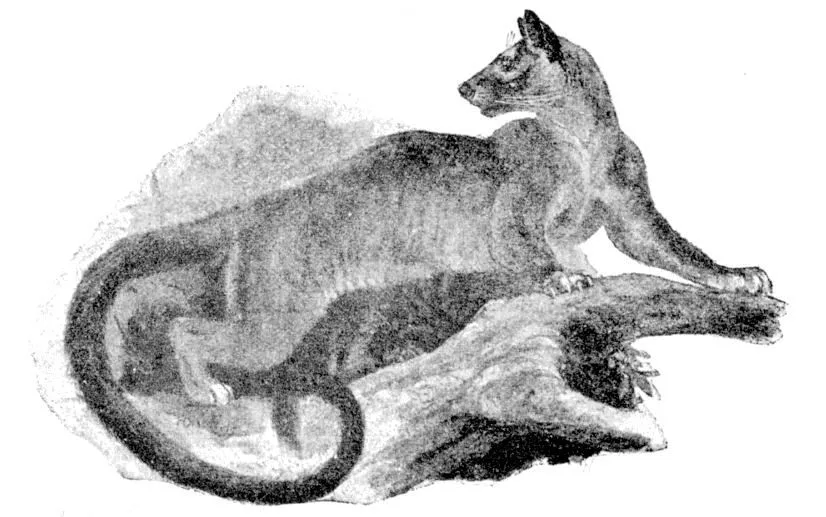
The fossa (Cryptoprocta ferox) has puzzled scientists since the 1830s. At first glance it looks like some kind of cat, monkey or weasel. It belongs to Eupleridae, a family known as the Malagasy carnivores, and it is closely related to the mongoose and civet, even though it shares some adaptive similarities with cats.
It is Madagascar’s largest carnivore and native only to that island, where it lives in forests from the coastal lowlands to mountains up to 2,000 meters. Males weigh 6.2 to 8.6 kilograms (13 to 19 pounds) and females 5.5 to 6.8 kilograms (12 to 15 pounds), with a body 70 to 80 centimeters (27 to 31 inches) long, not including the tail. The fossa’s tail makes up about half of its total length, and it runs 65 to 70 centimeters (26 to 28 inches) on its own. Its life span in the wild is unknown, but fossas have lived up to 20 years in zoos.
Headfirst Down the Trunk
The fossa moves with ease high up in the trees. Its tail helps it balance and jump from branch to branch, and retractable claws and flexible ankle joints help it climb down a tree headfirst. On the ground it is just as comfortable running flat-footed, like a bear, and it can travel up to 26 kilometers (16 miles) in a day.
Lemurs are its main food source, and the fossa is Madagascar’s only predator able to kill the largest lemur species. It also eats fish, birds, small mammals, reptiles and even wild pigs. It is an ambush hunter, catching prey with its forelimbs and claws and killing it quickly with a bite from its sharp teeth.
Three Hunters, One Kill Researchers once watched three male fossas hunt a 3-kilogram arboreal primate together for 45 minutes. The hunters changed roles during the hunt and then shared the prey. It was the first detailed observation of cooperative hunting in a solitary species.
A Passing Phase
In 2002, scientists reported the first discovery of transient, or temporary, masculinization in a female mammal, in the fossa. Young females in the study had an enlarged, spiny clitoris supported by a small bone, plus a pigmented secretion on their belly fur that, in adults, was found only on males. These features appeared to fade with age, and most of the adult females studied lacked them. Levels of three male hormones showed no significant difference between the masculinized young females and the unmasculinized adults, and none of the explanations proposed up to then for female masculinization in mammals fit the findings.
A Shrinking Kingdom
In Kirindy Forest, where fossas are thought to be unusually common, a three-year mark-recapture study from 1994 to 1996 estimated just 0.18 adults, or 0.26 individuals, per square kilometer. In 2005 the researchers suggested that none of Madagascar’s 46 protected areas at the time supported a viable population of fossas.
Fossas are also hunted for bushmeat. Village surveys from 2005 to 2011 around Makira and Masoala, Madagascar’s two largest protected areas, found an average of 31 fossas eaten a year at the four sites studied. The IUCN lists the fossa as Vulnerable. San Diego Zoo Wildlife Alliance puts the wild population at only about 2,500, a figure already in use in 2000.
Published Updated
Traits
Intel
& FAQ
Guess
first
How big is a Fossa, really? Slide, lock in, and see what the sources say. Every answer is a figure from this page, quoted from where it came from.
Sources
- 01Fossa. San Diego Zoo Wildlife Alliance.
- 02Cryptoprocta ferox (fossa). Animal Diversity Web, University of Michigan.
- 03Hawkins (2016). Cryptoprocta ferox. The IUCN Red List of Threatened Species 2016: e.T5760A45197189.
- 04Hawkins & Racey (2005). Low population density of a tropical forest carnivore, Cryptoprocta ferox: implications for protected area management. Oryx.
- 05Lührs & Dammhahn (2009). An unusual case of cooperative hunting in a solitary carnivore. Journal of Ethology.
- 06Hawkins et al. (2002). Transient Masculinization in the Fossa, Cryptoprocta ferox (Carnivora, Viverridae). Biology of Reproduction.
- 07Farris et al. (2015). Hunting, Exotic Carnivores, and Habitat Loss: Anthropogenic Effects on a Native Carnivore Community, Madagascar. PLOS ONE.
What the sources say: 60 claims checked word for word against these sources →