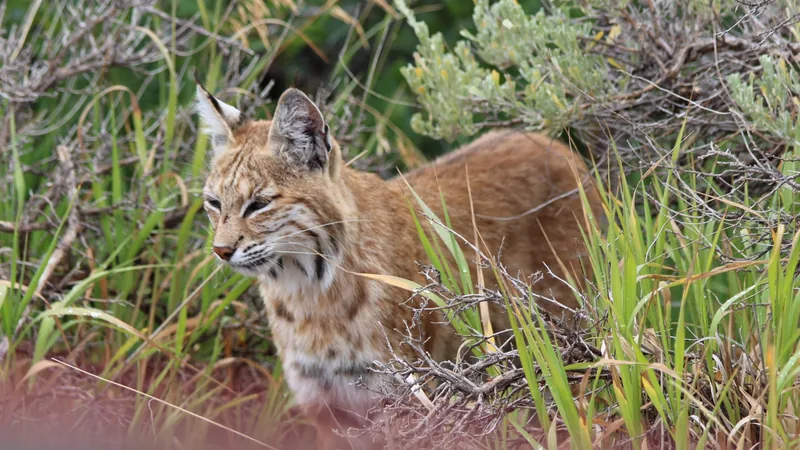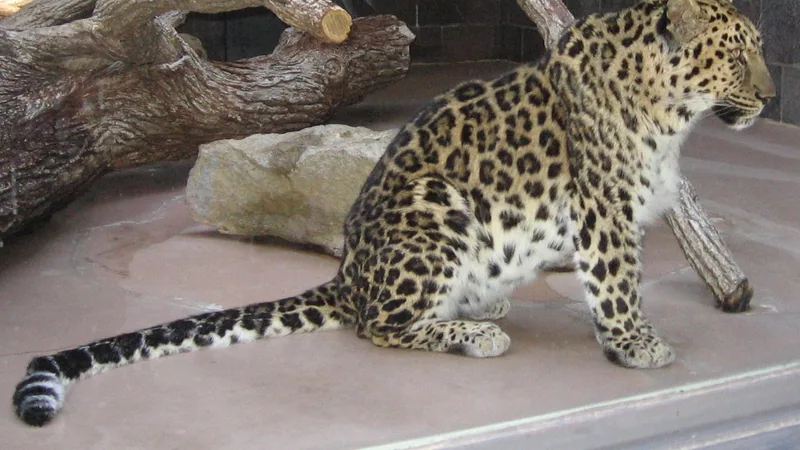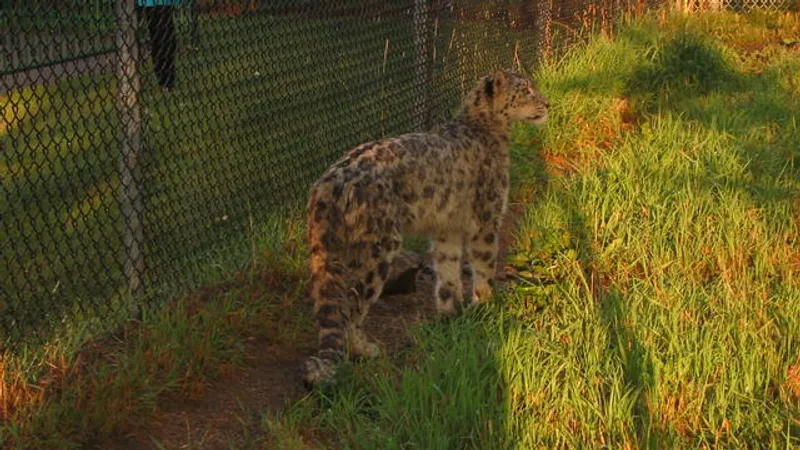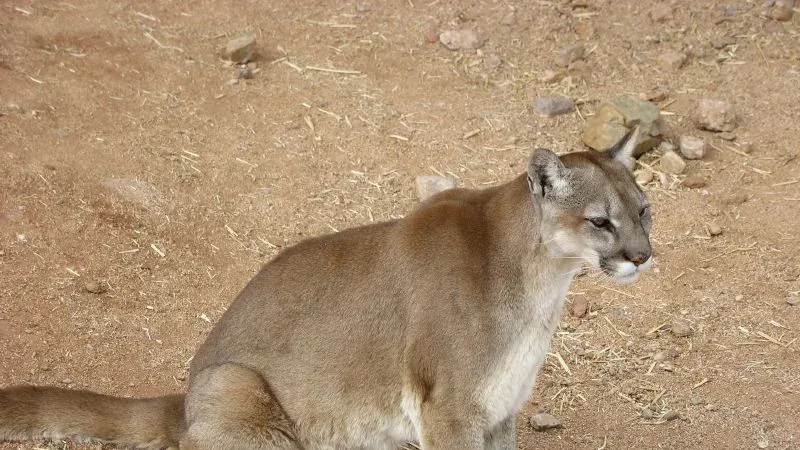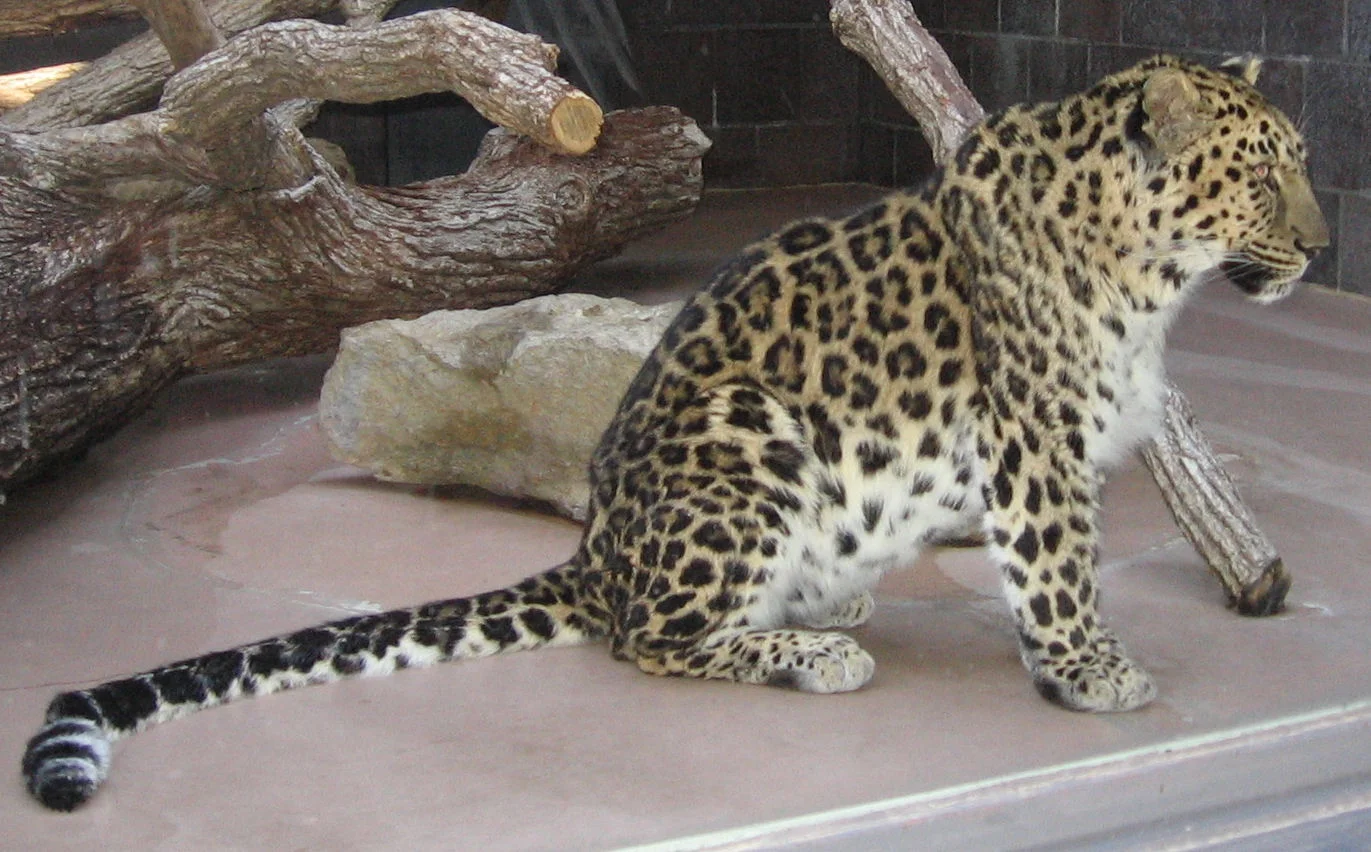
A wild Amur leopard (Panthera pardus orientalis) in winter woodland, from a camera trap in the Russian Far East
Field
notes
Built for Far Eastern Winters
The Amur Leopard (Panthera pardus orientalis) is the northernmost subspecies of leopard. It lives in temperate forests in the Russian Far East and northeast China, where winters bring extreme cold and deep snow. It is adapted to that cold with thick fur that grows up to 7.5 centimeters long in winter, and for camouflage in the snow its coat is paler than other leopard subspecies’ coats. Its rosettes, the flower-shaped spots on a leopard’s back, are more widely spaced and larger than those of other leopards, and conservation scientists identify individual leopards by their unique spot patterns in trail-camera photos. Amur leopards often wrap their long tails around themselves to keep warm.
Males generally weigh 32 to 48 kilograms but can reach 75; females are smaller, at 25 to 43 kilograms. A male’s body is 42 to 54 inches long, not counting the tail, and tails typically measure 32 to 35 inches. In the wild an Amur leopard lives 10 to 15 years, and it may reach 20 in captivity. Amur leopards live alone. A female’s territory covers about 15 to 40 square miles and a male’s about 100 to 150, and they mark their areas with urine, droppings and scratch marks.
An Ambush With a 20-Foot Leap
An Amur leopard normally hunts at night. Its prey includes roe deer, sika deer, wild boar, musk deer, hares and badgers. It stalks carefully, trying to get as close as possible before leaping, and it can leap 20 feet across and 10 feet high. Because it is active at night, its eyes reflect light in a way that produces a better image in low light, which lets it see about six times better than a person in the same light. It carries off and hides unfinished kills, sometimes up trees, so other predators do not take them. It is also a strong swimmer and climber.
One Patch Left Brookfield Zoo Chicago puts the Amur leopard’s entire estimated range at only 965 square miles. A 2016 study of leopards across their range found that this subspecies had lost as much as 98 percent of its historic range. What remained was a single habitat patch with the lowest human population density of any leopard subspecies (6 people per square kilometer).
The Rarest Big Cat in the World
The Amur leopard’s range shrank dramatically during the 20th century, mainly due to habitat loss and hunting, and as recently as the 1970s fewer than 30 were left in the wild. A census taken in 2017 suggested there were around 100. Poaching of leopards and their prey is a serious threat. Forest fires shrink their forest habitat and replace it with grassland that leopards prefer to avoid. Inbreeding, when close relatives breed, is a big concern after the population dwindled to a few dozen, and trail-camera photos have occasionally shown wild leopards with white paws and short tails that could reflect genetic mutation. Several Russian reserves are home to the largest population, including Land of the Leopard National Park, created in 2012, and China established the Northeast China Tiger and Leopard National Park in 2021. In zoos, a global breeding program held 217 Amur leopards across 88 institutions as of July 2018, a population that descends from 14 animals.
Published Updated
Traits
Intel
& FAQ
Guess
first
How big is a Amur Leopard, really? Slide, lock in, and see what the sources say. Every answer is a figure from this page, quoted from where it came from.
Sources
- 01Amur leopard facts. WildCats Conservation Alliance.
- 02Amur Leopard. Brookfield Zoo Chicago.
- 03Jacobson et al. (2016). Leopard (Panthera pardus) status, distribution, and the research efforts across its range. PeerJ.
- 04Leopard. San Diego Zoo Wildlife Alliance.
- 05Jackson & Nowell (2008). Panthera pardus ssp. orientalis. The IUCN Red List of Threatened Species 2008: e.T15957A5333757.
- 06Parchizadeh & Belant (2021). Brown bear and Persian leopard attacks on humans in Iran. PLOS ONE.
What the sources say: 59 claims checked word for word against these sources →