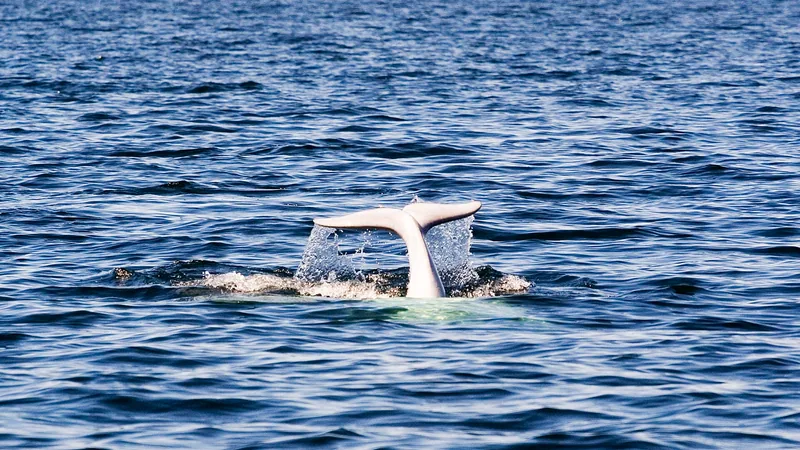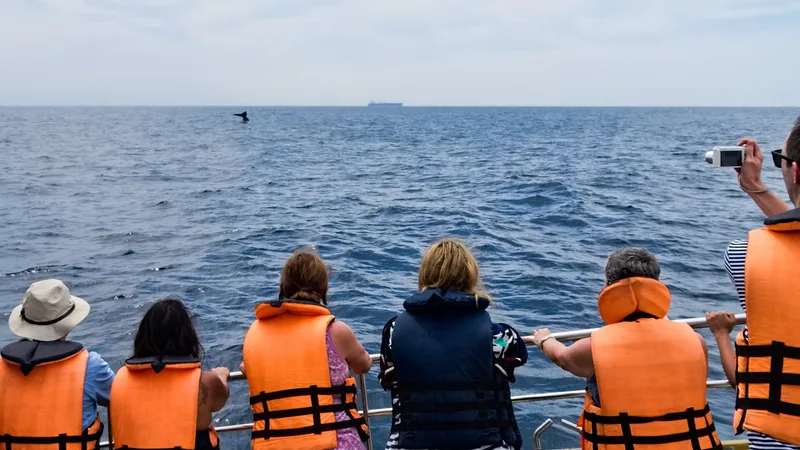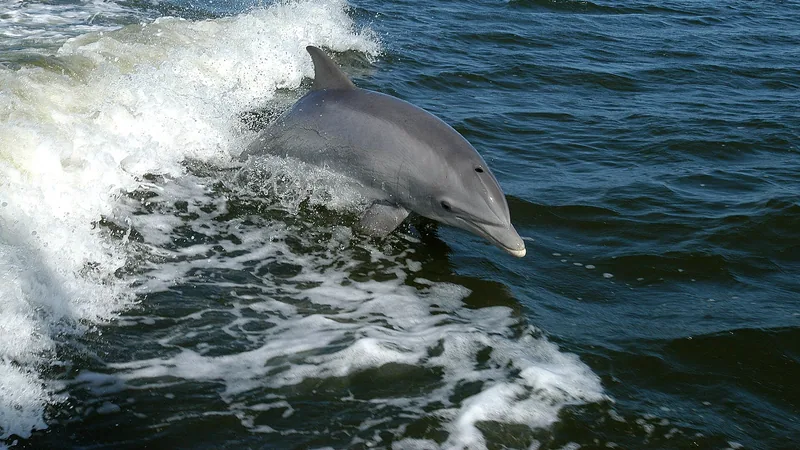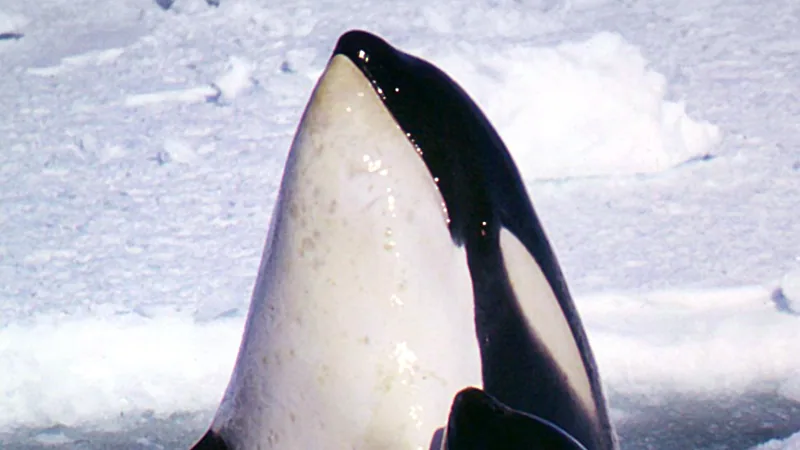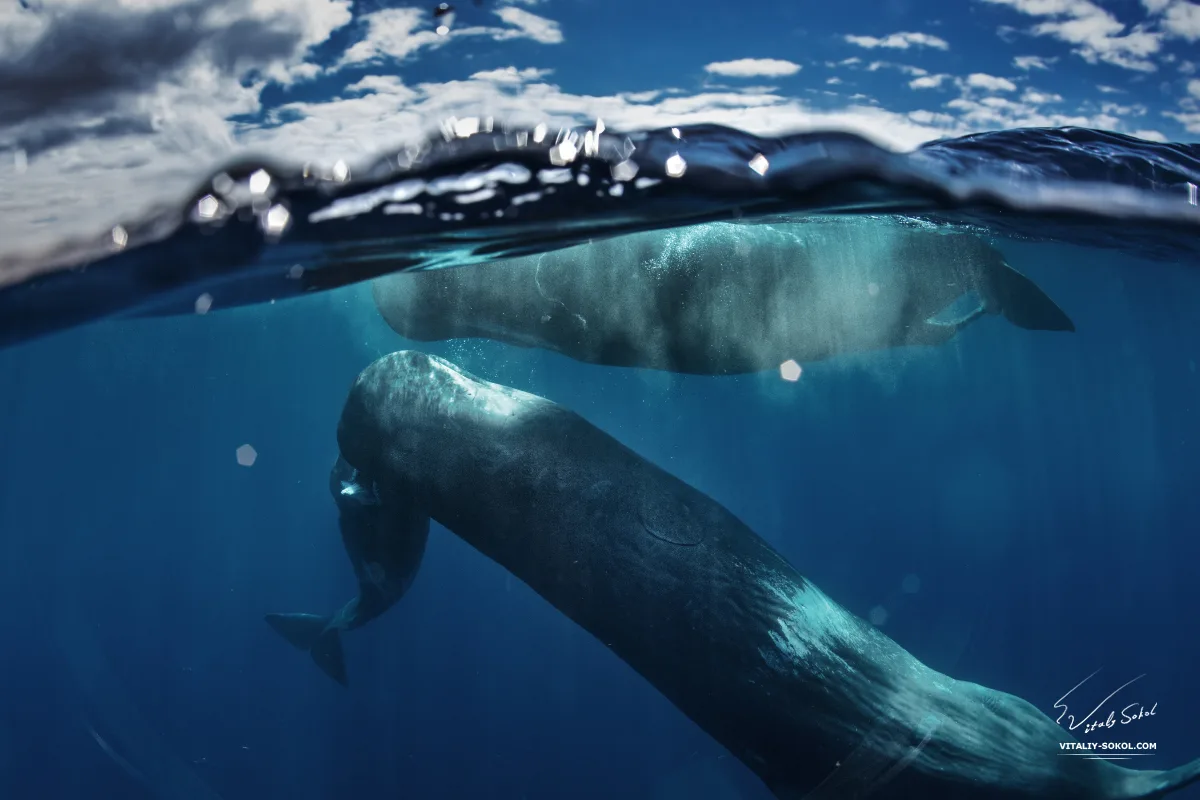
A pod of Spermwhales socializing
Field
notes
Biggest of the Toothed Whales
The sperm whale (Physeter macrocephalus) is the largest of the toothed whales, and it lives in deep oceans worldwide, from the equator to the edge of the polar pack ice. Adults weigh from 15 tons (females) to 45 tons (males), males grow to about 52 feet (16 meters), and a sperm whale can live up to 60 years. In old males, the blunt-fronted head can make up to a third of the body’s length.
It hunts on deep dives that routinely reach 2,000 feet (610 meters) and can last 45 minutes, then comes up to breathe and recover for several minutes before the next one. Its main food is medium-sized squid, around half a meter long and 1 to 3 kilograms each. Much bigger jumbo, giant and colossal squid have occasionally turned up in sperm whale stomachs, and sharks, skates and other deep-sea fish are on the menu too.
Hunting by Sound
It finds that food by echolocation, listening for the echoes of its own clicks. Those clicks come from a gigantic nose, and the spermaceti, an oil sac in the head, helps focus the sound. In recordings off Norway, clicks judged to be aimed straight at the recording array reached up to 236 decibels underwater, by far the loudest sounds recorded from any biological source.
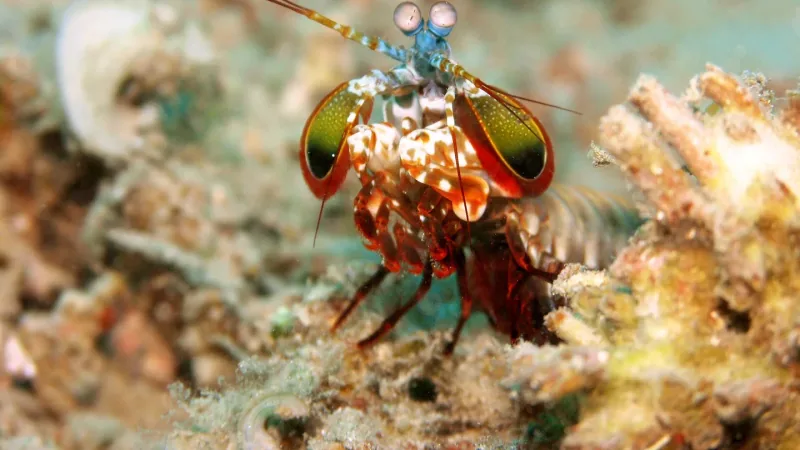
A hypothesis nicknamed the “biological big bang” proposed that the whale stuns its prey with those clicks. A 2016 study tested it with sound-and-motion tags on six whales.
Turned down for the kill About a body length from their prey, the tagged whales switched to a fast buzz of clicks and turned them down by 20 to 40 decibels, so the sound reaching the prey stayed far below what it takes to stun it.
The quiet, rapid clicks give the whale fast updates on where its prey is, and sudden jolts recorded near the end of most buzzes point to fast jaw movements, suction or both to catch it.
Its Place in the Ocean
Sperm whales are major nutrient recyclers in the world’s oceans, and the prey they get through each year has been compared to the combined catch of human fisheries. Commercial whaling from 1800 to the 1980s greatly reduced their numbers worldwide. The species is still recovering, and its numbers are likely increasing. The IUCN lists it as Vulnerable.
Published Updated
Traits
Intel
& FAQ
Guess
first
How big is a Sperm Whale, really? Slide, lock in, and see what the sources say. Every answer is a figure from this page, quoted from where it came from.
Sources
- 01Sperm Whale. NOAA Fisheries.
- 02Møhl et al. (2003). The monopulsed nature of sperm whale clicks. The Journal of the Acoustical Society of America.
- 03Fais et al. (2016). Sperm whale predator-prey interactions involve chasing and buzzing, but no acoustic stunning. Scientific Reports.
- 04Red List Status of Cetaceans. IUCN SSC Cetacean Specialist Group.
- 05Clarke (1978). Structure and Proportions of the Spermaceti Organ in the Sperm Whale. Journal of the Marine Biological Association of the United Kingdom.
What the sources say: 54 claims checked word for word against these sources →