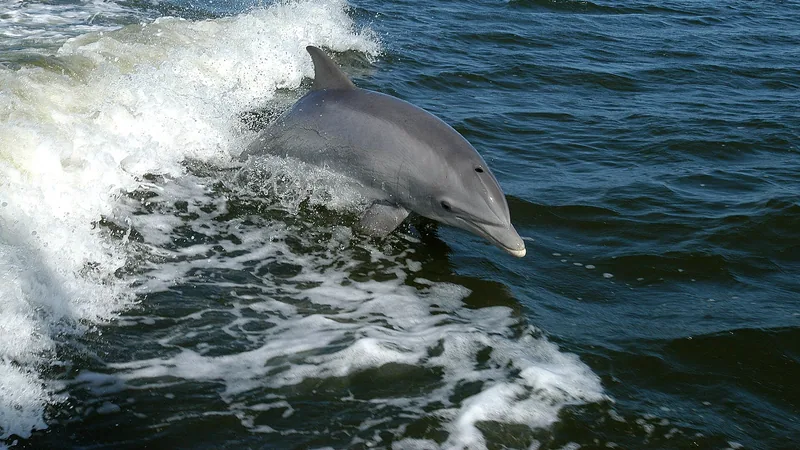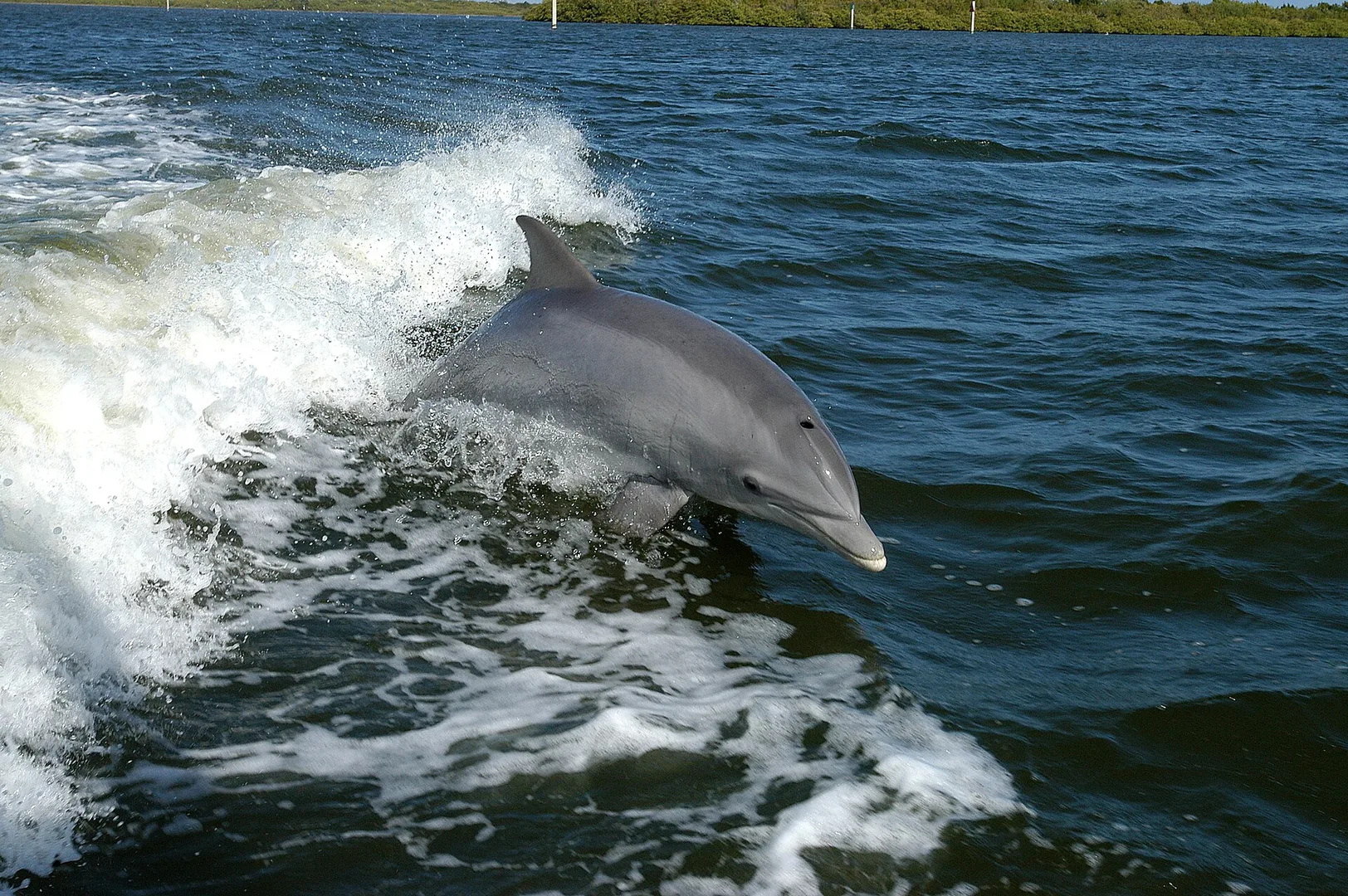
Bottlenose dolphin jumping at Pelican Point, Namibia
Field
notes
Long Lives and Shark Bites
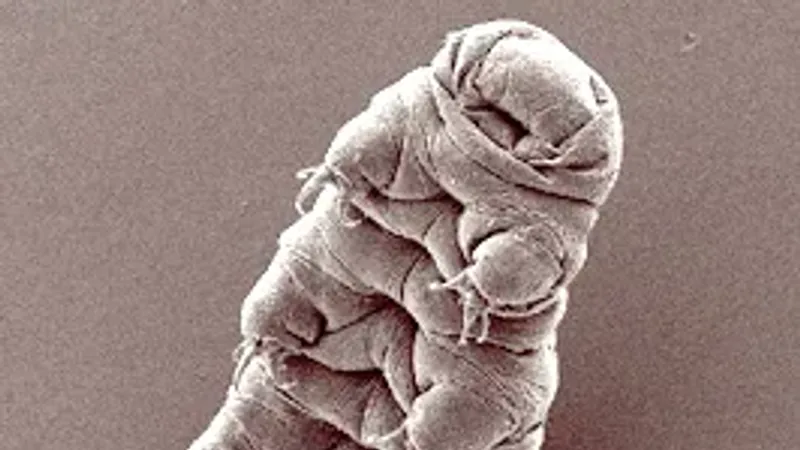
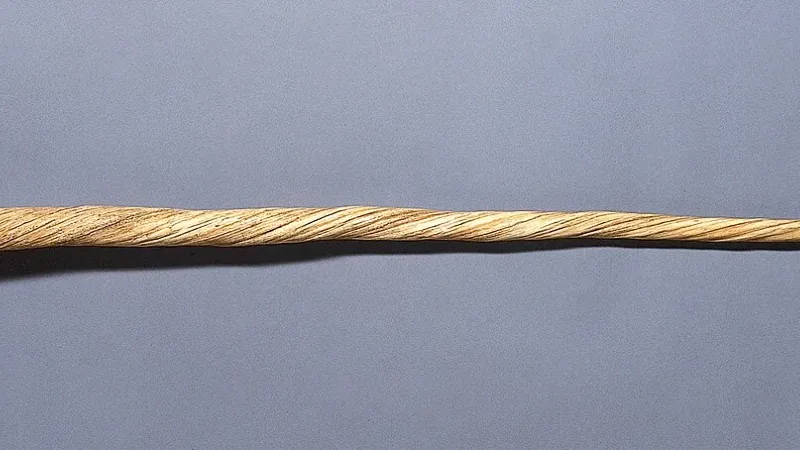
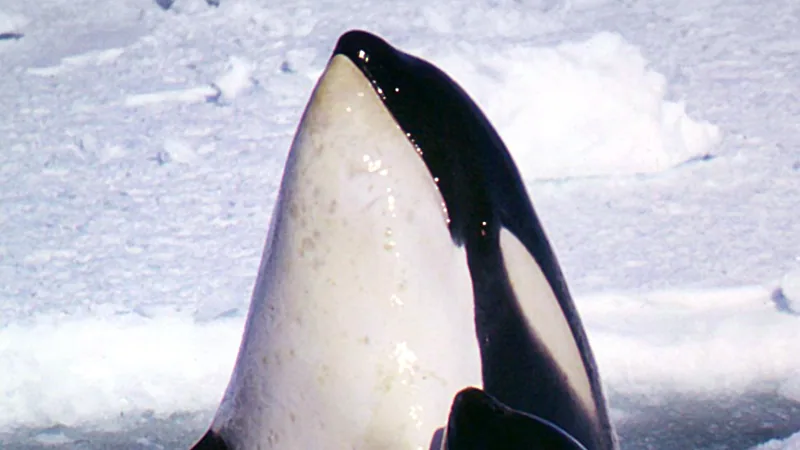
Common bottlenose dolphins (Tursiops truncatus) run 6 to 13 feet long and weigh 300 to 1,400 pounds, and adult males typically grow bigger than adult females. NOAA Fisheries says they can live at least 40 years, with some females outliving males at 60 years or more. Females as old as 45 have given birth, and NOAA lists bottlenose dolphins as likely to go through menopause, like humans, killer whales, belugas and narwhals.
Larger sharks, such as bull, tiger, and dusky sharks, are their most common predators, and these sharks prey on smaller dolphins, calves and females more than larger dolphins. It is not uncommon to see dolphins bearing shark bites, proof they survived an attack. Blubber may give some protection against predators.
A Whistle of Its Own
Each dolphin is believed to have its own signature whistle and to keep it for life, and calves can develop one as young as one month old. A 1998 study of four captive dolphins found that each one mainly made its own signature whistle when it was apart from the group, strong support for the idea that the whistle keeps the group together. Wild dolphins also answer another dolphin’s whistle by making the same whistle type, over distances of up to 580 meters, a sign of animals addressing each other individually.
It gets stranger. In a 2006 study, dolphins could still tell whose signature whistle they were hearing after researchers removed all its voice features. At the time, dolphins were the only animals other than humans shown to pass on identity information independent of the caller’s voice. Dolphins have also passed the mirror test for self-recognition, which had long seemed limited to humans and apes, and that discovery made elephants the next logical species to test.
Half its brain rests at a time. A dolphin has to surface to breathe, and it sleeps by resting one side of its brain while lowering its activity level. That lets it rest yet stay conscious enough to breathe and carry on basic survival behaviors.
Hunting by Sound
Bottlenose dolphins are found in temperate and tropical waters around the world, from harbors, bays and estuaries to far offshore in the open ocean. They feed on a variety of prey, such as fish, squid, and crustaceans like crabs and shrimp. They may work together to herd fish into groups and take turns charging through the school, or trap schools of fish against sandbars and seawalls for an easy meal. They do not chew: a dolphin grips a fish in its teeth and swallows it whole, head first, so the spines do not catch in its throat.
To find prey, they use passive listening, high-frequency echolocation, or both. Echolocation calls pass through the melon, a fatty lens for sound that focuses the outgoing calls, while a fatty pad in the lower jaw focuses sound to each ear. Dolphins use echolocation to navigate and to detect the shape of the seafloor, prey and the presence of predators.
Published Updated
Traits
Intel
& FAQ
Guess
first
How big is a Bottlenose Dolphin, really? Slide, lock in, and see what the sources say. Every answer is a figure from this page, quoted from where it came from.
Sources
- 01Common Bottlenose Dolphin. NOAA Fisheries.
- 02Tursiops truncatus (bottlenosed dolphin). Animal Diversity Web, University of Michigan.
- 03Wells, Natoli & Braulik (2019). Tursiops truncatus. The IUCN Red List of Threatened Species 2019: e.T22563A156932432.
- 04Janik & Slater (1998). Context-specific use suggests that bottlenose dolphin signature whistles are cohesion calls. Animal Behaviour.
- 05Janik, Sayigh & Wells (2006). Signature whistle shape conveys identity information to bottlenose dolphins. Proceedings of the National Academy of Sciences.
- 06Janik (2000). Whistle Matching in Wild Bottlenose Dolphins (Tursiops truncatus). Science.
- 07Plotnik, de Waal & Reiss (2006). Self-recognition in an Asian elephant. Proceedings of the National Academy of Sciences.
What the sources say: 39 claims checked word for word against these sources →