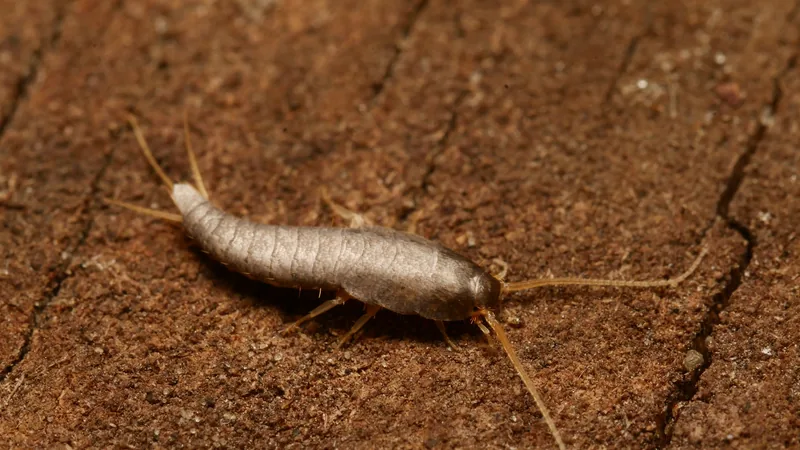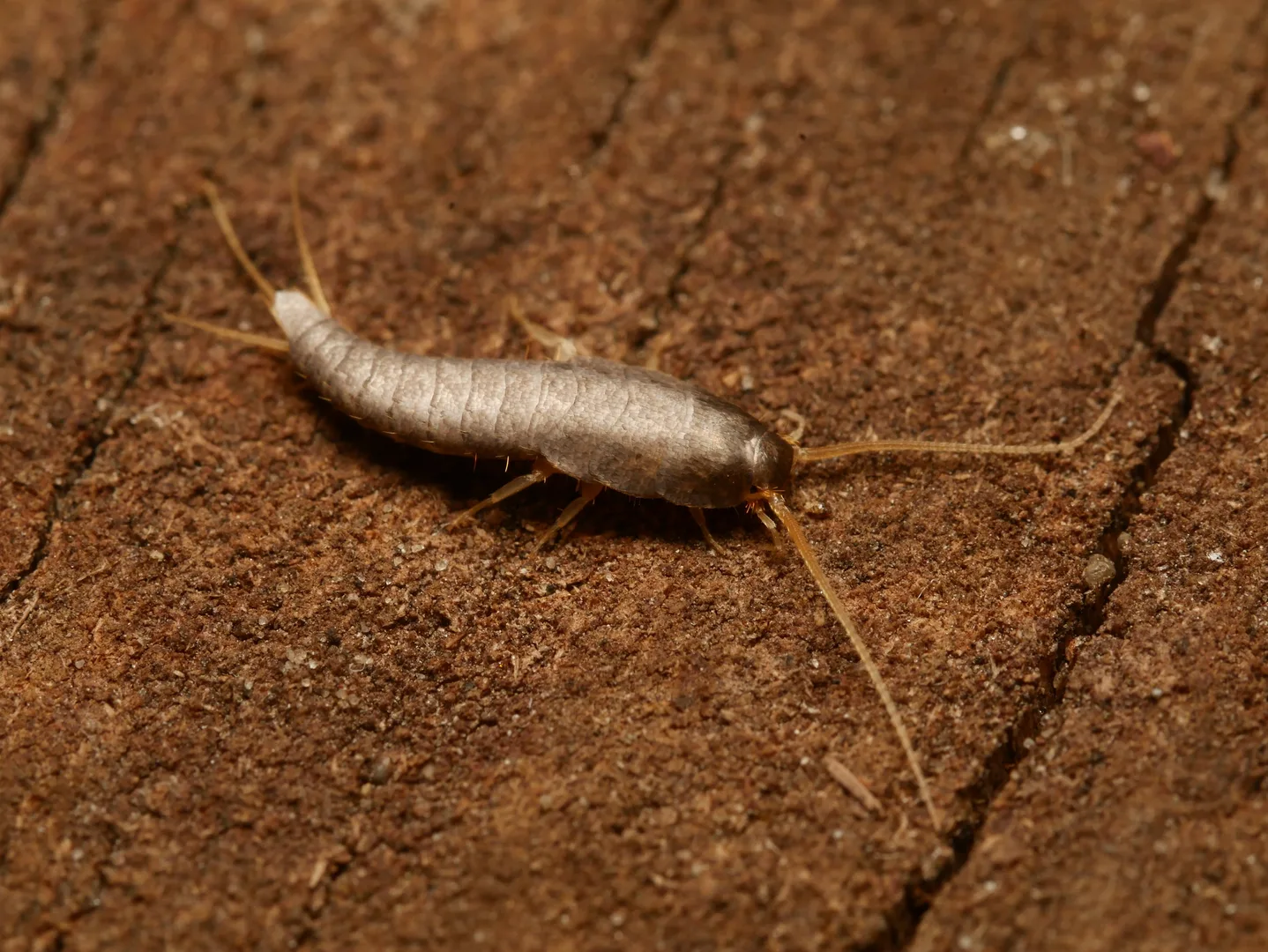
Silverfish (Lepisma saccharinum), Charlottenburg-Wilmersdorf, Berlin, Germany
Field
notes
An Insect That Keeps Molting
Silverfish can keep molting throughout their lives, even as adults. Molting means shedding the hard outer layer to grow. Young silverfish molt six to seven times until they reach adulthood. Silverfish have been recorded molting 25 to 66 times in a lifespan. In optimal conditions, a silverfish can keep molting over a lifespan of up to four years. Getting from egg to adult typically takes one year.
Scales, Bristles and a Silk Date
Lepisma saccharinum is silver or pearl-gray, with a body covered in tiny glistening scales. Adults are usually 7 to 10 millimetres long and can reach 11 millimetres. The body tapers to the back end, where three long appendages with bristles appear. If a silverfish loses one of these, or an antenna, it can regenerate it in two to four weeks. Most earlier works spell the name Lepisma saccharina; a recent naming change altered the ending.
Courtship starts with the male and female tapping each other with their antennae. The male then spins a Y-shaped silk structure and leaves a spermatophore, a packet of sperm, near it. The female finds the silk and takes the packet up. Eggs are laid in clutches of seven to twelve.
A Year Without a Meal Silverfish are capable of going for long periods of time, up to an entire year, without food.
The Paper Eater
Silverfish prefer starchy materials such as paper and wood. They like glazed paper best, which is paper coated with a starch-rich layer. They are reported to eat the glue behind wallpaper and in book bindings. On paper, they scratch the surface and leave bare or translucent patches, and they can eventually eat holes through it.
Silverfish are nocturnal and rarely seen in the daytime unless disturbed. When they are, they dart away quickly. They are usually found indoors in concealed spots such as bathrooms, attics and basements. Adults are frequently found in damp areas, and eggs are laid only in damp conditions.
From Mediterranean Forests to Your Bathroom
The species is found worldwide. A recent revision says it is probably native to the Mediterranean region. In southern and central Europe it lives both inside and outside houses. Outdoors it has been found under stones, rocks, bark and leaf litter, and sometimes in ant nests. In the rest of the world where it has been reported, it occurs as an obligate synanthropic species: there it has been recorded only in human buildings, not in the wild. Neither it nor any other Lepisma species has been found in natural habitats in America.
Published
Traits
Intel
& FAQ
Guess
first
How big is a Silverfish, really? Slide, lock in, and see what the sources say. Every answer is a figure from this page, quoted from where it came from.
Sources
- 01Phillips & Gillett-Kaufman (2018). Silverfish Lepisma saccharina Linnaeus (Insecta: Zygentoma: Lepismatidae). EDIS.
- 02Molero-Baltanás et al. (2024). Worldwide revision of synanthropic silverfish (Insecta: Zygentoma: Lepismatidae) combining morphological and molecular data. Journal of Insect Science.
- 03Pinniger. Pest Fact sheet No 8: Silverfish and grey silverfish. English Heritage.
What the sources say: 46 claims checked word for word against these sources →