Asian giant hornet (Vespa mandarinia) on a leafy branch
Field
notes
One hive, a few hours, thousands of bees
From August, the giant hornet switches from other prey to honeybees, and that bee-hunting peaks in September and October. One hornet can kill many bees but is unlikely to destroy a whole colony. When three or more hornets from the same nest hit one hive, they can enter a state called the “slaughter phase”. A group of 20 to 30 can kill 5,000 to 25,000 honeybees in a few hours.
The hornets want protein, so they keep the muscle-rich thorax, the bee’s middle section. They drop the head, abdomen and legs and carry the thorax home as a “meatball”. When the colony is decimated, the hornets move into the hive and eat the young bees there, making trips back to their nest for several days and up to two weeks.
The bees that cook back
The bee ball When a foraging hornet tries to enter a Japanese honeybee hive, more than 500 workers can form a ball around it and vibrate their flight muscles. The heat inside the ball rises to almost 47°C, which is lethal to the hornet but not to the honeybees.
European honeybees, the kind kept for honey, did not evolve alongside the hornet. They do not form the ball. Their guards fight hornets one by one in the air, and the much larger hornet always wins.
A giant with a one-year colony
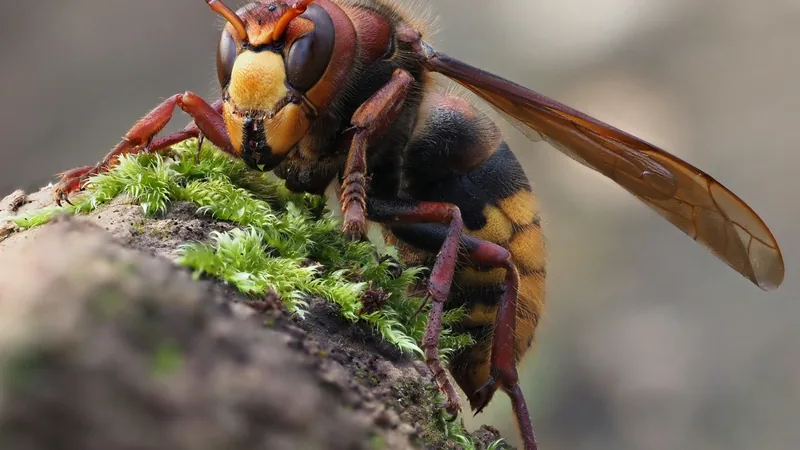
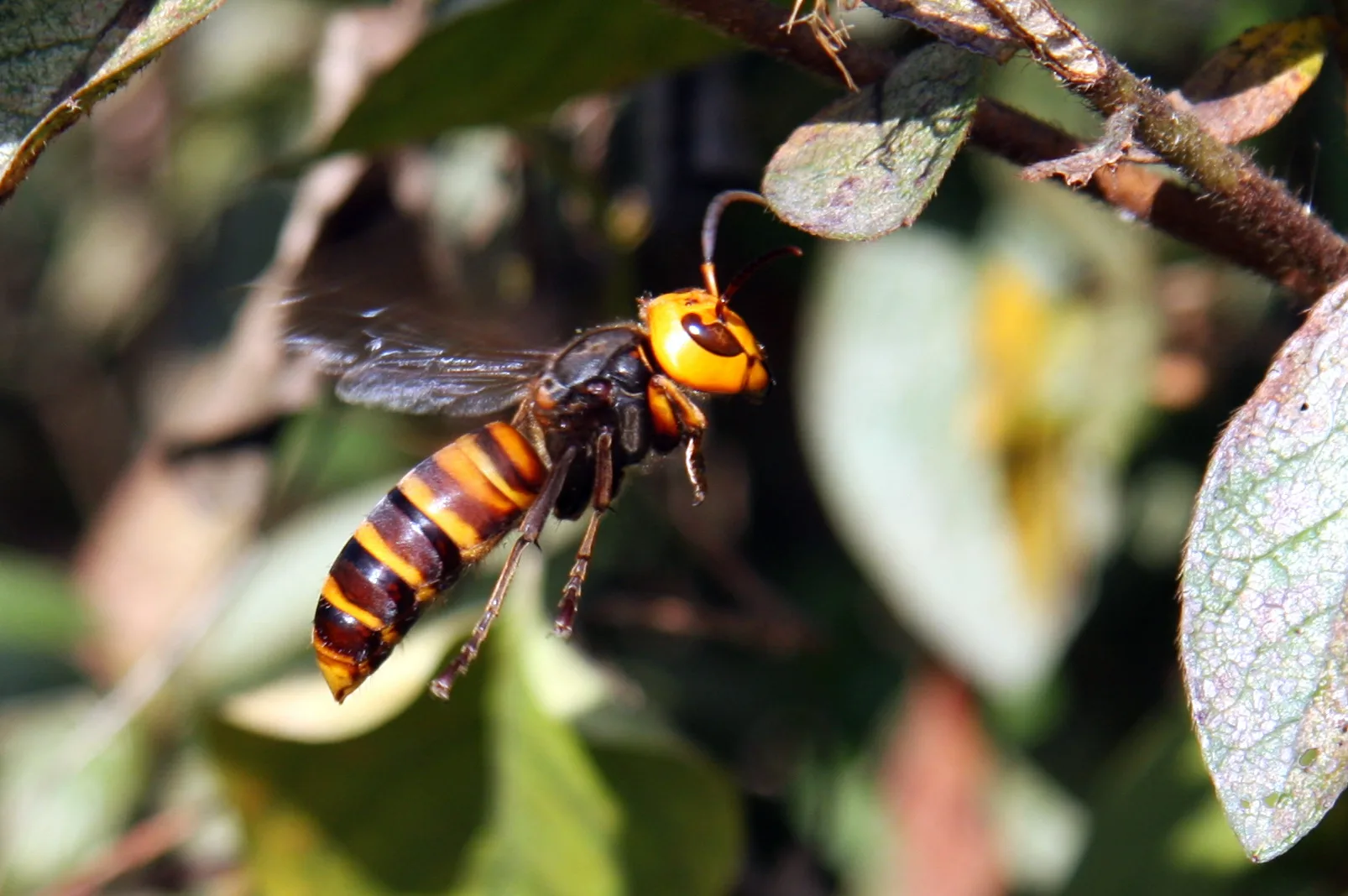
This is the world’s largest hornet, with a broad orange head. Workers can grow to 1.5 inches (3.8 cm) long, and queens can exceed 2 inches (5 cm), with a wingspan of 3 inches (7.6 cm). It lives naturally across Asia, including India, Nepal, Sri Lanka, Vietnam, Taiwan and Japan. Nests are typically underground, usually in abandoned rodent burrows in forests, often in association with pine roots. Of 1,756 nests examined in Japan, only three were above ground.
Its colonies last one year and die at the onset of winter. The only survivors are queens, which overwinter in underground cavities. Queens fight off the males, which leaves up to 65% of them unfertilized. Both fertilized and unfertilized queens overwinter, but only fertilized queens go on to found new nests the following year.
A sting that hurts, and a spray
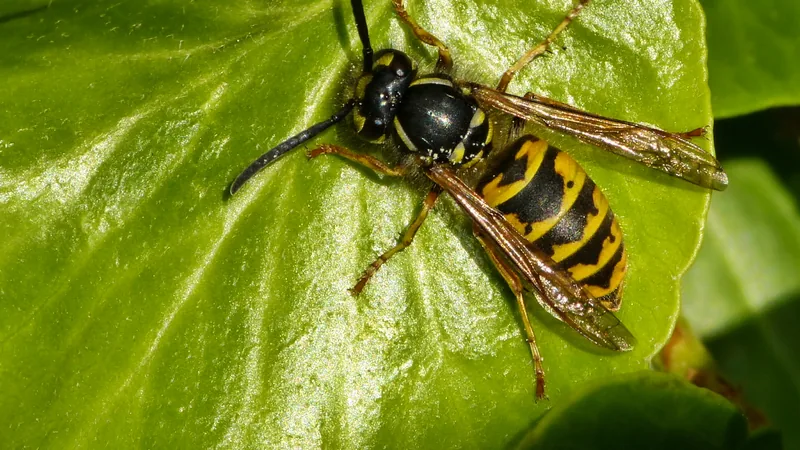
Giant hornet stings are extremely painful. Per unit of volume, the venom is less deadly than that of some North American wasps. Its LD50, the dose that kills half of the animals tested, is 4.0 mg/kg against the southern yellowjacket’s 3.5 mg/kg (lower means deadlier). But a giant hornet is big, so each sting delivers more venom.
Defending its nest, it can also spray venom from its stinger. One case report describes a 77-year-old man who was not stung, yet venom sprayed into his eye left him with iris atrophy and a mature cataract.
Published
Traits
Intel
& FAQ
Guess
first
How big is a Asian Giant Hornet, really? Slide, lock in, and see what the sources say. Every answer is a figure from this page, quoted from where it came from.
Sources
- 01Nuñez-Penichet et al. (2021). Geographic potential of the world’s largest hornet, Vespa mandarinia Smith (Hymenoptera: Vespidae), worldwide and particularly in North America. PeerJ.
- 02Northern Giant Hornets. Penn State Extension, 2025.
- 03Ugajin et al. (2012). Detection of Neural Activity in the Brains of Japanese Honeybee Workers during the Formation of a “Hot Defensive Bee Ball”. PLoS ONE.
- 04Hirano & Tanikawa (2020). Ocular Injury Caused by the Sprayed Venom of the Asian Giant Hornet (Vespa mandarinia). Case Reports in Ophthalmology.
- 05Barth, Kearns & Wason (2013). Vespa mandarinia. Animal Diversity Web, University of Michigan.
- 06Hornets. Washington State Department of Agriculture.
What the sources say: 46 claims checked word for word against these sources →