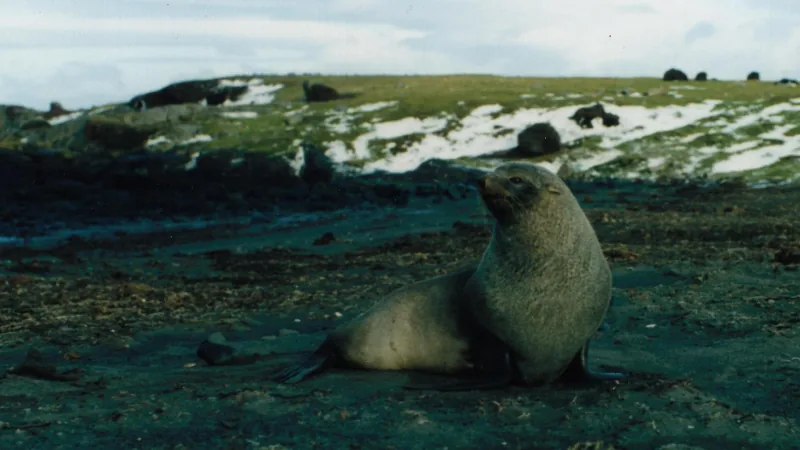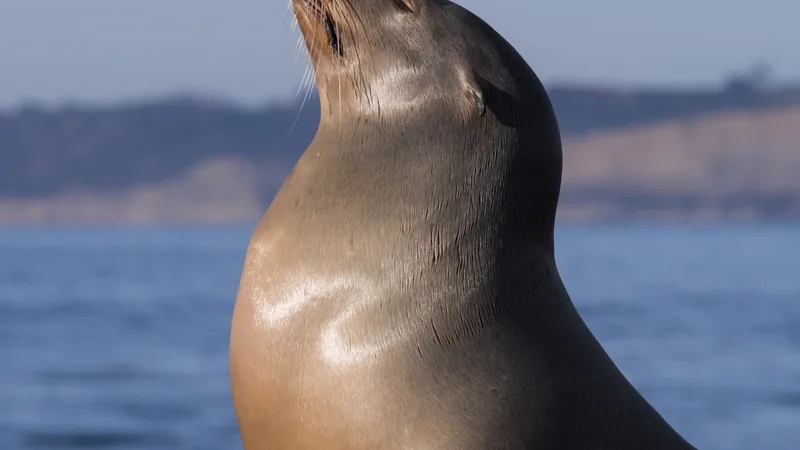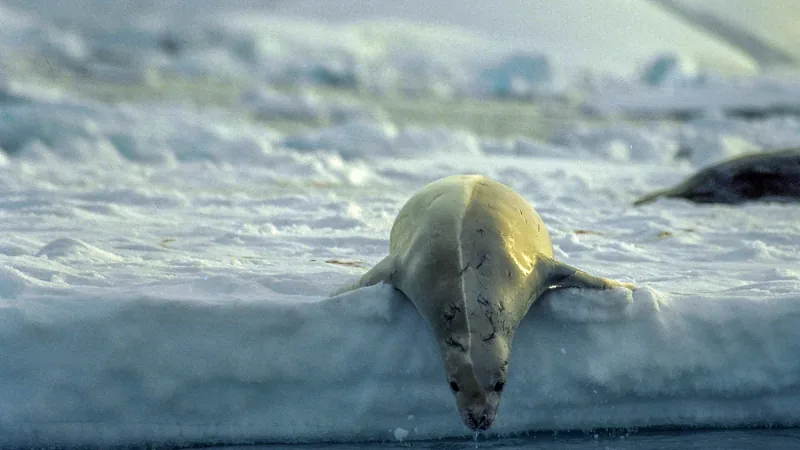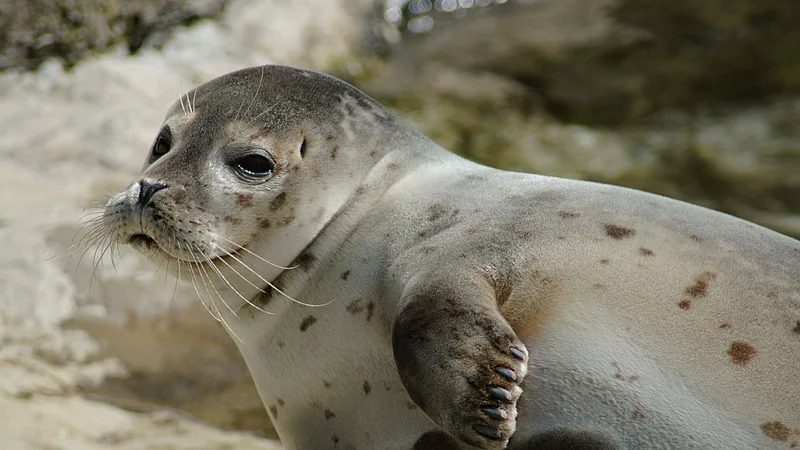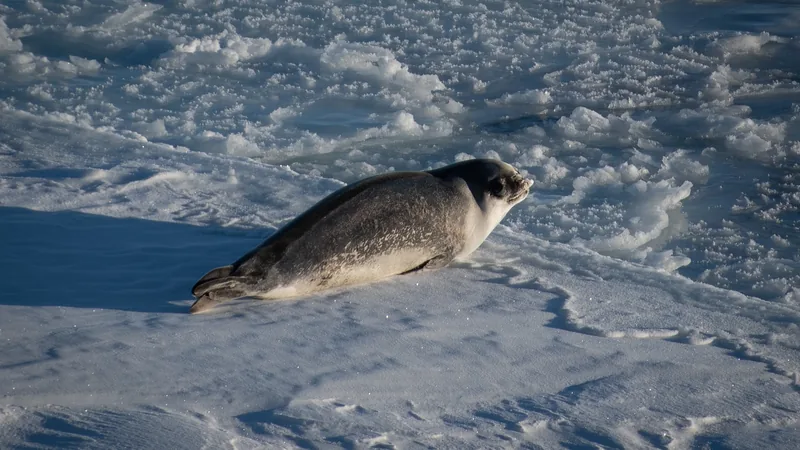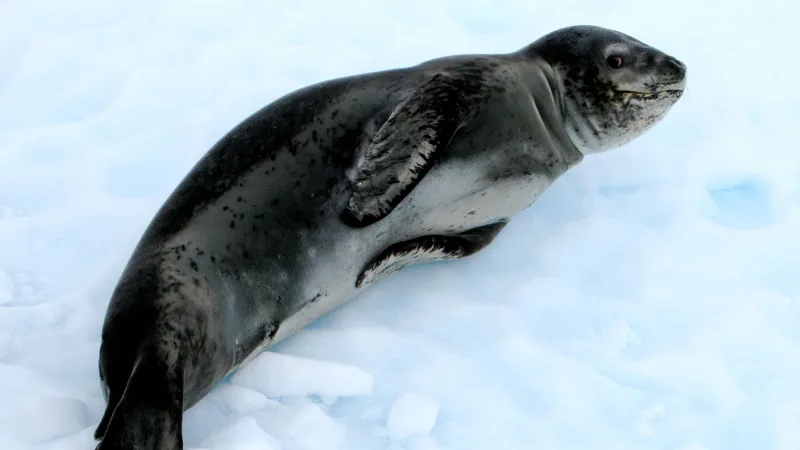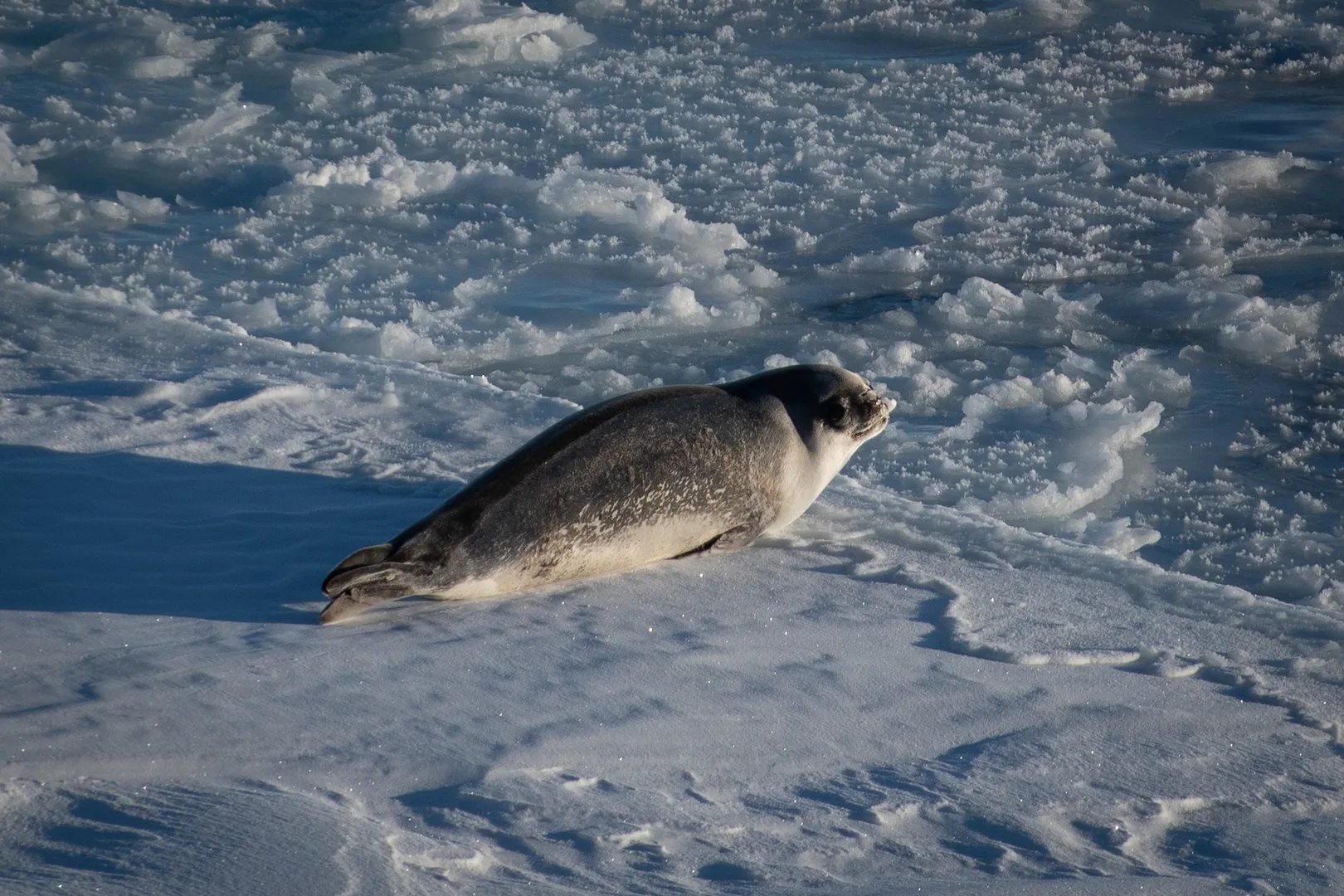
Ross seal hauled out on the pack ice
Field
notes
Eyes and Inner Ears
The Ross Seal (Ommatophoca rossii) has disproportionately large eyes, 70 millimetres in diameter, which make it easy to distinguish from closely related seals. They may be an adaptation for hunting in dimly lit depths. CT scans of specimens show changes inside the head too: compared with other true seals, the semicircular canals of the inner ear are narrower and a brain structure called the paraflocculus is smaller, independent of body size. Whales and dolphins show parallel changes, a case of convergent evolution toward aquatic life that stops short of other traits: the Ross seal lacks their reduced eye muscles and shortened neck.
Rare and Hard to Find
Ross seals are the least numerous and least studied of the seals that breed on Antarctic pack ice, and they tend to be solitary. Range maps that show them throughout the Weddell Sea are at odds with earlier surveys there. The evidence suggests they are absent from the Weddell Sea in winter, and from its inner reaches past about 73 degrees south in summer and early autumn, when they occur in number in the eastern Weddell Sea, east of about 30 degrees west.
A Rarely Used Protection Since the Antarctic Treaty system first provided for Specially Protected Species in 1964, only the fur seals and the Ross seal have been listed, and the fur seals were de-listed in 2006. The tool has therefore remained little used. Even estimating the Ross seal’s population status has proved extremely difficult.
Hundreds of Metres Down
Unlike crabeater and Weddell seals, which remain in the ice year round, Ross seals spend most of their life cycle foraging in the open ocean. Five seals tagged in the eastern Weddell Sea mostly dived 100 to 200 metres deep and often beyond 300, usually for 5 to 12 minutes; earlier studies recorded occasional dives close to 800 metres. From March to July the seals dived deeper at twilight and shallowest at night, and their diving effort was highest at night. Why is unknown: the authors suggest the seals may be reaching their aerobic dive limit, which would cap how long each dive lasts. They eat squid and fish, and occasionally crustaceans and bottom-dwelling invertebrates. In the open ocean they take myctophid fish (lanternfish) and cephalopods, and over the continental shelf during their annual moult, Antarctic silverfish.
Size and Breeding
Ross seals are slightly smaller on average than leopard and crabeater seals, reaching about 3 metres and 200 kilograms, and females average larger than males. They have a thick neck, a slender body and the shortest hair and whiskers of any true seal. Pups have been sighted from 2 October to 22 November. Three tracked females that entered the pack ice in the breeding season stayed hauled out for five to seven days at a stretch, broken by one- to three-hour spells in the water. In the wild, Ross seals are believed to live up to 21 years.
Published Updated
Traits
Intel
& FAQ
Guess
first
How big is a Ross Seal, really? Slide, lock in, and see what the sources say. Every answer is a figure from this page, quoted from where it came from.
Sources
- 01Ommatophoca rossii. Animal Diversity Web, University of Michigan.
- 02Ross seal. Australian Antarctic Division, 2018.
- 03AnAge entry for Ommatophoca rossii. AnAge: The Animal Ageing and Longevity Database, Human Ageing Genomic Resources.
- 04Wege, Bornemann & Bester (2023). The nightlife of a Ross seal: diving and haul-out behaviour from the eastern Weddell Sea. Antarctic Science.
- 05Bester et al. (2019). Ross seal distribution in the Weddell Sea: fact and fallacy. Polar Biology.
- 06Loza et al. (2017). Sensory anatomy of the most aquatic of carnivorans: the Antarctic Ross seal, and convergences with other mammals. Biology Letters.
- 07Southwell et al. (2008). Estimating population status under conditions of uncertainty: the Ross seal in East Antarctica. Antarctic Science.
- 08Hughes et al. (2024). The Antarctic Specially Protected Species conservation management tool: Development, use and future outlook. Biological Conservation.
- 09Hückstädt (2026). Ommatophoca rossii. The IUCN Red List of Threatened Species 2026: e.T15269A95971509.
What the sources say: 43 claims checked word for word against these sources →