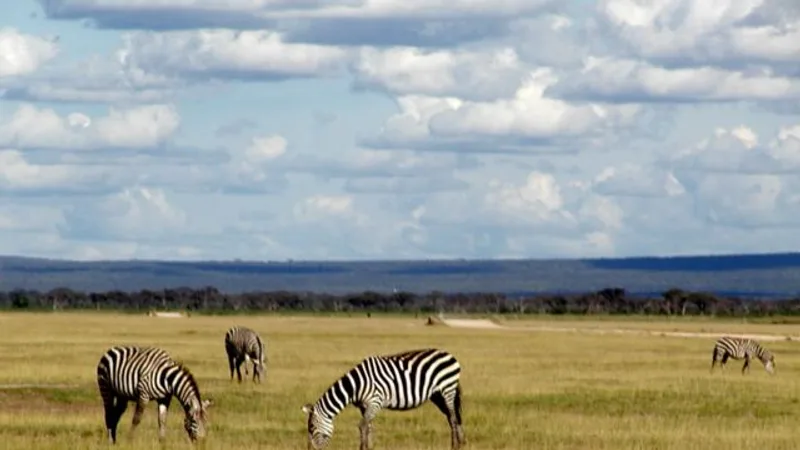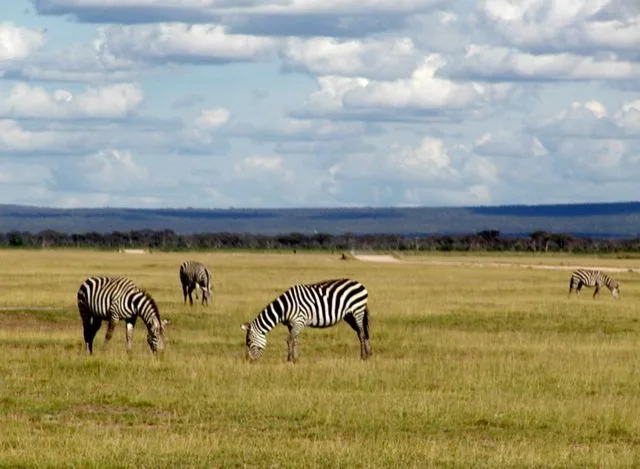
Plains zebra walking at Klein Namutoni with a storm and rainbow in the background, Etosha National Park.
Field
notes
How Big, and How Long
The plains zebra (Equus quagga) stands up to 59 inches (1.5 meters) at the shoulder and weighs 500 to 800 pounds (227 to 363 kilograms) as an adult. A newborn foal weighs about 32 kilograms, and moments after birth it can stand, walk and suckle. A plains zebra typically lives 15 to 20 years; the oldest verified individual, born wild and later kept in captivity, lived to about 38.
The Riddle of the Stripes
Zebra stripes have interested scientists for over a century. One of the main theories is that they protect against predators, for example by making it hard to single out one zebra from a herd. A 2014 study was the first to test the main explanations systematically, matching stripe patterns across zebra, horse and ass species and subspecies against conditions in their ranges. It found no consistent link between striping and camouflage, predator avoidance, cooling, or social interaction. What it did find was a link to biting flies: most measures of striping tracked how much tabanid flies, such as horseflies, were likely to pester the animals in each range, and belly stripe numbers tracked where tsetse flies live.
A pattern no two zebras share Every plains zebra’s stripes are as individual as a fingerprint. A zebra foal learns its own mother’s stripe pattern from birth to stay close to her, and it needs to: mares usually will not adopt another mare’s foal, so no one else would feed it.
The Pioneer Grazer
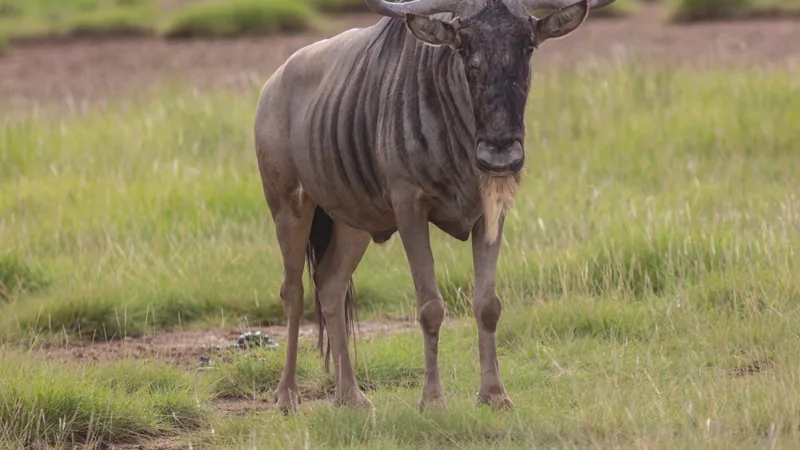
Plains zebras eat mostly short grasses, but they are not picky eaters. They sometimes eat leaves and young trees too, and as a result can range more widely than many other species, often venturing into woodlands. They are considered “pioneer grazers”: plains zebras are often the first grazers to move into a well-vegetated area, and wildebeest and gazelle tend to move in only after zebras have trampled and shortened the grass. Native to more than 15 African countries, from the Serengeti-Mara plains of Kenya and Tanzania to Namibia, they usually live in treeless grasslands and savanna woodlands and are absent from deserts and rainforests. Every year, hundreds of thousands of them set off from Tanzania’s Serengeti plains north to Kenya, on a trek of around 2,900 kilometers (1,800 miles) to find food and water.
Staying Off the Menu
Lions, spotted hyenas, African wild dogs, cheetahs, leopards and Nile crocodiles hunt plains zebras. Plains zebras live in family groups of one stallion, one or more mares and their young, and families sometimes band together into large herds. Big numbers mean more eyes watching for predators, and members of a group take turns standing watch. In Zimbabwe’s Hwange National Park, researchers found that plains zebras graze on open grassland near waterholes by day, where they can easily spot predators, then move a few kilometers away at sunset, when lions become active. That move sharply cuts their risk of meeting lions at night. Members of a group may try to bite or kick attacking predators to protect foals and herd mates, but a zebra’s most reliable defense is to flee.
Published Updated
Traits
Intel
& FAQ
Guess
first
How big is a Plains Zebra, really? Slide, lock in, and see what the sources say. Every answer is a figure from this page, quoted from where it came from.
Sources
- 01King & Moehlman (2016). Equus quagga. The IUCN Red List of Threatened Species 2016: e.T41013A45172424.
- 02Caro et al. (2014). The function of zebra stripes. Nature Communications.
- 03Courbin et al. (2018). Zebra diel migrations reduce encounter risk with lions at night. Journal of Animal Ecology.
- 04Equus burchellii. Animal Diversity Web, University of Michigan.
- 05Zebra. San Diego Zoo Wildlife Alliance.
- 06Plains Zebra. The Maryland Zoo in Baltimore.
- 07Equus quagga. AnAge: The Animal Ageing and Longevity Database.
- 08Zebra. African Wildlife Foundation.
What the sources say: 60 claims checked word for word against these sources →