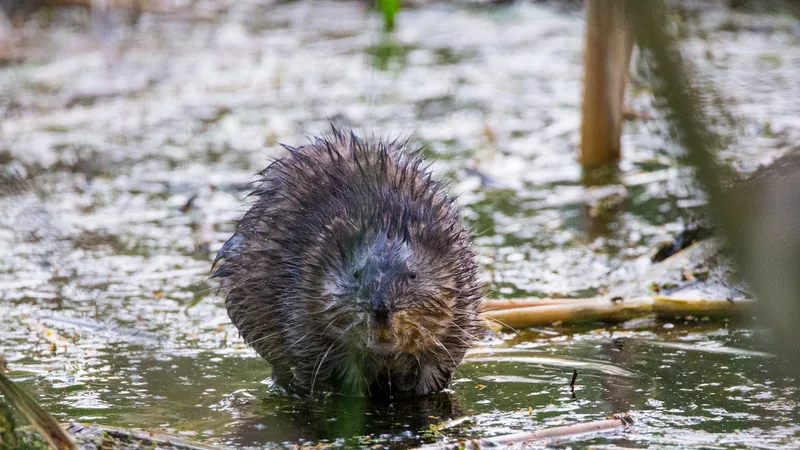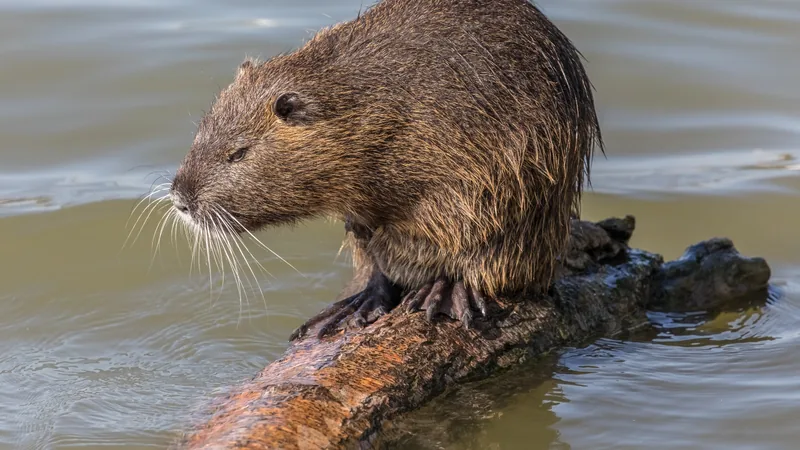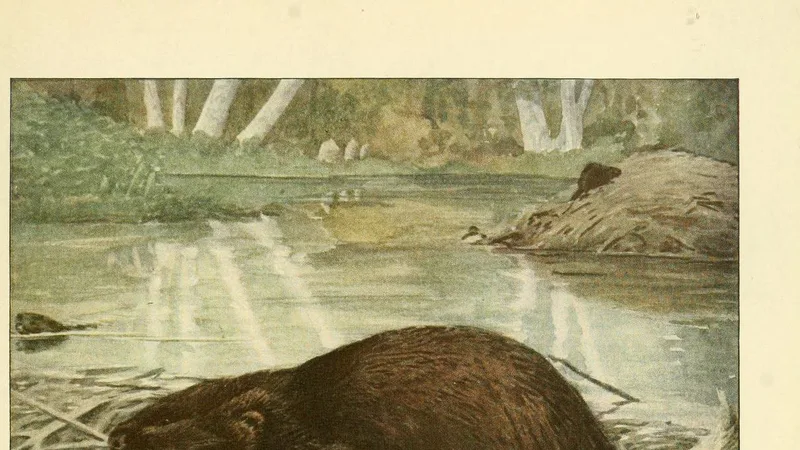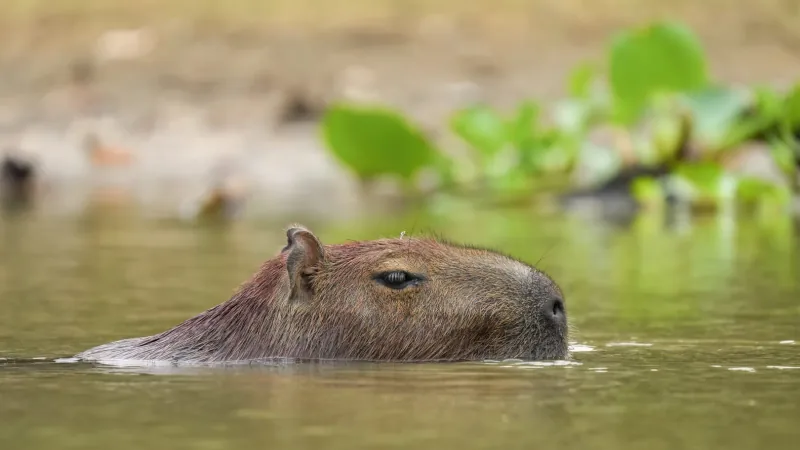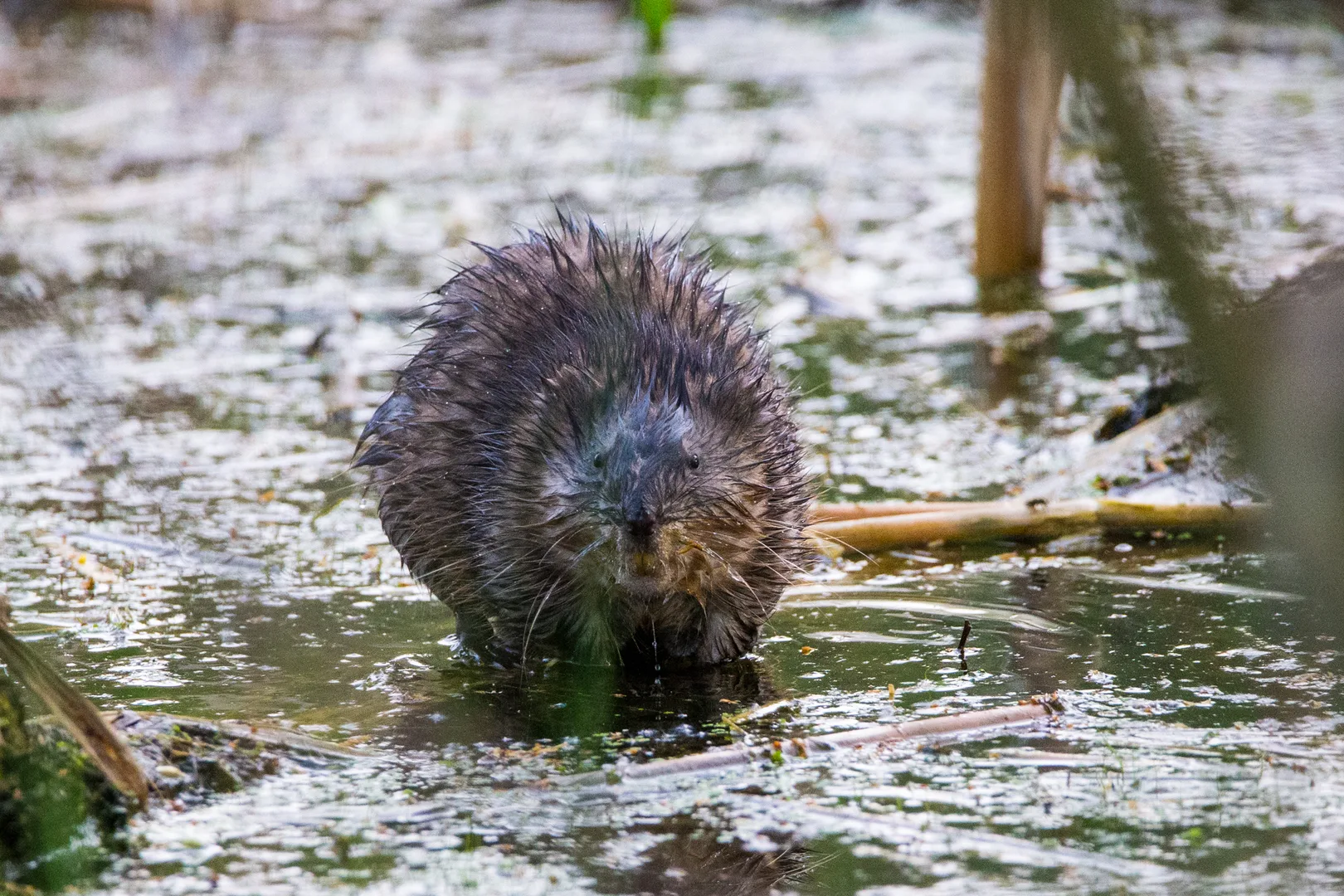
Muskrat in the Westricher Moorniederung nature reserve, Rhineland-Palatinate, Germany
Field
notes
Cold feet on purpose
The muskrat, Ondatra zibethicus, is a rodent that lives in marshes, ponds and lakes, and it keeps its feet and tail cooler than its body core. The trick is called regional heterothermia: the muskrat regulates the flow of blood to its feet and tail. Its dense fur traps air underneath for insulation and buoyancy. Its ears are almost invisible under the fur, and its back feet are slightly webbed for swimming. The flat, scaly tail is nine and a half inches long.
Diving response In a lab study, electrically stimulating the nerve that serves the lining of a muskrat’s nose dropped its heart rate from about 264 to 121 beats per minute and briefly stopped its breathing, much like the diving response.
Size and lifespan
Muskrats weigh 680 to 1,800 grams, and the average is 1,135.8 grams. Length runs from 410 to 620 millimeters (16.14 to 24.41 inches). In the wild a muskrat lives about 3 years. Up to 10 years in captivity has been suggested, but that is not confirmed, and one captive muskrat lived 5.8 years.
A third of its weight, every day
Muskrats are mainly vegetarians, though they eat animals as well. Each day they eat about one-third of their weight. In summer they eat the roots of aquatic plants. In winter they swim under the surface ice to reach plants.
They shelter in bank burrows, which are tunnels dug into a bank, or in nests made from piles of vegetation. A nest sits on a base such as a tree stump, usually in 15 to 40 inches of water. Males have a pair of scent glands that give off a musky odor to attract females in the breeding season, and muskrats also use musk to warn intruders.
From marshes to Eurasia
Muskrats are native to swamps, marshes and wetlands from northern North America to the Gulf coast and the Mexican border. Early in the 20th century they were introduced to northern Eurasia. A study that ranked 486 alien species in Europe by their impact put the muskrat among the highest-ranking ones.
At home, minks, raccoons, river otters, coyotes, owls and alligators are among its known predators. A muskrat can escape many of them by slipping into the water or its burrow. The IUCN Red List rated the species Least Concern in 2016.
Published
Traits
Intel
& FAQ
Guess
first
How big is a Muskrat, really? Slide, lock in, and see what the sources say. Every answer is a figure from this page, quoted from where it came from.
Sources
- 01Ondatra zibethicus. Animal Diversity Web, University of Michigan.
- 02AnAge entry for Ondatra zibethicus. AnAge: The Animal Ageing and Longevity Database, Build 15, Human Ageing Genomic Resources.
- 03McCulloch, Faber & Panneton (1999). Electrical stimulation of the anterior ethmoidal nerve produces the diving response. Brain Research.
- 04Xie et al. (2022). Mass Spectrometry Imaging of Lipids in the Scent Glands of Muskrat (Ondatra zibethicus) in Different Reproductive Statuses. Cells.
- 05Danell (1996). Introductions of aquatic rodents: lessons of the muskrat Ondatra zibethicus invasion. Wildlife Biology.
- 06Nentwig et al. (2017). More than “100 worst” alien species in Europe. Biological Invasions.
- 07Cassola (2016). Ondatra zibethicus. The IUCN Red List of Threatened Species 2016: e.T15324A22344525.
What the sources say: 49 claims checked word for word against these sources →