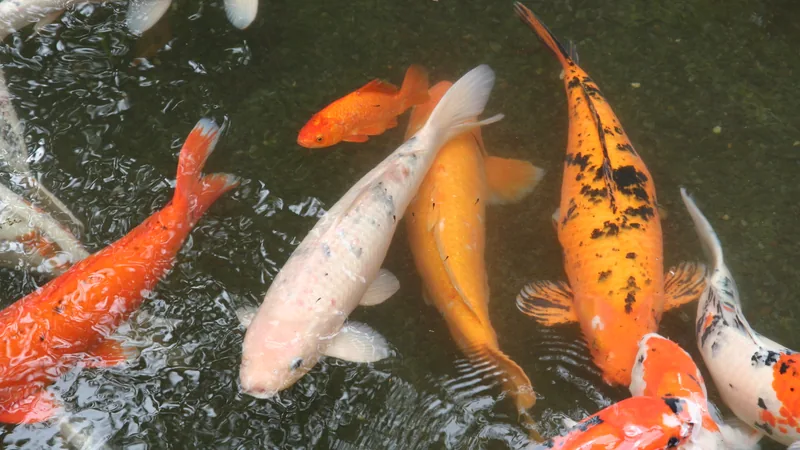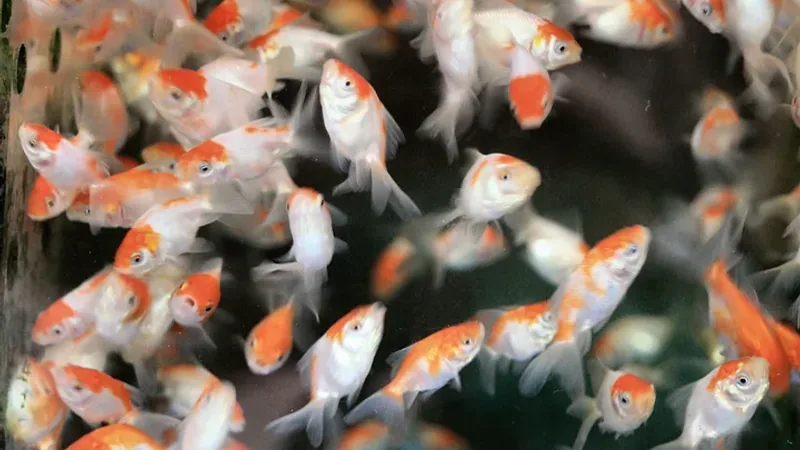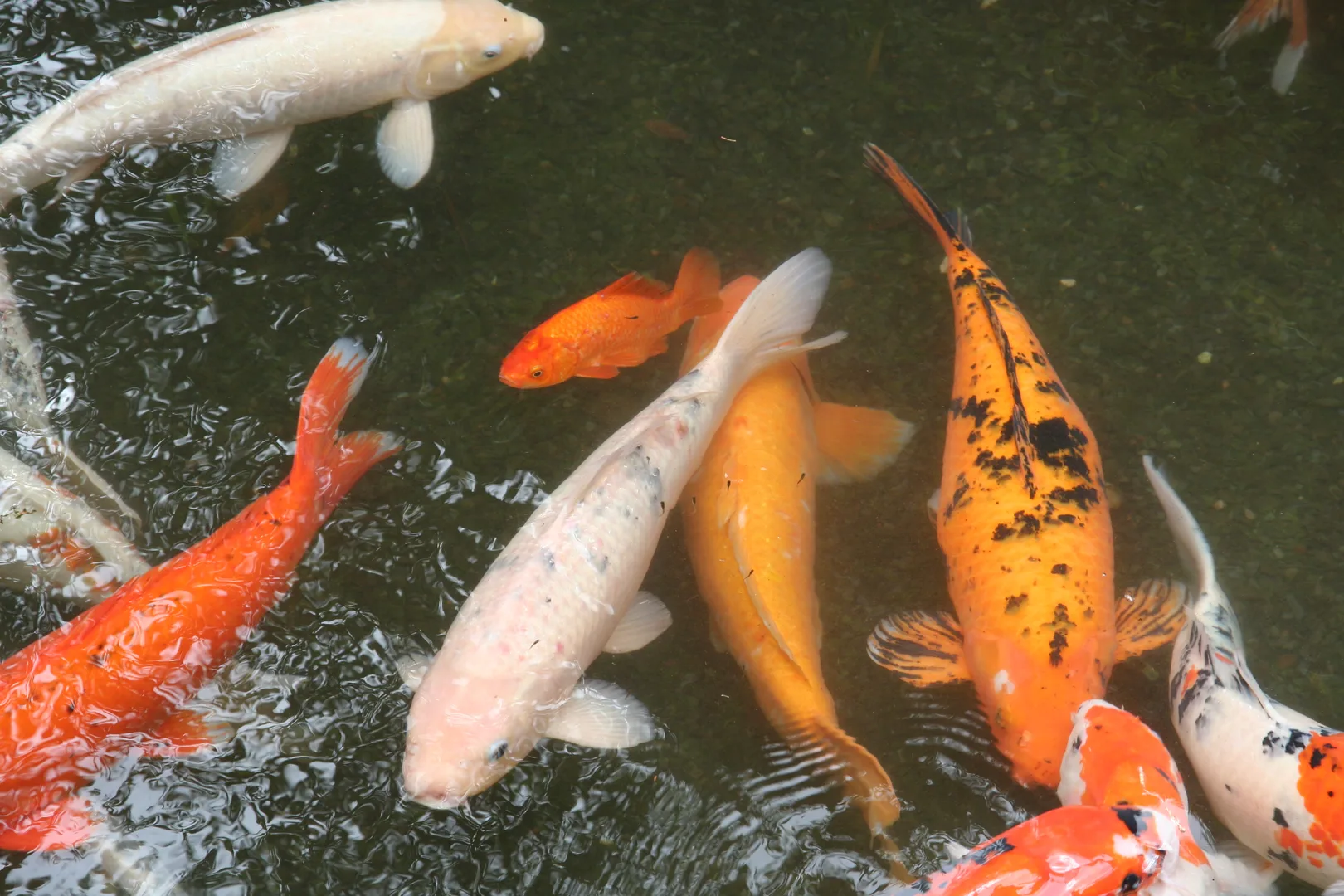
Koi of several colour varieties.
Field
notes
Pets That Poison Their Own Pond
Koi are ornamental varieties of domesticated common carp, first bred in Japan. Their own waste can kill them.
Self-poisoning fish Without a good filtration system in their pond, koi would poison themselves, as they excrete ammonia.
Keepers put them in outdoor ponds with very clean, oxygenated water and plenty of shade. The shade matters: koi can get sunburned.
A Rice-Paddy Fish Turned Rainbow
Chinese farmers raised carp in rice paddies for food in the 1600s, and the practice spread to Japan. There, people spotted odd colors in some of the carp and bred them. Today there are over 100 koi varieties, in red, white, black, yellow, brown, gray and green, and many combinations of those.
Koi eat mostly plants, with rice and corn among their favorite foods. They will also eat live shrimp and even their own young, called fry, before the little fish’s colors come in.
How Big, How Old, and Which Carp
Sources name koi two ways. The San Diego Zoo files them under Cyprinus carpio, the common carp. A 2021 study names them Cyprinus rubrofuscus, which FishBase and the Red List treat as a wild species. Each figure below says which fish it belongs to.
For koi, the zoo gives a maximum length of about 3 feet (91 centimeters) and an average weight of about 35 pounds (16 kilograms). It says koi typically live 25 to 35 years if cared for properly. For the common carp, AnAge lists a maximum longevity of 47 years in captivity.
For the wild Cyprinus rubrofuscus, FishBase lists a maximum length of 28 centimeters (standard length) and places the species in Asia: Laos, Viet Nam and China, from the Amur to Red River drainages. Koi, by contrast, are kept as pets on 6 out of 7 continents, the zoo says. The Red List rates the wild species Least Concern, assessed in 2020, and the zoo says koi are not endangered.
Fish That Seek Out a Hand
In a study published in 2021, at an aquaponics learning center in Brooklyn, a researcher offered a submerged hand to seven adult koi, each between 40 and 60 centimeters long, without forcing contact. The koi spent more time than expected within reach of the researcher, and they started the touching themselves by mouthing, brushing and bumping the hand.
Some did this often and others rarely. The koi stayed interested even after being fed to satiation (full), which the authors say suggests the interest may not be about food. The zoo adds that koi can be taught to eat from a person’s hand.
Published Updated
Traits
Intel
& FAQ
Guess
first
How big is a Koi, really? Slide, lock in, and see what the sources say. Every answer is a figure from this page, quoted from where it came from.
Sources
- 01Bogutskaya & Huckstorf (2022). Cyprinus rubrofuscus. The IUCN Red List of Threatened Species 2022: e.T166052A159637283.
- 02Fife-Cook & Franks (2021). Koi (Cyprinus rubrofuscus) Seek Out Tactile Interaction with Humans: General Patterns and Individual Differences. Animals.
- 03Koi (Cyprinus carpio). San Diego Zoo Wildlife Alliance.
- 04Cyprinus rubrofuscus Lacepède, 1803. FishBase.
- 05AnAge entry for Cyprinus carpio. AnAge: The Animal Ageing and Longevity Database, Build 15, Human Ageing Genomic Resources.
What the sources say: 53 claims checked word for word against these sources →