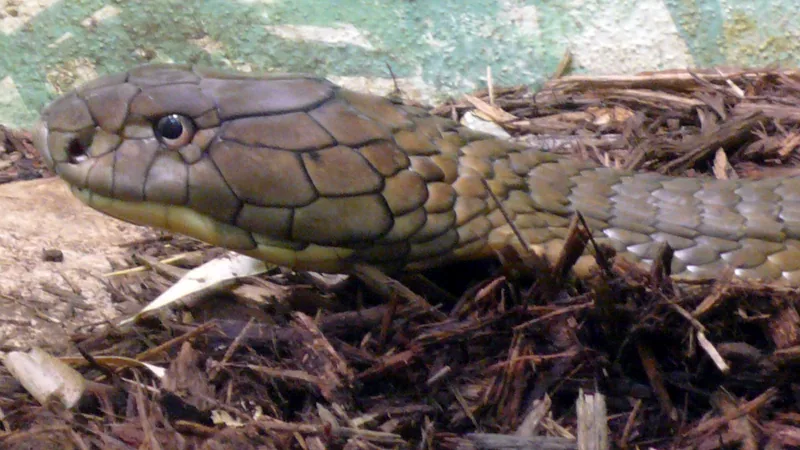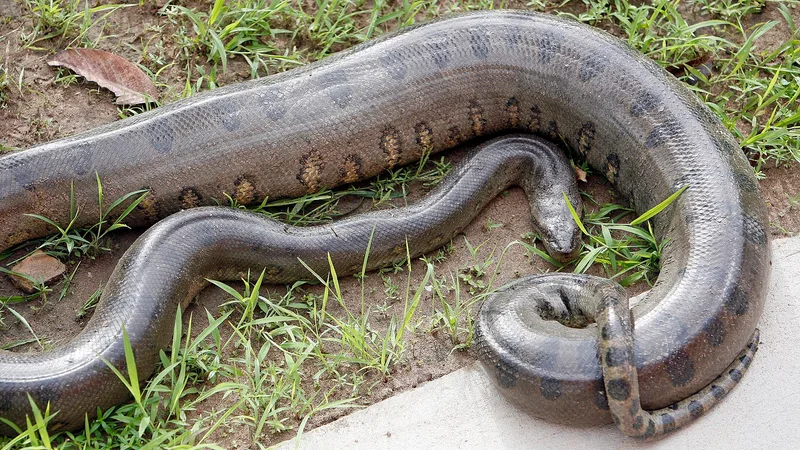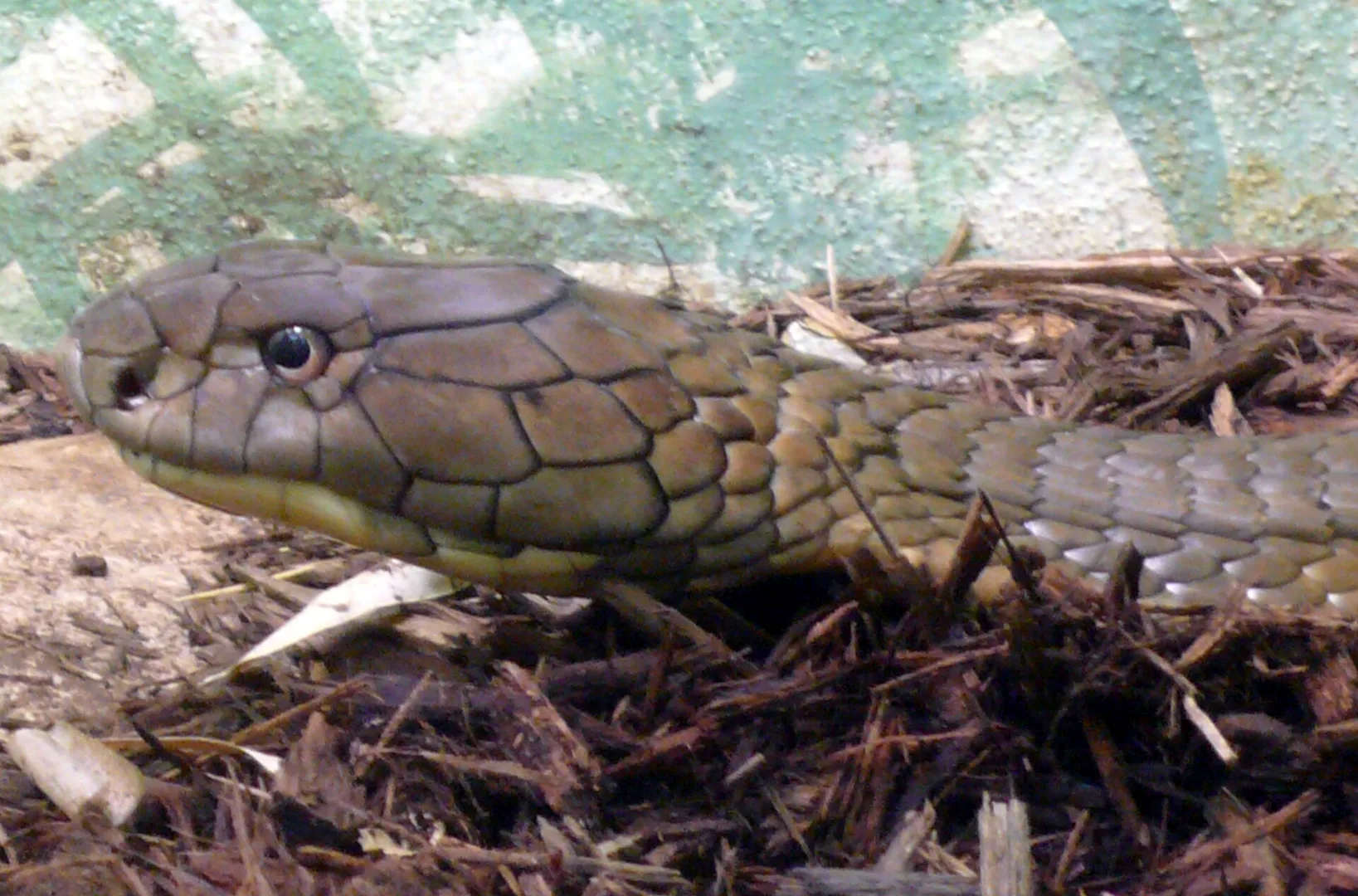
King cobra (Ophiophagus hannah)
Field
notes
The Lowdown
Able to reach eighteen feet, the king cobra (Ophiophagus hannah) is the longest venomous snake on the planet. Its genus name, Ophiophagus, literally translates to “snake-eater”, reflecting its predatory specialty: hunting and eating other snakes, including venomous vipers, kraits, and pythons.
When confronted, the king cobra can lift up to a third of its body off the ground, in some cases high enough to look an adult human in the eye, while flaring its wide ribbed neck hood. Rather than a typical snake hiss, it lets out a deep growl that sounds almost like a dog’s. Structural analysis of its airway suggests the sound comes from tracheal diverticula, air-pocket structures in the windpipe that act as low-frequency resonating chambers.
A nest of leaves Female king cobras build a nest, pushing leaves and branches into a pile where the heat of rotting plants incubates the eggs, then stay on top to guard them.
One bite can deliver more than a gram of neurotoxic venom, measured dry. Yet despite all that venom, field scientists often describe king cobras as placid snakes that would rather put on a threat display than attack.
Published Updated
Traits
Intel
& FAQ
Sources
- 01Tan, Bourges & Tan (2021). King Cobra and snakebite envenomation: on the natural history, human-snake relationship and medical importance of Ophiophagus hannah. Journal of Venomous Animals and Toxins including Tropical Diseases.
- 02Young (1991). Morphological basis of “growling” in the king cobra, Ophiophagus hannah. Journal of Experimental Zoology.
- 03Ophiophagus hannah (king cobra). Animal Diversity Web, University of Michigan.
- 04King cobra, facts and photos. National Geographic.
- 05Cobra. San Diego Zoo Animals & Plants.
- 06Longest venomous snake (specimen). Guinness World Records.
What the sources say: 33 claims checked word for word against these sources →