Bitis gabonica
Field
notes
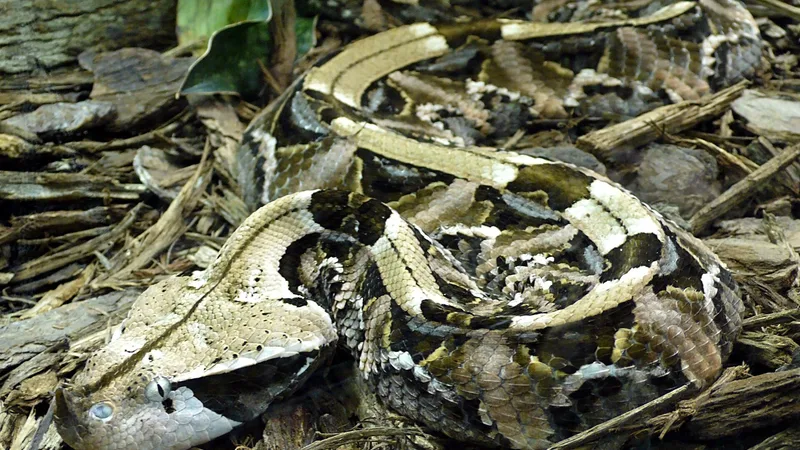
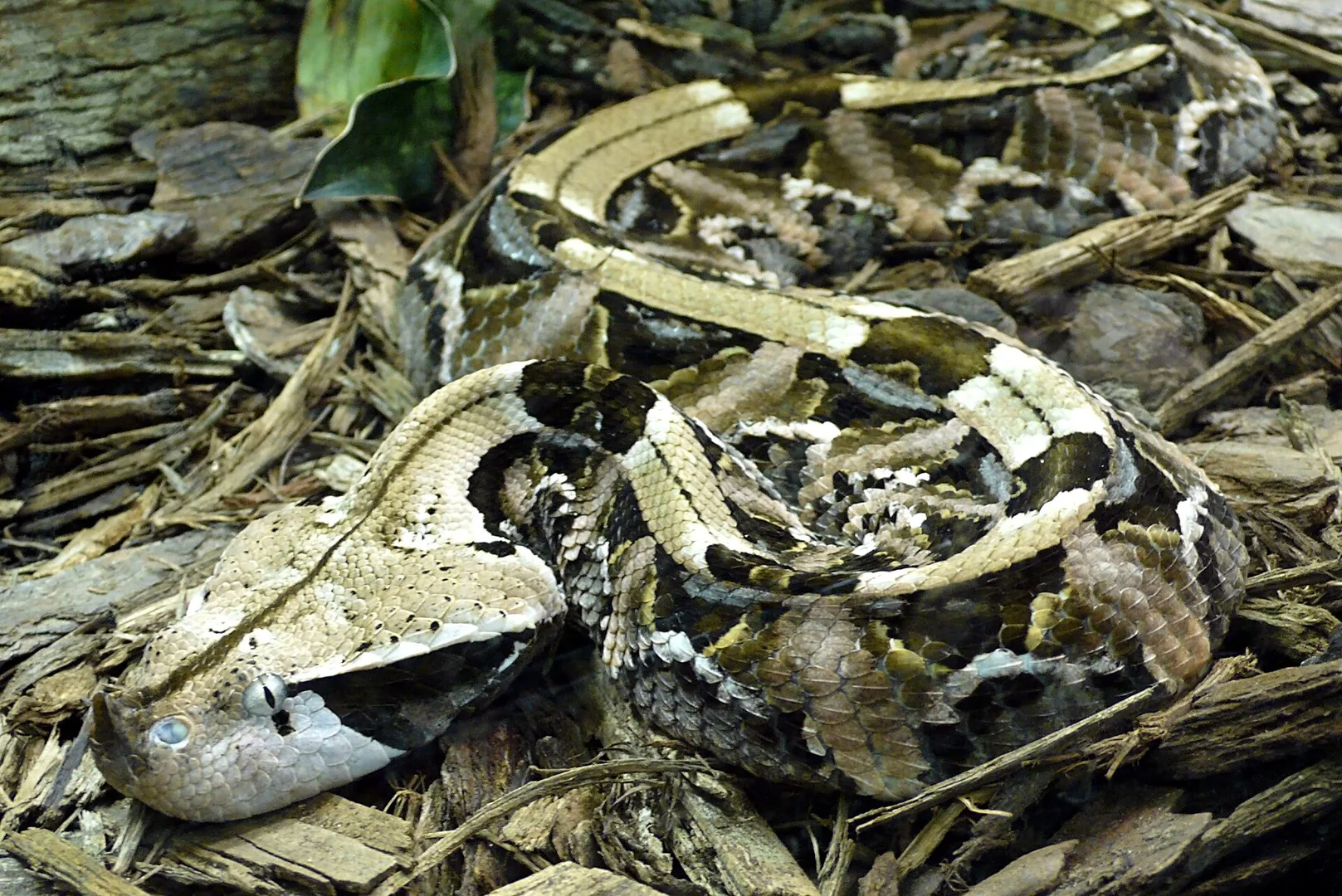
The Gaboon viper (Bitis gabonica) is a snake camouflaged to match the forest floor. Its broad head mimics a fallen leaf, right down to the central vein, and the brown, pink and purple diamonds along its back blend into the litter of the forest floor. It lives in rainforests and wet areas in parts of Central, East and West Africa.
The Heavyweight of African Vipers
It is the largest viper in Africa. The National Zoo says Gaboon vipers weigh more than 20 kg and reach more than 1.8 m long, and the biggest have heads nearly 15 cm across at the widest point. The AnAge longevity database lists a maximum of 18 years in captivity.
Fangs Like Switchblades
A viper’s fangs are extremely long, rotating, hollow teeth. Gaboon viper fangs can be 5 cm long, which the National Zoo says makes them the longest of any venomous snake. A video study of more than 750 strikes by 86 viper species found that vipers reposition their fangs after first contact in more than a third of strikes. The authors say that suggests strong selective pressure for a rapid nerve-and-muscle response to a misplaced fang.
This snake is a passive hunter. It lies hidden and strikes at whatever small creatures pass within range. It eats small and medium-sized mammals and birds. Most snakes bite and let go. This one holds on until its prey dies.
Big Dose, Calm Temper
Venom on demand A Gaboon viper can control whether it injects venom and how much, so a strike can range from no effect to rapid death.
A review of the species says it makes prodigious amounts of venom, yet weight for weight the venom is rather low in toxicity next to other poisonous snakes. In experimental animals, systemic envenomation is marked by an abrupt drop in blood pressure, damage to the heart and laboured breathing. A proteomic study of venom from East African Gaboon vipers found 35 proteins, from 12 toxin families.
Even so, the snake is docile, and the same review links that to the very low number of human bites. The National Zoo says most bites happen when someone steps on a snake that had no chance to get away. Females can give birth to 50 to 60 live young at a time.
Published Updated
Traits
Intel
& FAQ
Guess
first
How big is a Gaboon Viper, really? Slide, lock in, and see what the sources say. Every answer is a figure from this page, quoted from where it came from.
Sources
- 01Gaboon viper. Smithsonian's National Zoo and Conservation Biology Institute.
- 02AnAge entry for Bitis gabonica. AnAge: The Animal Ageing and Longevity Database, Build 15, Human Ageing Genomic Resources.
- 03Marsh & Whaler (1984). The Gaboon viper (Bitis gabonica): Its biology, venom components and toxinology. Toxicon.
- 04Calvete, Marcinkiewicz & Sanz (2006). Snake Venomics of Bitis gabonica gabonica. Protein Family Composition, Subunit Organization of Venom Toxins, and Characterization of Dimeric Disintegrins Bitisgabonin-1 and Bitisgabonin-2. Journal of Proteome Research.
- 05Cundall (2009). Viper Fangs: Functional Limitations of Extreme Teeth. Physiological and Biochemical Zoology.
- 06Luiselli et al. (2021). Bitis gabonica. The IUCN Red List of Threatened Species 2021: e.T13300893A13300904.
What the sources say: 32 claims checked word for word against these sources →