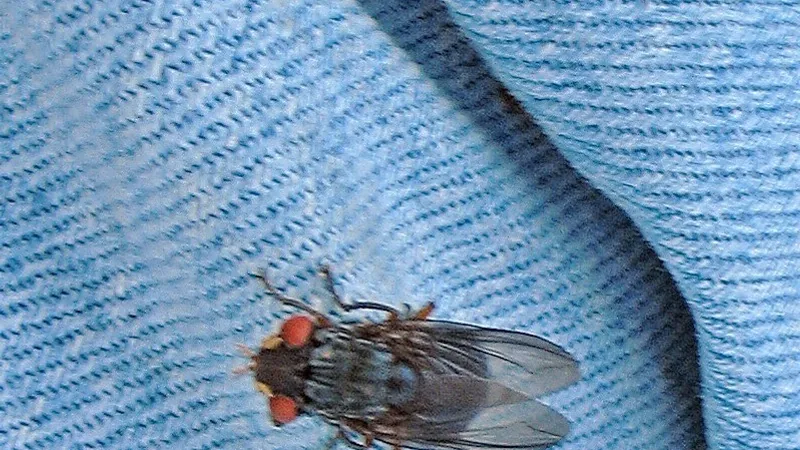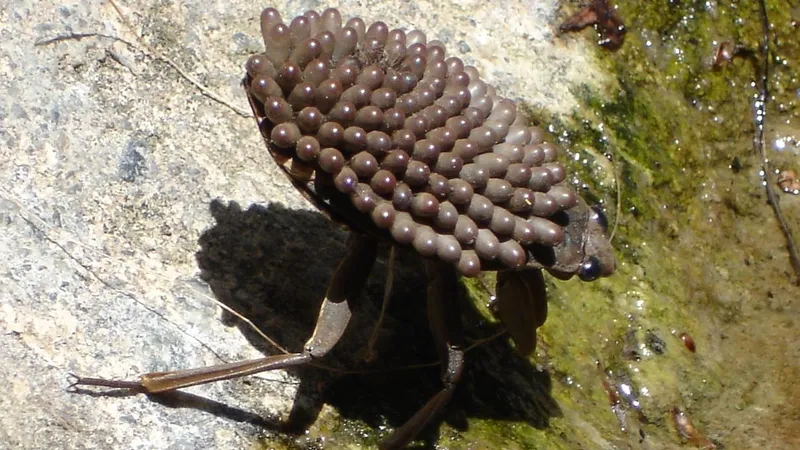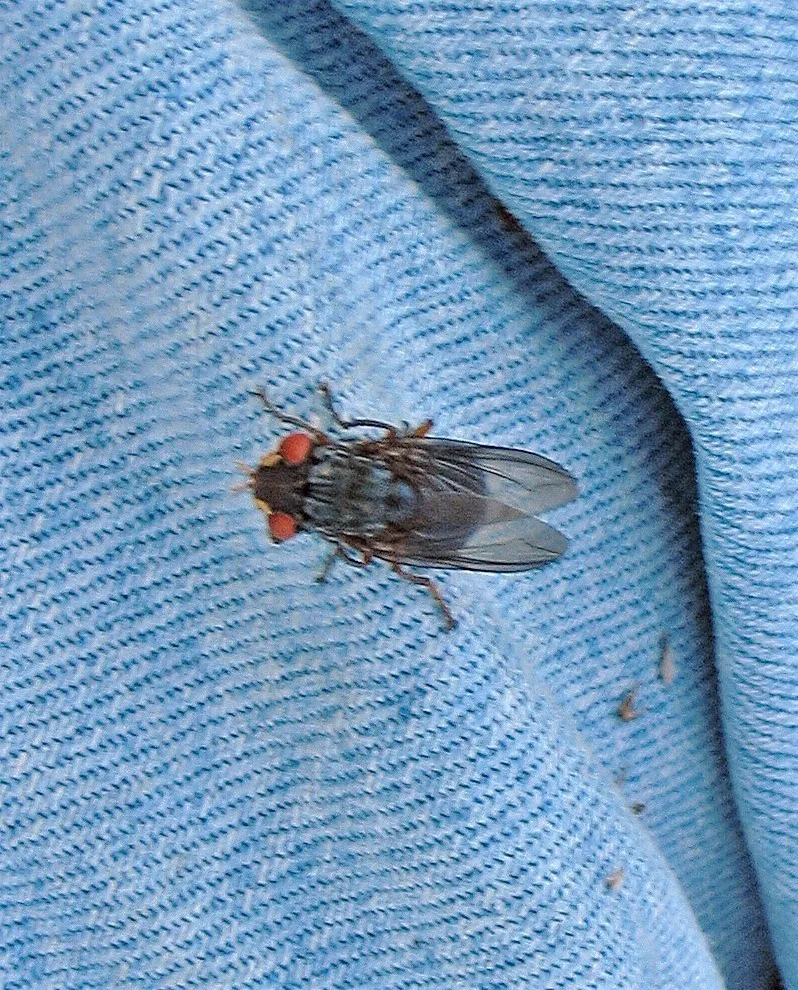
Dermatobia hominis, Concepción, Misiones, Argentina
Field
notes
The Fly That Hires a Taxi
Other botflies lay their eggs on a host or in its surroundings. The human botfly, Dermatobia hominis, hires a courier. A female catches a blood-feeding carrier in flight, usually a mosquito or a tick, and glues her eggs to its abdomen. This behavior is known as phoresy. Animal Diversity Web says the glue does not dissolve in water and that the carrier is released unharmed.
The eggs react to a change in temperature. When the carrier lands on a warm-blooded animal, usually to feed, the temperature jump makes them hatch. Animal Diversity Web says the larvae bore in within 5 to 10 minutes, often through the carrier’s bite wound. The University of Florida adds that they can also enter through hair follicles.
Porter service Forty-eight species of flies, about half of them mosquitoes, and one tick had been reported as egg carriers for this one fly by 2003.
In Brazil’s Tinguá reserve, researchers trapped one such carrier, a Hemilucilia segmentaria fly, in 2001. It was carrying 20 eggs on its left side.
Built Like a Bumblebee
The adult is a large, densely haired fly that looks like a bumblebee. It is 12 to 18 mm long, with a bluish body, and the female is the larger sex. Adults have lost their mouthparts and do not feed. In the laboratory an adult lives 3 to 4 days, and Animal Diversity Web says that stage is given over to reproduction: a female lays 800 to 1,000 eggs.
Life Under the Skin
A larva that hatches on a host digs into the skin and settles in the layer just beneath it. Any infestation of the body by fly larvae is called myiasis (my-EYE-uh-sis). The larva breathes through two openings at its rear end that sit flush with the skin, uses backward-pointing spines to stay put, and feeds on fluid from the surrounding tissue.
It passes through three growth stages, called instars. The University of Florida sheet gives a timeline: the larvae molt to the second stage after seven days of infestation and to the third after eighteen, and leave the host after about thirty days. In general, a larva spends five to 12 weeks inside its host. A full-grown larva can reach 25 mm long and 7 mm across. It then drops to the ground, buries itself in soil and pupates, and an adult emerges two to three weeks later. Cattle and dogs are its usual hosts, though it turns up in many other warm-blooded animals, from cats, pigs and sheep to rabbits, monkeys and people.
Where It Lives
It is native to Central and South America. The University of Florida says it runs from Mexico down to Paraguay and northeast Argentina. Animal Diversity Web says it prefers hilly, moist, cool secondary forest, often in coffee-growing highlands.
Outside that range, cases turn up in travelers. The University of Florida’s 2008 fact sheet counted seven reported cases in the United States since 1999, and every confirmed patient had recently been to Central or South America.
Published
Traits
Intel
& FAQ
Guess
first
How big is a Human Botfly, really? Slide, lock in, and see what the sources say. Every answer is a figure from this page, quoted from where it came from.
Sources
- 01Dermatobia hominis. Animal Diversity Web, University of Michigan Museum of Zoology.
- 02Larrick & Rutledge-Connelly (2008). Human Bot Fly, torsalo (Central America), moyocuil (Mexico), berne (Brasil), mucha (Colombia, mirunta (Peru), and ura (Argentina, Paraguay, and Uruguay), Dermatobia hominis (Linnaeus, Jr.) (Insecta: Diptera: Oestridae): EENY 440/IN775, 9/2008. EDIS.
- 03Marinho et al. (2003). Hemilucilia segmentaria (Fabricius, 1805) (Diptera: Calliphoridae) as new biological vector of eggs of Dermatobia hominis (Linnaeus Jr., 1781) (Diptera: Oestridae) in Reserva Biológica do Tinguá, Rio de Janeiro, Brazil. Memórias do Instituto Oswaldo Cruz.
What the sources say: 58 claims checked word for word against these sources →