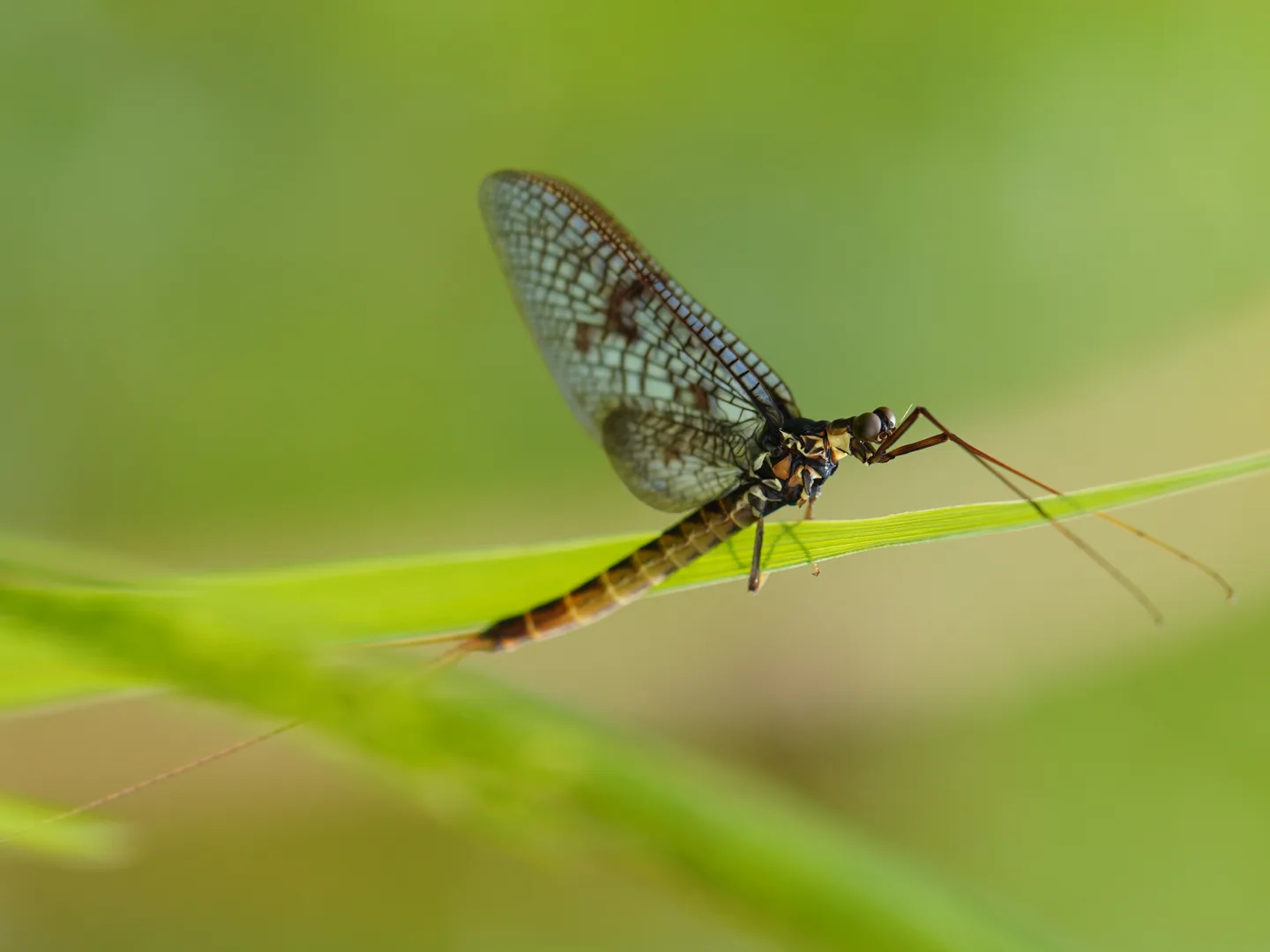
Ephemera danica Müller, 1764
Field
notes
Fooled by a smooth black surface
Light reflected off water is horizontally polarized, which means its waves line up in one direction. Ephemera danica detects water with that signal. The more strongly a surface reflects horizontally polarized light, the more attractive it is to mayflies like this one. In a field test, smooth black plastic was the most attractive surface on offer. A cover textured like a rose petal was practically unattractive to them.
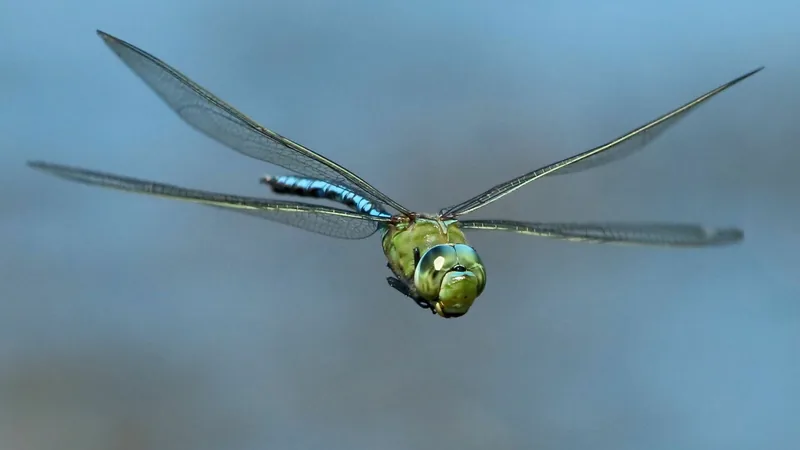
On each test day, between 18:30 and 19:15, mainly males flew around the surfaces at first. Then, in the second phase of swarming, most of the landing mayflies were females, often with visible egg batches. Sometimes they laid those egg batches on the test surfaces.
A burrower in the sand
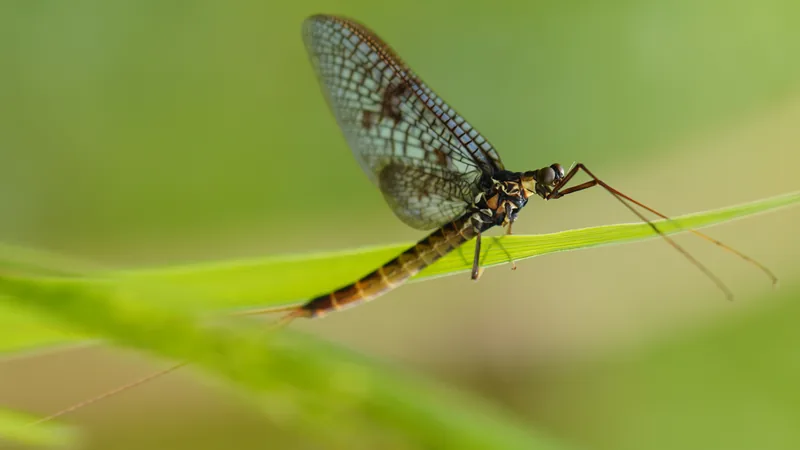
This is a large mayfly, 1.5 to 3.0 cm long, known both as the common mayfly and the green drake mayfly. Its nymphs, the young aquatic stage, live in the depositional zones of streams and rivers with a sandy bottom. There they construct a tubular burrow in the sediment and feed by filtering or collecting fine particulate organic detritus, which is tiny bits of dead material. The species is widespread throughout Europe, and emerging adults have been collected in the littoral zone of Lake Constance in Germany. The littoral zone is the shallow water near a lake’s shore.
Nymphs collected from a Devon river for lab tests weighed between 15 and 128 mg fresh. In two Polish rivers, small mayflies (optimal size 11.63 mm) were mainly settled by ciliated protozoans, and larger ones (optimal size 28.77 mm) by midge larvae.
Passengers aboard On a single mayfly, researchers in two Polish rivers found between 0 and 18 midge larvae and from 0 to 46 ciliate colonies.
A two-year cycle
Across 2007 to 2013, E. danica at a cool, groundwater-fed reach of England’s River Dove kept a 2-year emergence cycle. The adults then fly: the main flight period is towards the end of May, though adults are often present between April and November.
As adults they do not feed, but they do use energy. In a study of the nymphs of this mayfly and another one, triglycerides, a type of fat, were the major energy reserve throughout development, at more than 84% of total energy storage in both. In male nymphs the triglyceride concentrations remained high until emergence, presumably because of the high energy demands of their swarming flights as adults.
Published
Traits
Intel
& FAQ
Guess
first
How big is a Green Drake Mayfly, really? Slide, lock in, and see what the sources say. Every answer is a figure from this page, quoted from where it came from.
Sources
- 01Fritz et al. (2020). Bioreplicated coatings for photovoltaic solar panels nearly eliminate light pollution that harms polarotactic insects. PLOS ONE.
- 02Verberk et al. (2016). Field and laboratory studies reveal interacting effects of stream oxygenation and warming on aquatic ectotherms. Global Change Biology.
- 03Grzybkowska et al. (2016). Ephemera danica (Ephemeroptera: Ephemeridae) As a Resource for Two Commensals: Ciliated Protozoans (Sessilida) and Chironomids (Diptera). Journal of Insect Science.
- 04Everall et al. (2015). Detecting phenology change in the mayfly Ephemera danica: responses to spatial and temporal water temperature variations. Ecological Entomology.
- 05Yohannes & Rothhaupt (2018). Dietary nutrient allocation to somatic tissue synthesis in emerging subimago freshwater mayfly Ephemera danica. BMC Ecology.
- 06Winkelmann & Koop (2007). The management of metabolic energy storage during the life cycle of mayflies: a comparative field investigation of the collector-gatherer Ephemera danica and the scraper Rhithrogena semicolorata. Journal of Comparative Physiology B.
- 07Common mayfly. The Wildlife Trust of South and West Wales.
What the sources say: 37 claims checked word for word against these sources →