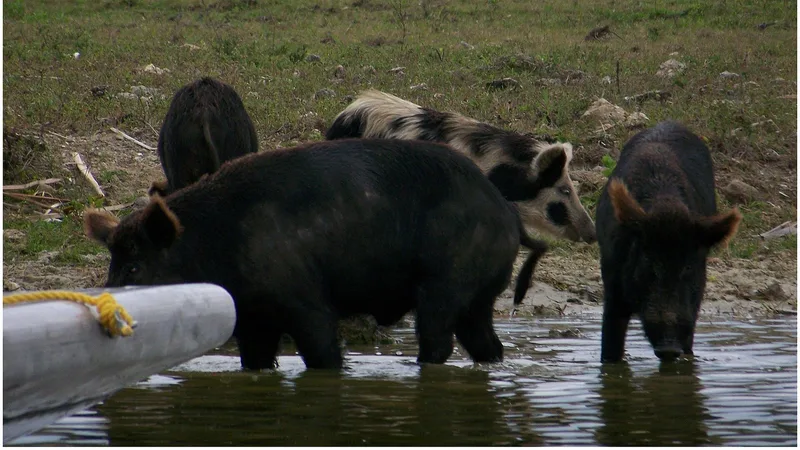
Gloucestershire Old Spot boar at a farm in Wherstead, Suffolk
Field
notes
The Orchard Pig of the Berkeley Vale
The Gloucestershire Old Spot (Sus domesticus) comes from around the Berkeley Vale, on the southern shore of the River Severn in Gloucestershire, England. The Rare Breeds Survival Trust calls it the oldest pedigree spotted pig in the world, because no other pedigree spotted breed was recorded before 1913. That was the year local farmers, worried that a government plan to license breeding boars threatened their local pig, formed the Gloucestershire Old Spots Breed Society and compiled an official herd book. The pigs themselves were first mentioned in English writing around 1790.
The breed was common on small family farms, where it thrived on whey from dairying, windfall fruit in orchards, and cider pressings. These gave it the nicknames “cottage pig” and “orchard pig.” In 2010 the Gloucestershire Old Spots Pig Breeders’ Club was awarded Traditional Speciality Guaranteed status by the EU Commission, an official label recognising the special qualities of the breed’s meat. The Gloucestershire Old Spot was the first breed of any species in the world to receive it.
A Broad, Deep-Bodied Heavyweight
This is a large-bodied breed. A white coat carries distinct black spots on black skin, and its forward-drooping lop ears, set well apart, are large enough to nearly cover the face by adulthood. Sows typically weigh around 280 kg and boars about 350 kg. The breed is known for its calm, docile nature and its hardiness when raised outdoors.
Grazing and Rooting
The Rare Breeds Survival Trust notes the breed’s excellent grazing ability. A US breed registry adds that if there is tastier food underground, such as worms and grubs, than the forage on offer, the pigs will root (dig with their snouts). Rooting tends to stay in patches, and areas with plenty of acorns, nuts and berries are usually the favourites. Digging can kill off unwanted plants, but the bare ground it leaves can let preferred plants take hold, which benefits certain invertebrates and reptiles.
Bruised by Apples, According to Folklore British folklore claims the breed’s large black spots were bruises left by apples falling on the pigs as they foraged in the orchards.
Rare Despite the Reputation
The breed is popular for its reputation for high-quality meat, but the number of pedigree animals has been declining in recent years. The Rare Breeds Survival Trust lists the Gloucestershire Old Spot as “At Risk” on its UK Watchlist, with a female breeding population estimated at just 424 animals in 2024. How long the pigs live is uncertain: one US breed registry calls it a difficult question, and says Old Spots have kept breeding until about nine years old, though many will not reach that age.
Published Updated
Traits
Intel
& FAQ
Guess
first
How big is a Gloucestershire Old Spot Pig, really? Slide, lock in, and see what the sources say. Every answer is a figure from this page, quoted from where it came from.