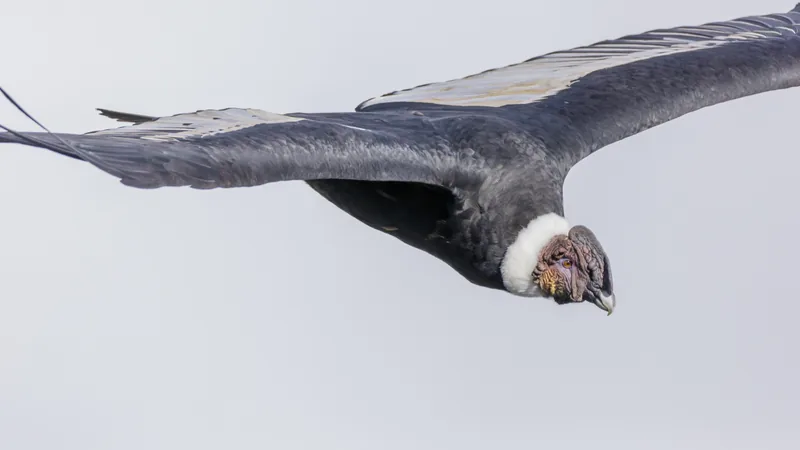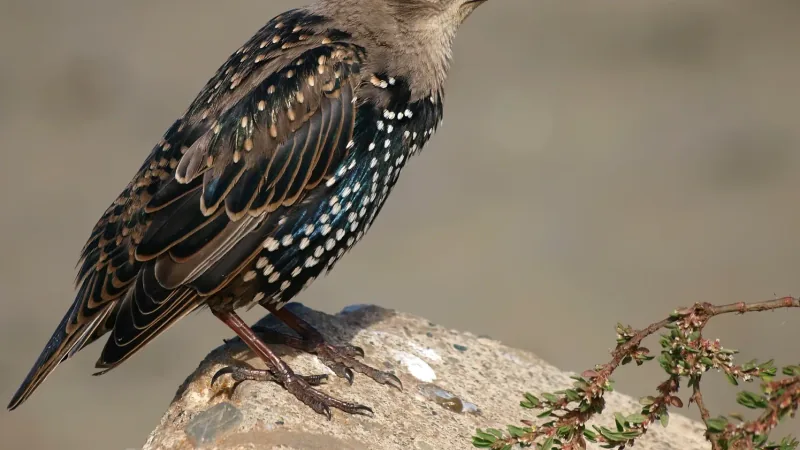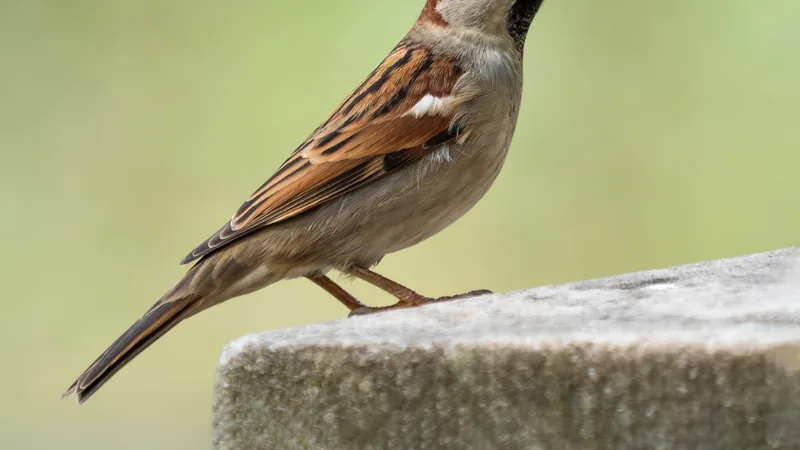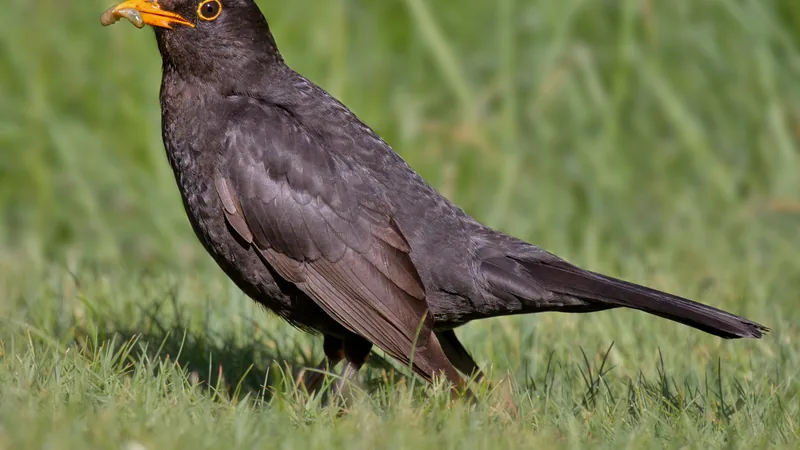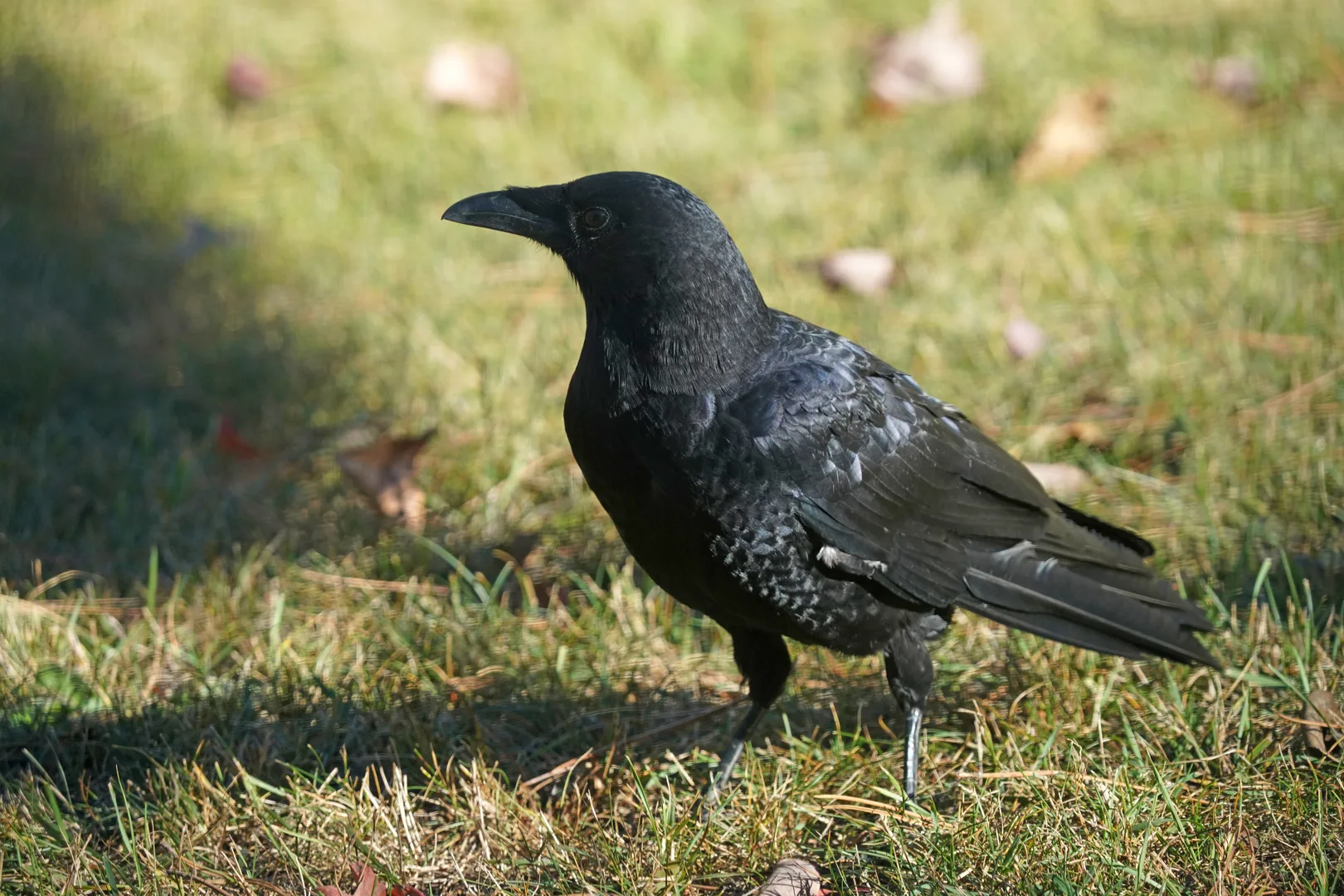
Foraging on a lawn.
Field
notes
A face they learn
Researchers near Seattle wore a unique mask while they trapped, banded and released crows. Crows that had been caught scolded the mask right away. Later, lone crows that had never been caught recognized the mask too, which fits with learning from other crows. Young crows whose parents had taught them to scold the mask joined in on their own.
Face recognition, passed along Over five years at one site, scolding of the “dangerous” mask doubled in frequency and spread at least 1.2 km from where it began.
A black bird with a hooked bill
An adult American crow is completely black, 41 to 53 cm long, and weighs 311 to 623 g. Its black bill ends in a slight hook, and stiff bristles sit over the nostrils. Ravens look similar but are much larger, with a hoarser voice.
Its call is a set of loud, harsh caws, and the shorter, sharper ones, called “kos”, are probably alarm calls.
Females lay 4 to 5 eggs, which hatch after 18 days. The young leave the nest at about 35 days old, and they have blue eyes that darken as they grow up. AnAge records a maximum longevity of 20 years for the species.
Eats almost anything
American crows are omnivores, eating plants and animals. When breeding, crows eat insects and larvae, worms, fruit, grain and nuts. They will hunt frogs, mice and young rabbits, but they are more likely to scavenge carrion such as roadkill.
To crack a nut, a crow pins it under one foot and hammers it with its bill. For a heavy-shelled item such as a walnut or clam, a crow flies high and drops it on a hard surface. They also cache food, hiding it in scattered spots instead of one place.
A family business across North America
American crows are native across North America, including the lower part of Canada and the continental United States. They like open areas with nearby trees, and they thrive in suburban neighborhoods and urban parks.
They are cooperative breeders: some offspring stay close to where they were born and help raise young. Faced with a predator, crows gang up to chase it and yell at it, which is known as mobbing. In winter, roosts can gather tens to hundreds of thousands of crows.
Crows are not invincible. In a 2002 Illinois study, more than two thirds of the crows studied died of West Nile virus infection.
Published
Traits
Intel
& FAQ
Guess
first
How big is a American Crow, really? Slide, lock in, and see what the sources say. Every answer is a figure from this page, quoted from where it came from.
Sources
- 01Corvus brachyrhynchos. The IUCN Red List of Threatened Species 2018: e.T22705990A131945410.
- 02Corvus brachyrhynchos (American crow). Animal Diversity Web, University of Michigan.
- 03AnAge entry for Corvus brachyrhynchos. AnAge: The Animal Ageing and Longevity Database, Build 15, Human Ageing Genomic Resources.
- 04Cornell, Marzluff & Pecoraro (2011). Social learning spreads knowledge about dangerous humans among American crows. Proceedings of the Royal Society B: Biological Sciences.
- 05Yaremych et al. (2004). West Nile Virus and High Death Rate in American Crows. Emerging Infectious Diseases.
- 06American Crow. National Audubon Society.
What the sources say: 50 claims checked word for word against these sources →