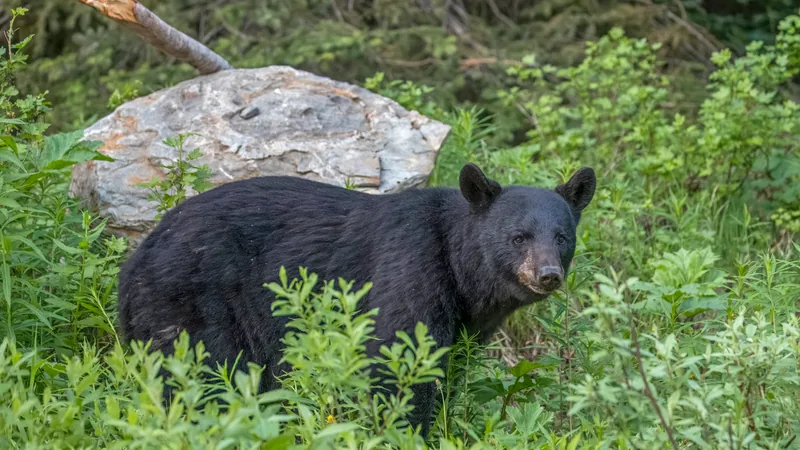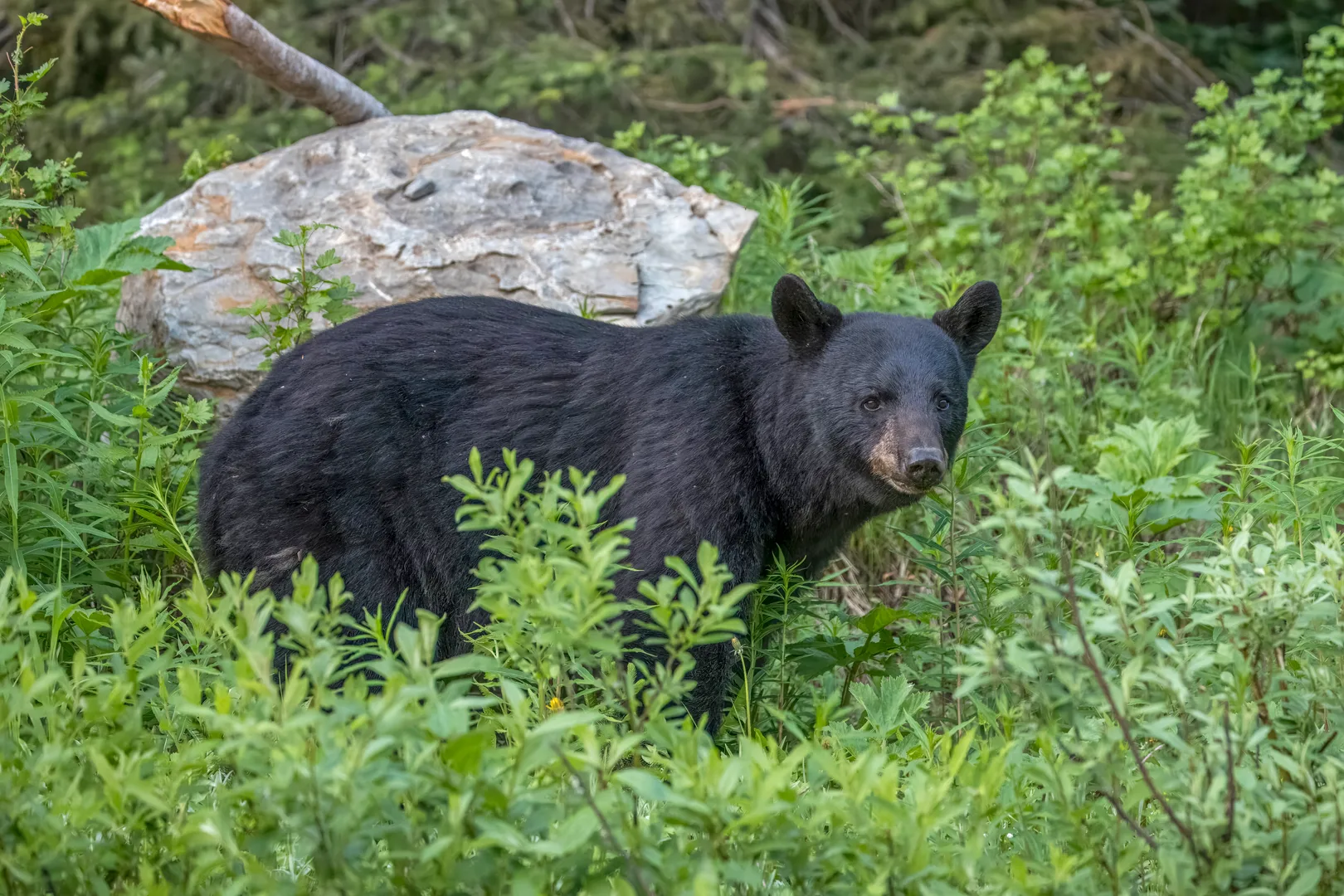
Cinnamon black bear ( Ursus americanus cinnamomum ) Yoho National park, BC, Canada
Field
notes
A nose about seven times stronger than a bloodhound’s
Great Smoky Mountains National Park says a black bear’s sense of smell is about seven times stronger than a bloodhound’s. The bear uses that nose to find natural foods like insects, nuts and berries. It can also draw a bear to human food and trash, including hot dogs and apple cores.
Big, and not always black
Males are 1,400 to 2,000 mm long (1.4 to 2 m) and weigh 47 to 409 kg. Females run 1,200 to 1,600 mm and 39 to 236 kg. In the wild, a black bear lives about 12 to 15 years.
The name does not always fit. Black bears are usually black, particularly in eastern North America. Western populations are more often brown, cinnamon or blonde, and some in coastal British Columbia and Alaska are creamy white or bluish gray.
They live from northern Alaska east across Canada to Labrador and Newfoundland, and south through most of the U.S. into central Mexico.
A mostly plant-based diet
Black bears are omnivores, meaning they eat both plants and animals. In the Smokies, roughly 85% of the diet is plant material, and nuts and acorns are especially important in fall. These high-energy foods help bears build up fat for winter. Bears also eat insects such as ants, bees and beetles, and carrion (dead animals) when they find it. It is rare for a black bear to hunt live animals.
Winter in slow motion
Black bears are not considered true hibernators. They enter torpor, a lighter form of hibernation. During torpor a bear does not eat, drink, urinate or defecate. In the northernmost part of the range, it has been known to last as long as seven months.
Tiny newborns Cubs are typically born in late January or early February while the mother is in her den. Each weighs 200 to 450 grams, the smallest young relative to adult size of any placental mammal, and is born naked and blind.
Most animals that hibernate are small, often weighing just a few ounces. How a large mammal manages it is still not fully understood.
Should you worry?
Bears are wild animals that are dangerous and unpredictable, and attacks have caused serious injuries and death. Such attacks are extremely rare. Animal Diversity Web counts fewer than 36 human deaths from black bear encounters in the 20th century, and calls black bears generally timid.
Published
Traits
Intel
& FAQ
Guess
first
How big is a American Black Bear, really? Slide, lock in, and see what the sources say. Every answer is a figure from this page, quoted from where it came from.
Sources
- 01Ursus americanus (American black bear). Animal Diversity Web, University of Michigan.
- 02Black Bears. National Park Service, Great Smoky Mountains National Park.
- 03Garshelis et al. (2016). Ursus americanus. The IUCN Red List of Threatened Species 2016: e.T41687A45034604.
What the sources say: 46 claims checked word for word against these sources →