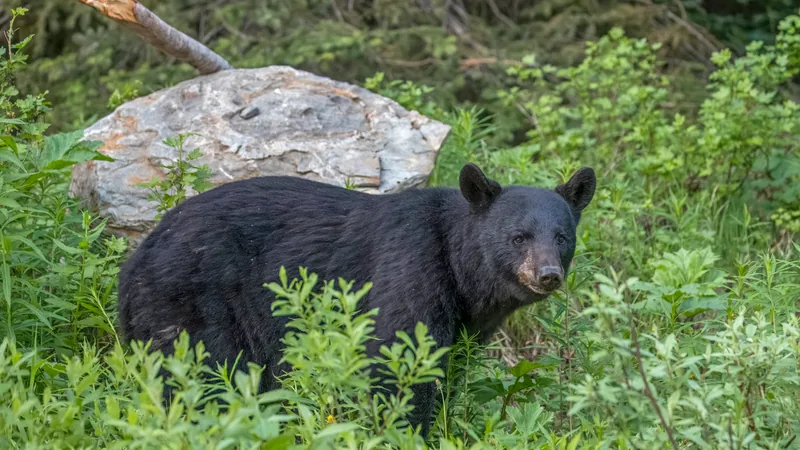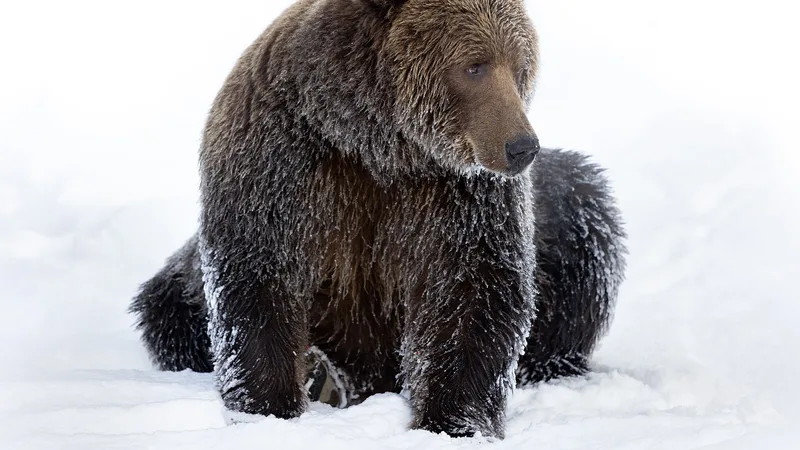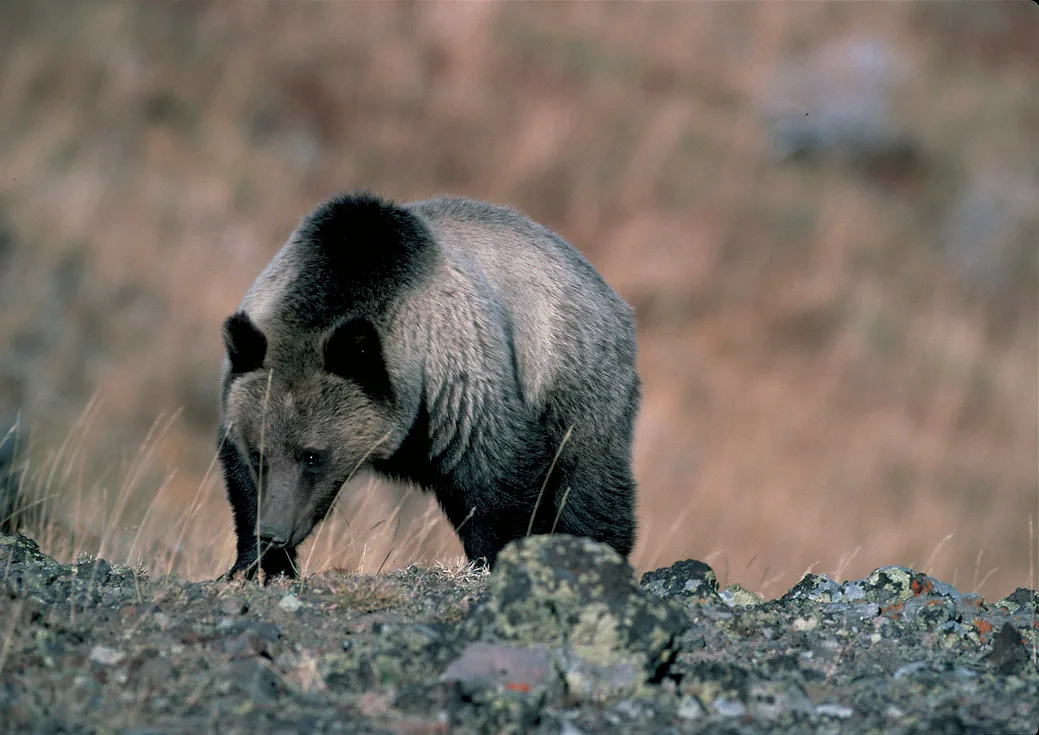
Ursus arctos horribilis (American Grizzly bear)
Field
notes
The Bear That Isn’t as Big as Its Reputation
The grizzly bear (Ursus arctos horribilis) is a North American brown bear, and it is not the giant its reputation suggests. According to the National Park Service, bears along the coast of Alaska are called brown bears, while the typically smaller inland bears, with little or no access to food from the sea, are called grizzlies. San Diego Zoo Wildlife Alliance says the coastal bears tend to be the largest, from eating fat-rich salmon every summer, and that despite its reputation the grizzly is one of the smallest brown bear subspecies. In the lower 48 states, an adult male grizzly averages 400 to 600 pounds (200 to 300 kilograms) and an adult female 250 to 350 pounds (110 to 160 kilograms), according to the U.S. Fish and Wildlife Service.
The IUCN rates the whole species, Ursus arctos, as Least Concern worldwide, which hides a rougher local picture. At least 1,923 grizzlies live in the lower 48 states, and the U.S. Fish and Wildlife Service lists that population as threatened.
Built to Dig
Grizzlies carry a large hump of muscle on their shoulders, which black bears lack, and San Diego Zoo Wildlife Alliance says grizzlies have the most distinctive hump of any brown bear. The digging tools are the claws. In Yellowstone, grizzly claws average 1.8 inches (45 millimeters), and the longest measured 5.9 inches (150 millimeters). Their length and shape make them good for digging food out of the ground but worse than a black bear’s for climbing trees. A grizzly can dig for roots and insects, dig a ground squirrel out of its burrow, or dig its den, usually on a steep slope. It is fast, too: the National Park Service lists a Yellowstone grizzly’s top speed at 35 to 40 miles an hour.
The Fall Calorie Blitz
In preparation for hibernation, a grizzly goes through hyperphagia, a feeding binge in the two to four months before it enters its den. Yellowstone’s figures put its intake at about 20,000 calories a day during hyperphagia, more than double the 5,000 to 8,000 it eats on a normal day. Whitebark pine seeds are a favorite fall food, and grizzlies also prey on elk calves and spawning trout. The strangest item on the menu is the army cutworm moth: hundreds of thousands of them migrate into the Rocky Mountains each year and rest under rocks in high boulder fields, and a single grizzly may eat more than 40,000 of them in one day.
No fat, no cubs The U.S. Fish and Wildlife Service reports that female grizzlies with less than 20 percent body fat are unlikely to produce cubs, even when they have mated.
Built to Outlast Winter
Grizzlies are shallow hibernators. Yellowstone’s figures show body temperature dropping only a few degrees, from 36.5 to 38.5°C in the active season to 34.4 to 35°C in hibernation, while heart rate falls from 40 to 50 beats a minute to 8 to 19. For four to six months in the den, a grizzly does not eat, drink, urinate, or defecate. A study that tracked brown bears in Sweden, the same species as the grizzly, found they entered their dens once snow arrived and the air reached freezing, and that their body temperature began rising about two months before they left, driven by the outside air temperature.
Published Updated
Traits
Intel
& FAQ
Guess
first
How big is a Grizzly Bear, really? Slide, lock in, and see what the sources say. Every answer is a figure from this page, quoted from where it came from.
Sources
- 01Ursus arctos (brown bear). Animal Diversity Web, University of Michigan.
- 02Ursus arctos horribilis (Grizzly Bear). U.S. Fish and Wildlife Service, Species Profile.
- 03Yellowstone Grizzly Bear Facts. National Park Service, Yellowstone National Park (Yellowstone Science 23(2)).
- 04Brown Bears. National Park Service.
- 05Bear Identification. National Park Service.
- 06Brown Bear. San Diego Zoo Wildlife Alliance.
- 07Greater Yellowstone Grizzly Bear and Army Cutworm Moths. Draper Natural History Museum, Buffalo Bill Center of the West.
- 08Evans et al. (2016). Drivers of hibernation in the brown bear. Frontiers in Zoology.
What the sources say: 48 claims checked word for word against these sources →