AnimalTracks.wiki

Volta Electric Eel

Electrophorus voltai

The biological super-battery that hit 860 volts, the strongest electric discharge known from any living animal.

Danger tierDeadlyCapable of killing a human.
IUCN status [LC]Least ConcernPopulation stable and widespread in natural habitats.Source: IUCN Red List
Vibe checkDaft PunkClassic Funk, Soul & DiscoListen ↓

Field
notes

Checked against 7 sources ↓

The Strongest Bio-Electricity on Earth

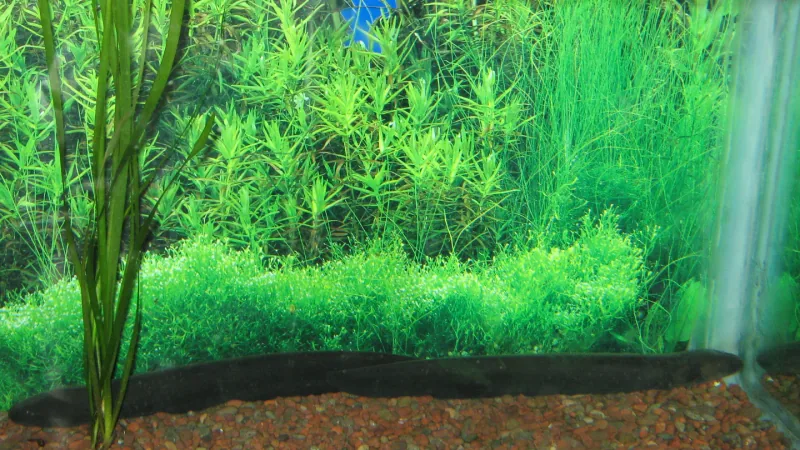
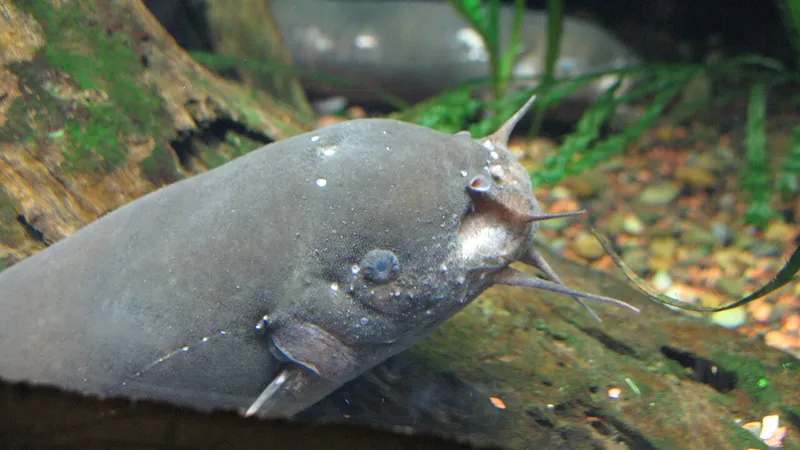
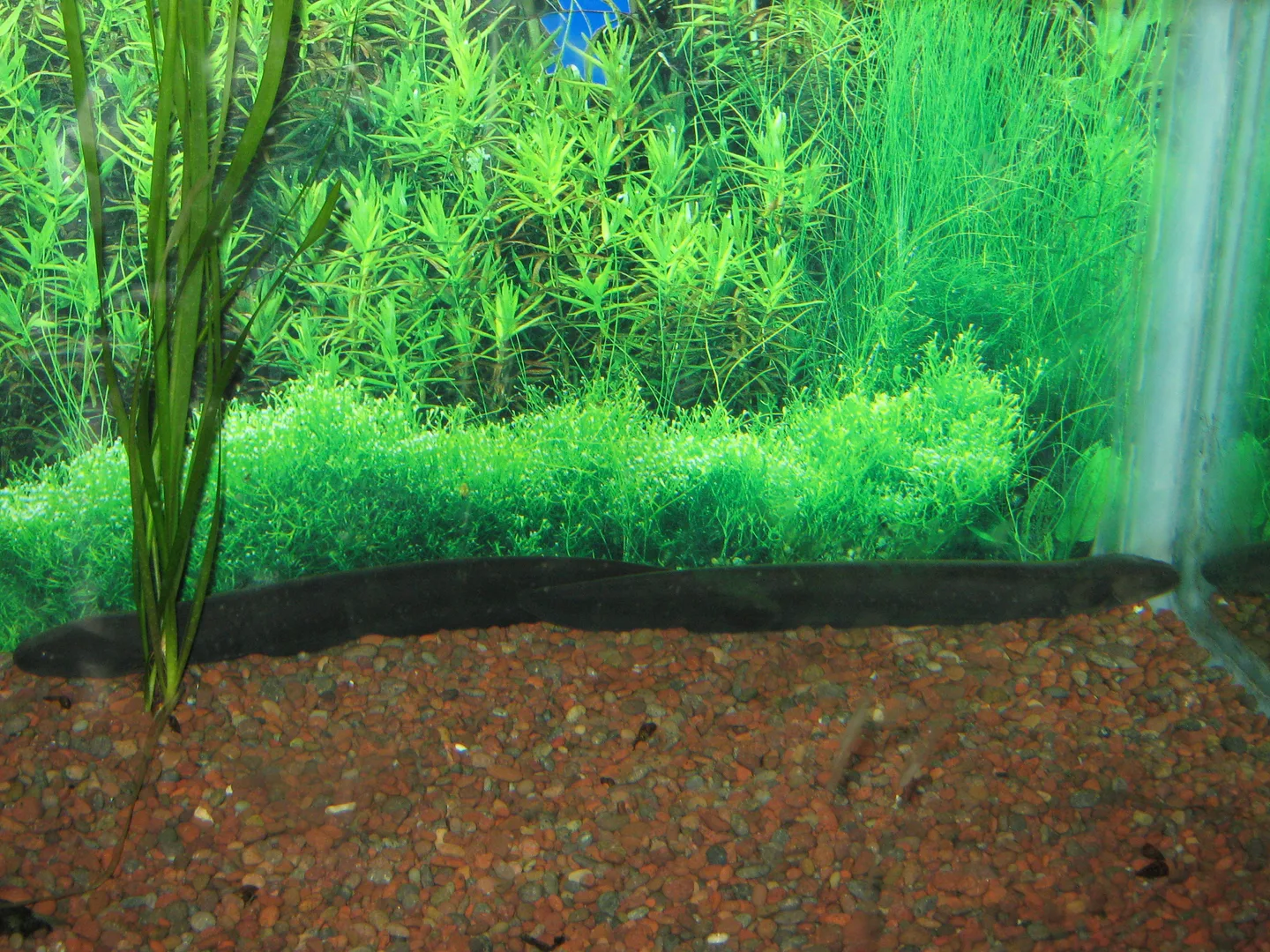
Despite its name and snake-like body, the Volta Electric Eel (Electrophorus voltai) is actually a knifefish, more closely related to catfish than to true eels. Described as a new species in 2019, it holds the record for the strongest electric discharge measured in any living animal: a single specimen jolted out 860 volts, nearly four times the voltage of a standard UK plug socket. In 1997, a 23-year-old man bathing in a Brazilian river convulsed after touching an electric eel, went under and likely drowned. A 2025 medical report calls it the first reliable clinical record of a death caused by an electric eel, and names Volta’s electric eel as the most likely species.

Living batteries About 80% of an electric eel’s body is taken up by three electric organs, built from stacks of electrocytes, modified muscle cells that each have a positive and a negative side.

High-Voltage Remote Muscle Control

When hunting in dark, murky water, an adult electric eel gives off weak pulses of around 10 volts to sense its surroundings. When it suspects prey is hiding nearby, it often fires a doublet, two rapid high-voltage pulses that hijack the prey’s nervous system and make its muscles twitch involuntarily, giving away roughly where it is hiding. Between 20 and 40 milliseconds after the twitch, a full high-voltage volley freezes the prey in place and the eel strikes.

Published Updated

Traits

Intel
& FAQ

01How much voltage can an electric eel actually produce?

In 2019, researchers described a new species, Volta's electric eel (Electrophorus voltai), and recorded one specimen discharging 860 volts, well above the 650 volts previously reported for electric eels. That makes Volta's electric eel the strongest living bioelectricity generator known.

Source: de Santana et al. 2019

02Is an electric eel actually an eel?

No. Despite its common name and serpentine form, the electric eel is a South American knifefish belonging to the order Gymnotiformes. It is more closely related to catfishes and carp than to the "true" eels in the order Anguilliformes.

Source: Natural History Museum, London

03Why does an electric eel not shock itself when discharging?

No one had worked it out as of 2019, when a scientific review of electric eel behavior listed how an eel protects its own nervous system from its high-voltage discharge among the questions that remain to be investigated.

Source: Catania 2019

04Can an electric eel jump out of the water to shock land animals?

Yes. When threatened, an electric eel can leap partly out of the water and press its chin, the most positively charged part of its body, against the threat while firing off volleys of high-voltage discharges. The higher it rises, the more of its power is diverted through the threat instead of into the water. The behavior supports a famous account from March 1800, when the explorer Alexander von Humboldt watched fishermen herd horses into a pool of electric eels, which attacked by pressing themselves against the horses while discharging.

Source: Catania 2016

Sources

More Ray-Finned Fishes

Actinopterygii & Sarcopterygii

Hydrodynamic aquatic rulers with lateral line pressure sensors, swim bladders, and electrical weaponry.

A captive African lungfish resting on aquarium gravel, its long thread-like fins trailing from a mottled olive body

African Lungfish

Protopterus annectens

A fish that breathes air through two lungs and can live for over a year inside a cocoon of its own dried slime.

Obligate air breathing through two lungs, and over a year inside a cocoon of dried slimeView →
▸ ElderHeavy Psych & Desert Rock
Close view of an alligator gar's diamond-scaled back and blunt snout breaking a marsh surface

Alligator Gar

Atractosteus spatula

Described as a 100-million-year-old living fossil, armored in interlocking ganoid scales, with two rows of fang-like teeth in its upper jaw and a swim bladder that can work as a lung.

Interlocking ganoid scale armor with a hard outer layer over a tough bony base, two rows of fang-like teeth in the upper jaw, and a vascularized swim bladder that can work as a lungView →
▸ Creedence Clearwater RevivalClassic Hard Rock & Southern Blues
American paddlefish from below in murky green water, the pale bars of its gill rakers showing inside the open gill slit

American Paddlefish

Polyodon spathula

An ancient river giant that carries 50,000 to 70,000 electroreceptor organs, the largest number of any living vertebrate species.

Paddle and head covered in ampullary organs: 50,000 to 70,000 electroreceptors per adult, the largest number of any living vertebrate speciesView →
▸ Blackberry SmokeDelta Blues & Swamp Rock
Live blackfin icefish, a close relative, seen from above in a pale holding tank at Palmer Station

Antarctic Icefish

Champsocephalus gunnari

A Southern Ocean fish with no working red blood cells, whose nearly clear blood carries oxygen dissolved in plasma, along with its own antifreeze.

Belongs to the only vertebrate family that lacks working hemoglobin genes and working red blood cells: its blood carries oxygen dissolved in the plasma instead.View →
▸ BiosphereGlacial Ambient & Drone Soundscapes

Clade factLateral line sensory systems detect water displacement and pressure waves from surrounding swimming creatures.

Explore all 53 →

Head-to-head showdowns

Simulated face-offs, biological power gauges, and 3-round combat

Down the Rabbit Hole

Associative matches based on weird shared evolutionary traits