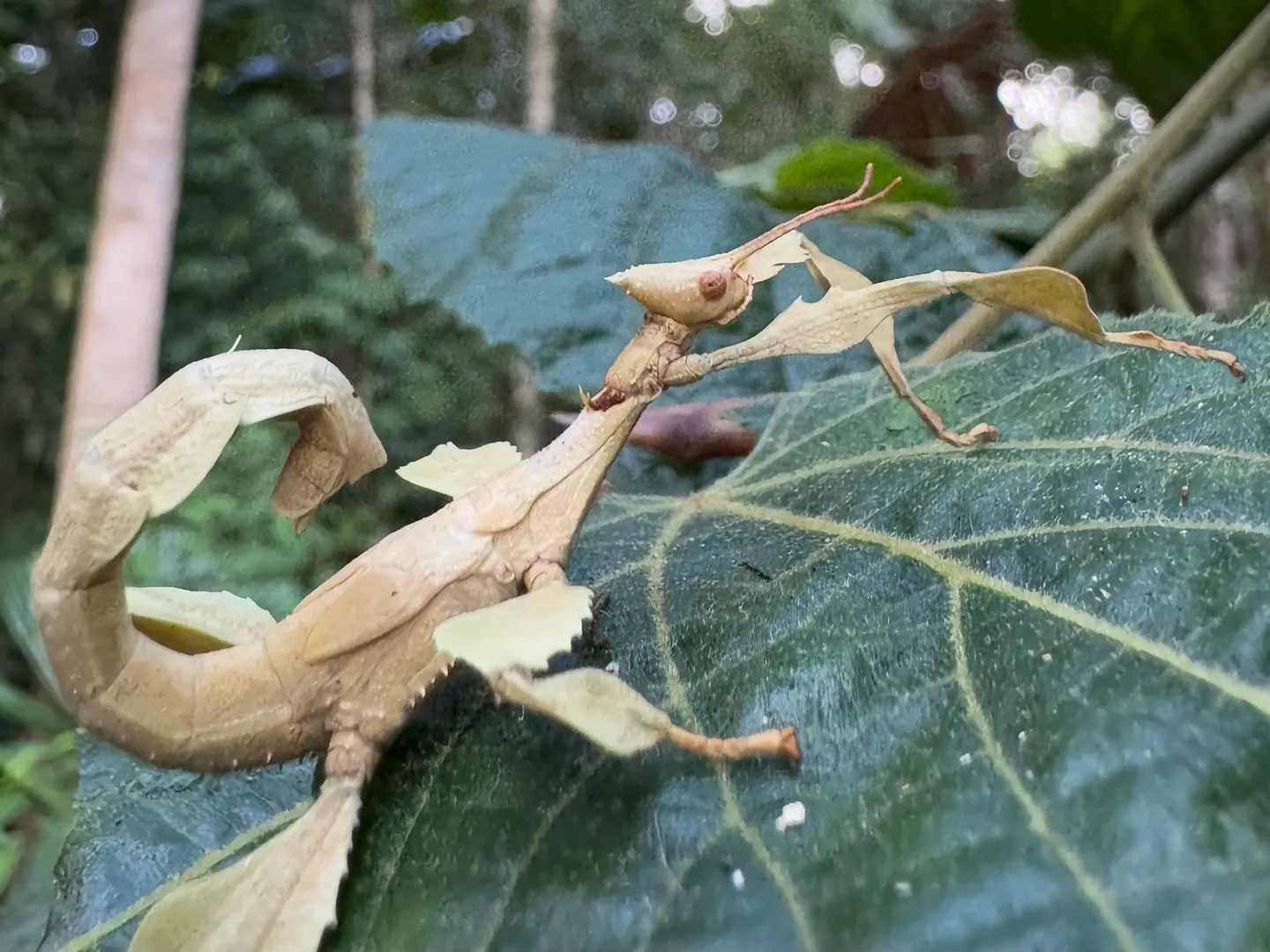
Giant Prickly Stick Insect (Extatosoma tiaratum), Douglas, AU-QL, AU
Field
notes
An ant in disguise
The giant prickly stick insect, Extatosoma tiaratum, hatches as a fake ant. The mother flicks her eggs onto the ground below her perch. Each egg has a knob, called a capitulum, that ants find attractive. Ants carry the eggs back to their underground nests.
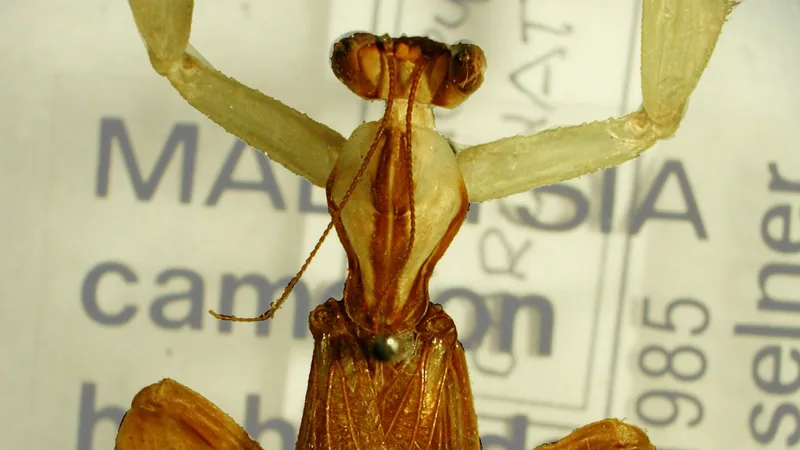
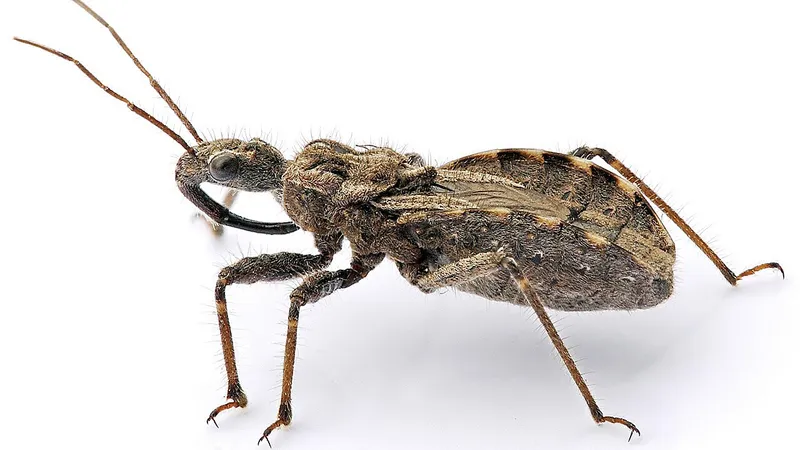
The young stick insects, called nymphs, hatch after one to three years underground and look and behave like red-headed black ants. They emerge from the nest and climb rapidly upwards, looking for soft green leaves. A study found that newly hatched nymphs travelled more than 100 metres within 60 minutes.
Ant nursery The ants eat only the knob, says the Australian Museum, and leave the rest of the egg in the nest, protected from other animals that might eat it.
A big body with spiky armour
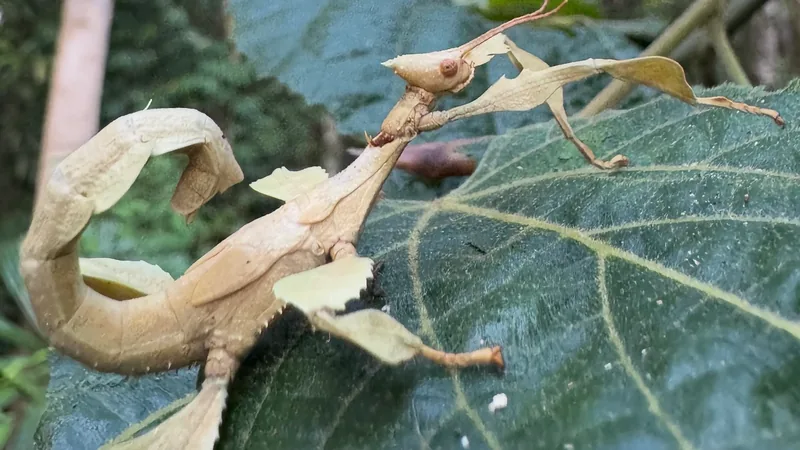
Females are the larger sex. Franklin Park Zoo lists females at 4 to 5 inches long (about 10 to 13 cm) and males at 3 to 4 inches (about 8 to 10 cm). Males have wings and can fly. Females have very short wings and cannot fly, but spiny projections on their legs and abdomen help deter predators.
This insect lives in tropical forests in northern Australia and Papua New Guinea. It is arboreal, meaning it lives in trees, and nocturnal, meaning it is active at night. It feeds mostly on eucalyptus leaves.
Its main defence is camouflage. It often curls its abdomen to look like a dry, dead leaf, and it sways gently like a branch in the breeze. The curled abdomen looks like a scorpion’s tail, but the insect has no stinger. If threatened, an adult can release a strong-smelling odour. Bats, birds and reptiles still eat it.
Mum is optional
Females can reproduce without a mate. This is called parthenogenesis. Fertilised eggs produce sons and daughters, and unfertilised eggs produce female offspring. Eggs made this way take longer to develop.
In one study, daughters produced by parthenogenesis were smaller than sexually produced females and more prone to deformities in their vestigial (leftover, tiny) wings.
The Australian Museum says females live for about 18 months, while males survive for around 6 to 8 months. The IUCN Red List rates the species Least Concern.
Published
Traits
Intel
& FAQ
Guess
first
How big is a Giant Prickly Stick Insect, really? Slide, lock in, and see what the sources say. Every answer is a figure from this page, quoted from where it came from.
Sources
- 01Giant Prickly Stick Insect. Franklin Park Zoo, Zoo New England.
- 02Britton. Leaf and Stick Insects: Order Phasmatodea. The Australian Museum.
- 03Rudolf & Brock (2017). Extatosoma tiaratum. The IUCN Red List of Threatened Species 2017: e.T80201037A104413678.
- 04Zeng et al. (2020). Canopy parkour: movement ecology of post-hatch dispersal in a gliding nymphal stick insect ( Extatosoma tiaratum ). Journal of Experimental Biology.
- 05Alavi et al. (2016). Novel microsatellite markers suggest the mechanism of parthenogenesis in Extatosoma tiaratum is automixis with terminal fusion. Insect Science.
- 06Burke & Bonduriansky (2022). Sexually but not parthenogenetically produced females benefit from mating in a stick insect. Functional Ecology.
What the sources say: 40 claims checked word for word against these sources →