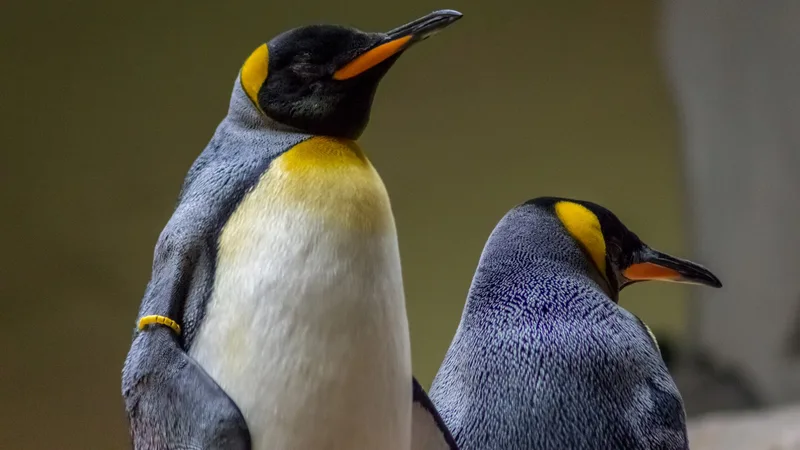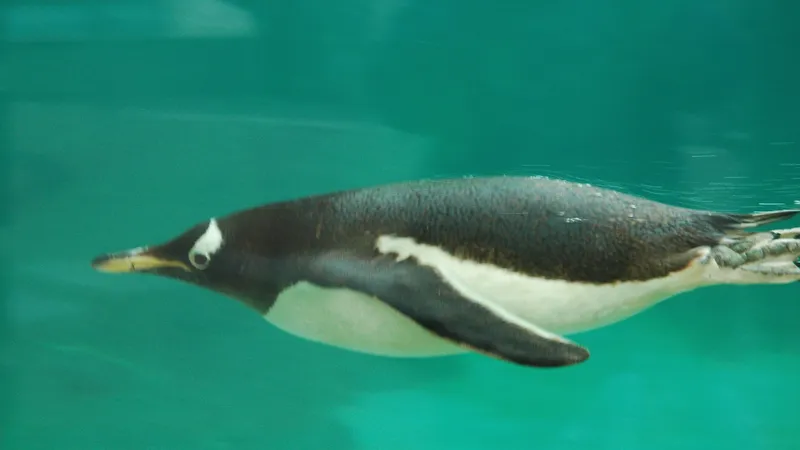
An emperor penguin leaping out of the water onto the ice at Gould Bay, Antarctica.
Field
notes
Diving Where the Blood Runs Cold
Emperor penguins can dive deeper than 500 meters and stay under for more than 23 minutes. One reason is their hemoglobin, the protein that carries oxygen in blood, which holds onto oxygen unusually tightly, like that of high-altitude birds and other penguins. That lets a diving penguin carry more oxygen when blood oxygen runs low and use up more of the oxygen it breathed in before the dive. The blood in its arteries stays almost fully saturated with oxygen through much of a dive, and only drops significantly on the final climb to the surface.
A diving penguin’s wings run cold. In a study of emperors diving from an isolated hole in the sea ice, the average temperature inside a wing vein during dives was about 7.6 degrees Celsius, while the stomach averaged 37.1 and the chest muscle 37.8. Those readings fit a warm core and a cooled outer shell, caused by narrowed blood vessels near the body’s surface (peripheral vasoconstriction), feathers that insulate less during a dive, and heat lost to the water.
Big Birds, Big Weight Swings
Emperor penguins stand 101 to 132 centimeters tall. They gain and lose weight rapidly across the breeding and feeding seasons: around hatching time, adults weigh 22 to 30 kilograms, and before their yearly molt they have to almost double their body mass. Wild emperors typically live 15 to 20 years, though some pass 40.
Silverfish, Squid, and a Spiky Tongue
Emperor penguins are carnivores, eating mostly fish, crustaceans and molluscs from the waters around Antarctica. Which prey is plentiful varies from place to place, but some research has found Antarctic silverfish among their most frequently eaten, with Nototheniidae fish a staple and Antarctic krill and glacial squid eaten regularly. A rough, spiky-textured tongue helps them catch and eat slippery fish and squid. They breed along the Antarctic coastline between 66 and 78 degrees south, where winter temperatures fall as low as minus 40 degrees Celsius with wind chills reaching minus 60. Killer whales and leopard seals have been seen preying on emperor penguins, and skuas are known to steal and eat their eggs and chicks. Most dives are shallow and fairly quick, which makes it harder for predators to reach them, and countershading, a dark back and pale belly, makes swimming penguins harder to make out.
Fasting Fathers of the Ice
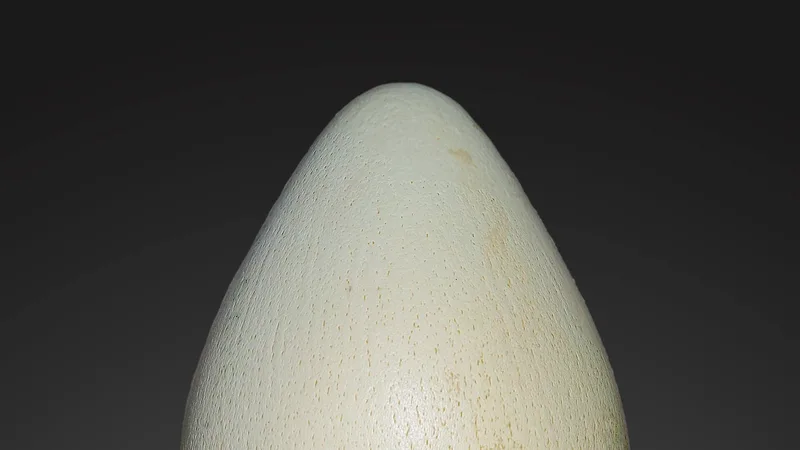
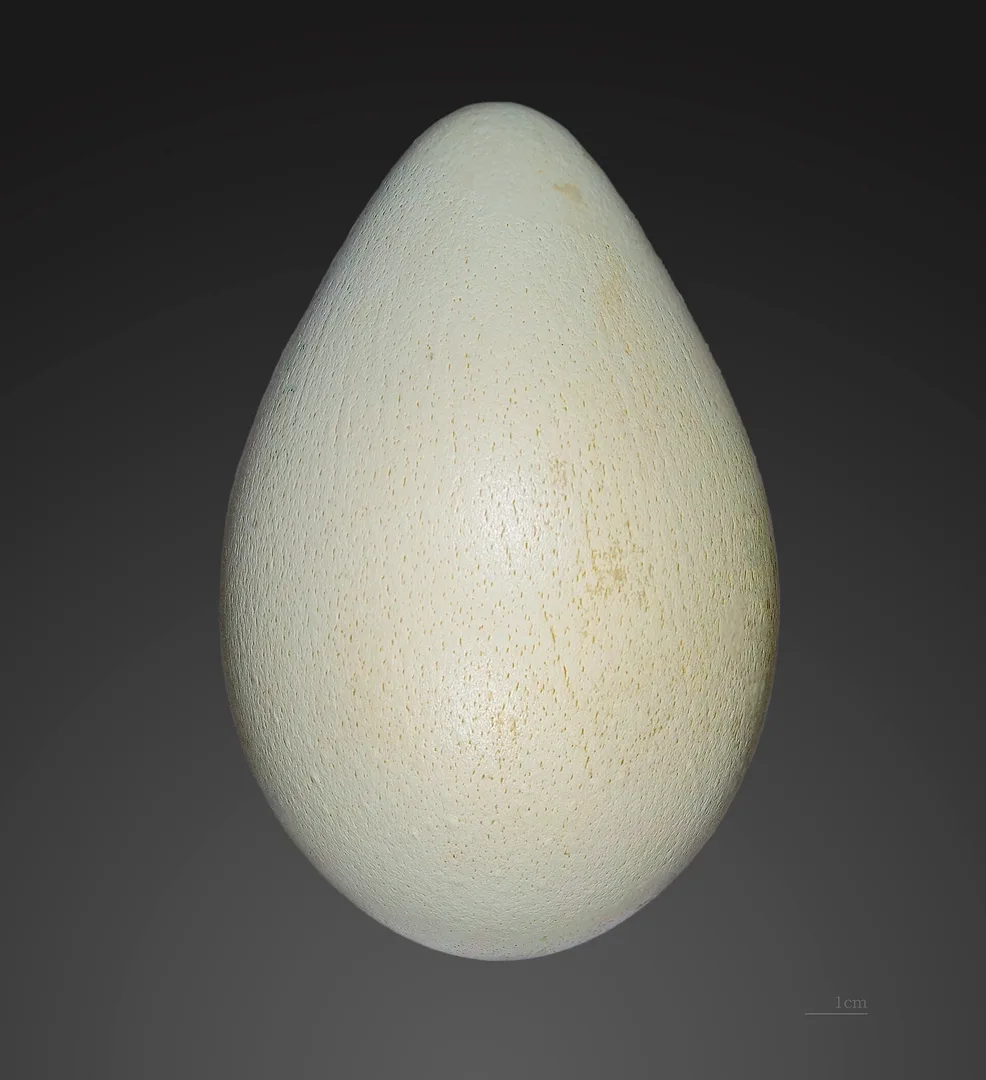
Breeding starts just as the Antarctic winter does: penguins arrive at their breeding grounds on the sea ice in early to mid-April. Females lay a single egg in late April or May and pass it to their mate almost immediately, then travel about 50 to 120 kilometers back to open water to feed. Males hold the egg on top of their feet inside a fold of warm skin called a brood pouch, low on the belly, for roughly 65 to 75 days until it hatches. Across the four-month winter fast, a male starts at about 38 kilograms, and the leanest are down to an estimated 18 by the time they head back to sea to feed. To save energy through the fast, males pack into huddles that can hold hundreds of birds at densities of up to 10 per square meter. Chicks hatch in mid-July. Their mother’s return can come before hatching or as much as a month after it, and the father feeds them a nutrient-rich, milky substance he produces in his own esophagus until she is back.
Published Updated
Traits
Intel
& FAQ
Guess
first
How big is a Emperor Penguin, really? Slide, lock in, and see what the sources say. Every answer is a figure from this page, quoted from where it came from.
Sources
- 01Aptenodytes forsteri (emperor penguin). Animal Diversity Web, University of Michigan.
- 02Meir & Ponganis (2009). High-affinity hemoglobin and blood oxygen saturation in diving emperor penguins. Journal of Experimental Biology.
- 03Ponganis et al. (2003). Regional heterothermy and conservation of core temperature in emperor penguins diving under sea ice. Comparative Biochemistry and Physiology Part A: Molecular & Integrative Physiology.
- 04Emperor penguin breeding cycle. Australian Antarctic Program.
- 05Emperor penguins. Australian Antarctic Program.
- 06Robin et al. (1988). Protein and lipid utilization during long-term fasting in emperor penguins. American Journal of Physiology-Regulatory, Integrative and Comparative Physiology.
- 07Gilbert et al. (2006). Huddling behavior in emperor penguins: Dynamics of huddling. Physiology & Behavior.
- 08Aptenodytes forsteri. The IUCN Red List of Threatened Species 2020: e.T22697752A157658053.
What the sources say: 57 claims checked word for word against these sources →