King penguins coming ashore on Possession Island, Crozet Islands, southern Indian Ocean.
Field
notes
Second in Size Only to the Emperor
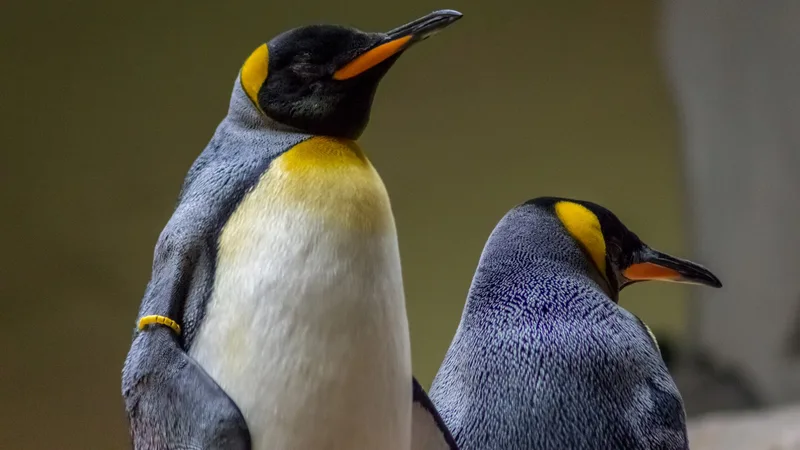
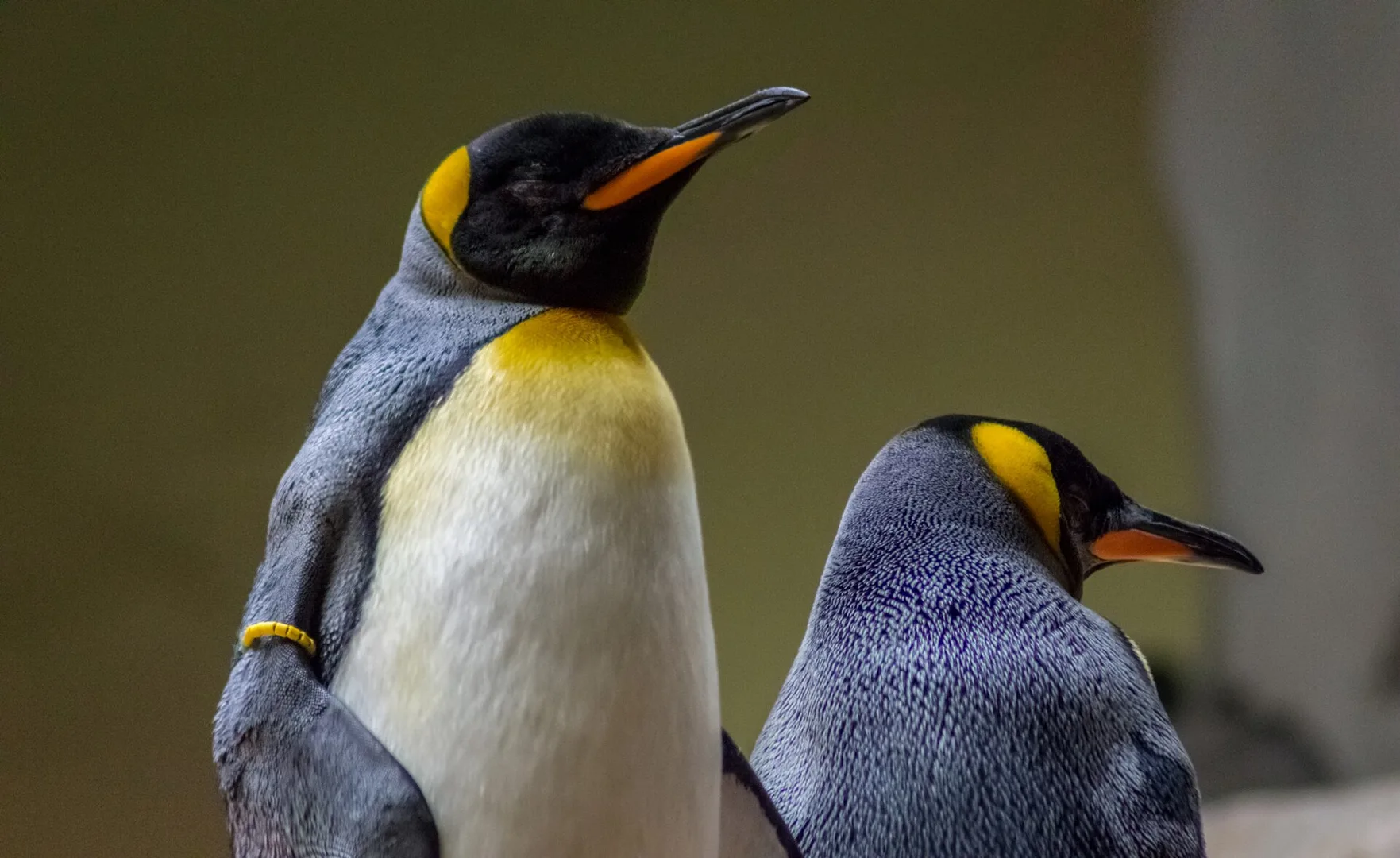
The king penguin (Aptenodytes patagonicus) is a large bird, but smaller and slimmer than the only other member of its genus, the emperor penguin, and it is the second largest of all penguin species. Adults stand 85 to 95 centimetres tall and weigh between 9.3 and 17.3 kilograms, averaging 11.8 kilograms. Its head is nearly black, with a spoon-shaped orange patch on each side, and a stripe on its lower beak reflects ultraviolet light, which is thought to signal sexual maturity, health or social standing. Young birds do not reach full adult colouring until they are three years old, and chicks are simply dark brown before their first molt. A banded wild king penguin has been recorded living to at least 27 years old.
The Long Commute
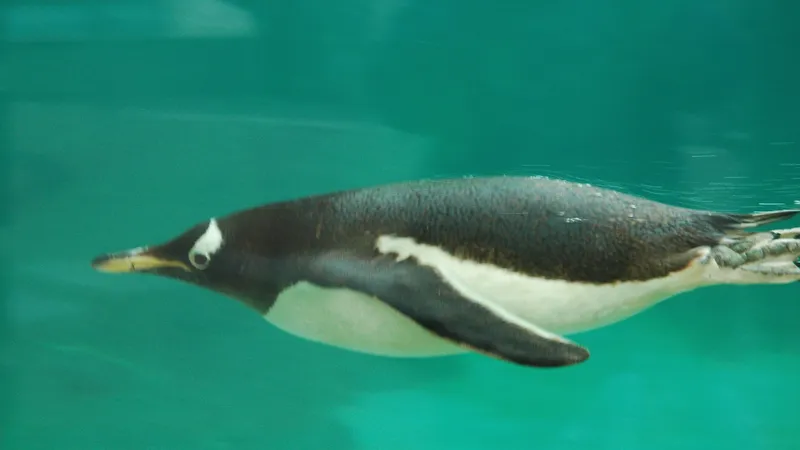
King penguins breed mainly on sub-Antarctic islands such as South Georgia, the Falklands, Crozet and Kerguelen, with no colonies found south of 60 degrees S latitude, and they tend to keep north of the pack ice, where the related emperor penguin takes over further south. They have been known to travel up to 500 kilometres from their colonies to feed. Tracking three king penguins over four- to eight-day trips at sea, researchers logged 2,595 dives: half went past 50 metres, and two passed 240 metres. At Marion Island, fish made up 87% of what king penguins ate by weight, mostly small lanternfish, with squid filling most of the rest and crustaceans barely registering.
Feet Instead of a Nest
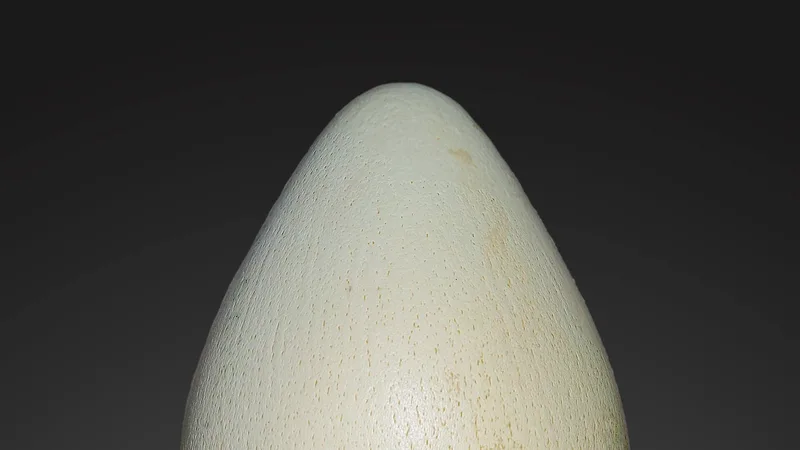
A king penguin is one of only two penguin species that do not build a nest. The female lays a single egg, which is transferred to the male’s feet and incubated for about 54 days under a warm fold of belly skin, with both parents trading shifts of five to 22 days. By the end of his first shift, a father has typically lost 30% of his body weight, and males nearing a critical mass of about 10 kilograms must choose between abandoning the egg or holding out for the mother’s return. Raising one chick to independence takes 14 to 16 months. Successful parents do not start again until their chick has fledged, so they begin the next season late and usually fail, but that failure lets them breed earlier the year after.
Molt is when a king penguin grows new feathers, a month-long stage that opens each breeding cycle for both parents. A study of seven molting birds found their body mass fell by 58% over 41 days of fasting, from an average of 18 kilograms.
One Voice Among Many
King penguin colonies are noisy, and with no nest or landmark to meet at, parents call to locate their chicks. The calls carry two frequencies at once, made by the syrinx, a two-part voice organ whose halves each produce sound independently. Chicks are thought to pick out the lower of the two frequencies, which carries farther through the noise, and to learn their parent’s call in their first five weeks of life. Antarctic and sub-Antarctic fur seals, leopard seals and killer whales prey on adults, while brown skuas and giant petrels take chicks.
Published Updated
Traits
Intel
& FAQ
Guess
first
How big is a King Penguin, really? Slide, lock in, and see what the sources say. Every answer is a figure from this page, quoted from where it came from.
Sources
- 01Aptenodytes patagonicus (king penguin). Animal Diversity Web, University of Michigan.
- 02AnAge entry for Aptenodytes patagonicus. AnAge: The Animal Ageing and Longevity Database, Human Ageing Genomic Resources.
- 03Martínez, Jutglar & Garcia (2020). King Penguin (Aptenodytes patagonicus). Birds of the World.
- 04Aptenodytes patagonicus. The IUCN Red List of Threatened Species 2020: e.T22697748A184637776.
- 05Kooyman et al. (1982). Diving Depths and Energy Requirements of King Penguins. Science.
- 06Culik et al. (1996). Diving Energetics in King Penguins (Aptenodytes Patagonicus). Journal of Experimental Biology.
- 07Adams & Klages (1987). Seasonal variation in the diet of the king penguin (Aptenodytes patagonicus) at sub‐Antarctic Marion Island. Journal of Zoology.
- 08Jouventin et al. (2005). Ultraviolet Beak Spots in King and Emperor Penguins. The Condor.
- 09Cherel, Leloup & Le Maho (1988). Fasting in king penguin. II. Hormonal and metabolic changes during molt. American Journal of Physiology-Regulatory, Integrative and Comparative Physiology.
What the sources say: 41 claims checked word for word against these sources →