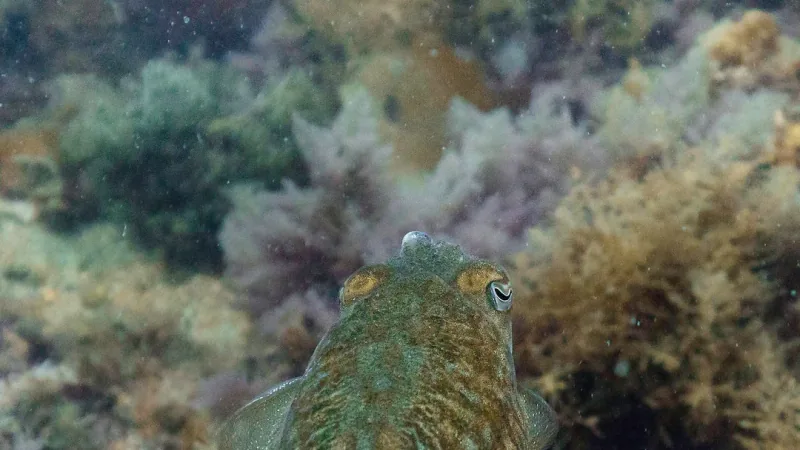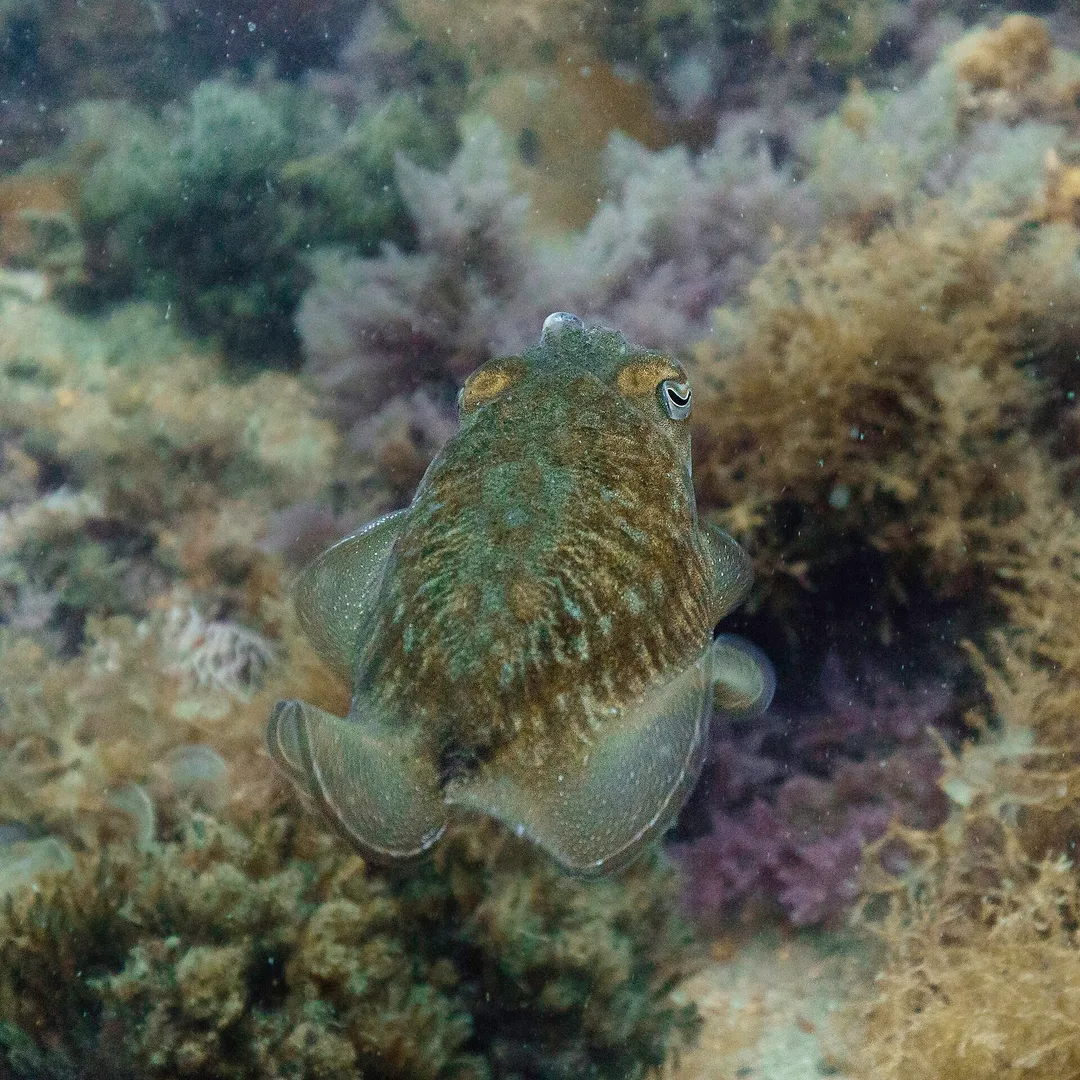
Common cuttlefish (Sepia officinalis), Arrábida National Park, Portugal
Field
notes
Cruising the sandy shelves and seagrass beds of the eastern Atlantic and the Mediterranean, the Common Cuttlefish (Sepia officinalis) grows a mantle up to 45 centimeters long and weighs 2 kilograms in subtropical areas and 4 kilograms in temperate ones, though the largest individual to be recorded reached 60 centimeters. Its lifespan is short: a maximum of two years is common, it typically breeds only once, and after spawning both males and females die. Along the way, it is said to carry one of the largest brain-to-body ratios of any invertebrate.
Colorblind Camouflage
A cuttlefish’s eye runs on a sole visual pigment, and a 2006 study put that to the test: shown checkerboards pairing a green square against grey squares matched for brightness, the cuttlefish showed no disruptive camouflage pattern on the matched pair, suggesting the board looked like a uniform background to its eyes. Researchers concluded cuttlefish must be color blind, though they can still perceive objects that differ in contrast by approximately 15 percent. It builds its disguises from about 30 separate skin pattern components; if each one worked on its own, researchers calculate the cuttlefish could produce at least a billion different combinations. It reads polarized light too. In lab trials, cuttlefish preyed preferably on fish with normal polarization reflection over fish that did not reflect linearly polarized light, which researchers suggest shows the cuttlefish uses that reflection to break through the mirror-like camouflage of silvery prey.
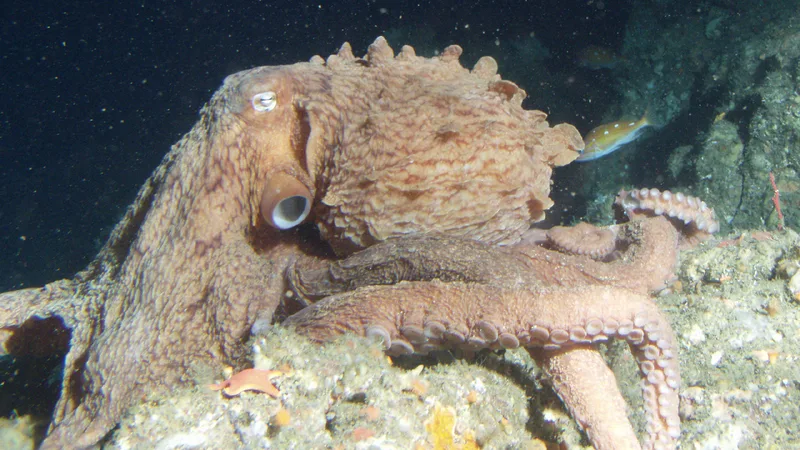
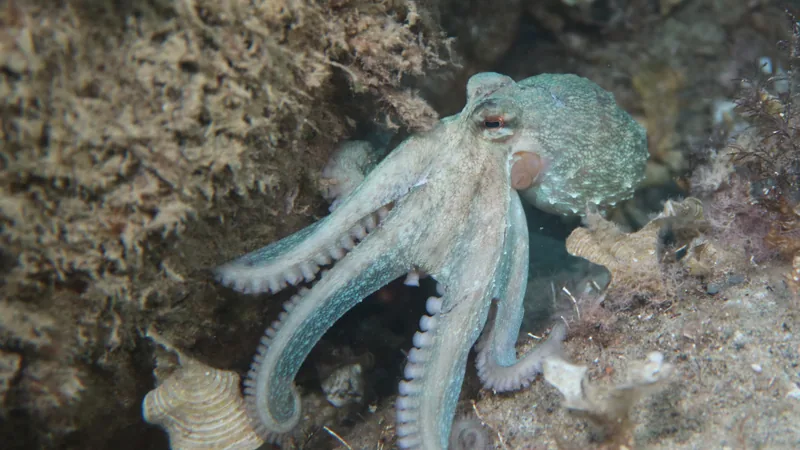
A Skin Full of Tiny Muscles Cuttlefish and their bottom-dwelling octopus relatives share a capability unique in the animal kingdom: dramatically and quickly changing their skin from smooth and flat to rugose and three-dimensional. Small bumps called papillae do it with rings of muscle at the base that contract and push the overlying skin upward, while muscles running across each papilla pull its edges toward the center to sculpt the shape, before a separate meshwork of thin muscles is thought to pull it flat again.
An Ambush Predator With Toxic Spit
The common cuttlefish usually spends the daytime hidden in sand and is active at night. When a crab or small fish wanders close, it strikes with two long feeding tentacles tipped in sucker-lined clubs, or pounces and uses its eight arms to capture and maneuver the prey while it tears at it with its radula and beak. Its saliva contains cephalotoxin, which induces paralysis and immobilizes prey. It typically feeds on crabs and bottom-dwelling fish like gobies, with minor amounts of amphipods, which are shrimp-like crustaceans, and has also been known to eat gastropods like sea snails, worms and even other cuttlefish.
The Cuttlebone Submarine
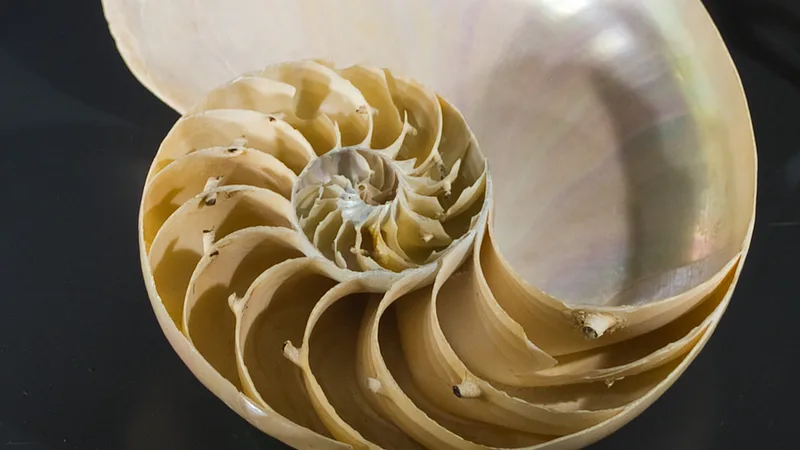
Inside the mantle sits the cuttlebone, a porous internal shell. The cuttlefish alters its buoyancy by controlling how much liquid moves into and out of it. Its recorded depth range runs from the surface to about 200 meters, and below 200 meters the ambient water pressure is enough to implode the shell. It is prey for large fish, seals, sharks and dolphins, and it avoids being eaten by camouflaging with its surroundings and disorienting predators by releasing ink.
Published Updated
Traits
Intel
& FAQ
Guess
first
How big is a Common Cuttlefish, really? Slide, lock in, and see what the sources say. Every answer is a figure from this page, quoted from where it came from.
Sources
- 01Common cuttlefish (Sepia officinalis). The Marine Life Information Network (MarLIN).
- 02Sepia officinalis. Animal Diversity Web, University of Michigan.
- 03Barratt & Allcock (2012). Sepia officinalis. The IUCN Red List of Threatened Species 2012: e.T162664A939991.
- 04Allen et al. (2013). Cuttlefish skin papilla morphology suggests a muscular hydrostatic function for rapid changeability. Journal of Morphology.
- 05Osorio et al. (2022). Multi-level control of adaptive camouflage by European cuttlefish. Current Biology.
- 06Mäthger, Barbosa, Miner & Hanlon (2006). Color blindness and contrast perception in cuttlefish (Sepia officinalis) determined by a visual sensorimotor assay. Vision Research.
- 07Shashar et al. (2000). Cuttlefish use polarization sensitivity in predation on silvery fish. Vision Research.
What the sources say: 70 claims checked word for word against these sources →