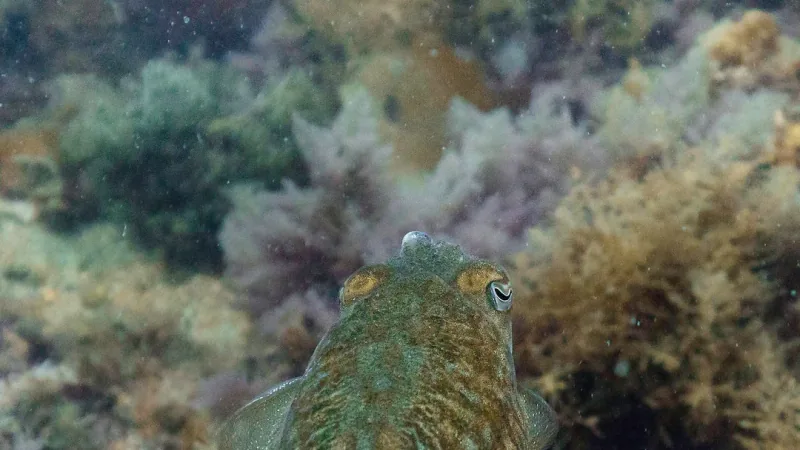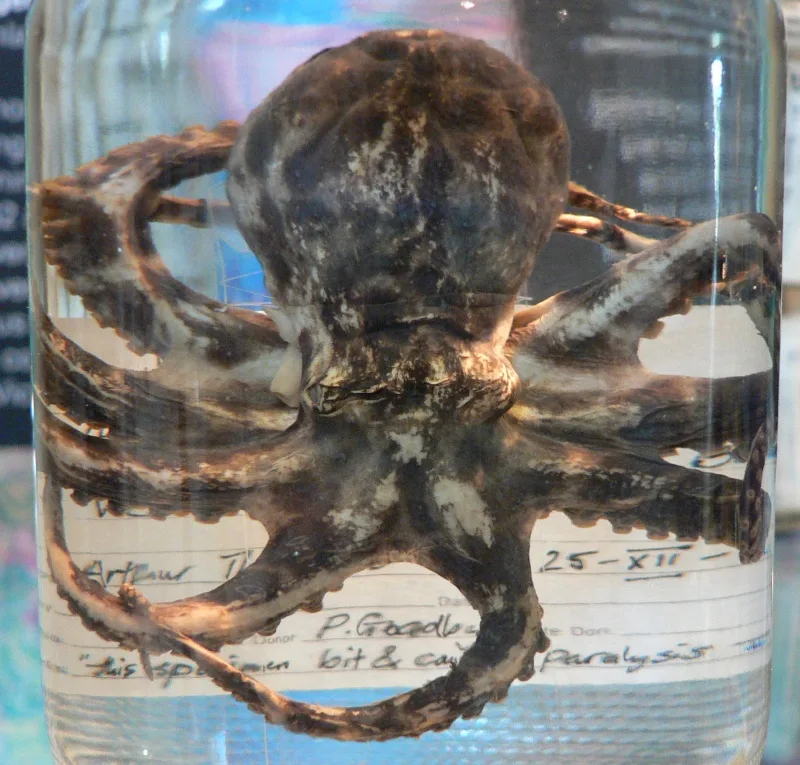
Vibrant iridescent electric blue rings flash across the mantle when the octopus feels threatened.
Field
notes
The Glowing Neon Assassin of the Shallows
Weighing barely 25 grams and comfortably resting within the palm of a human hand, the Blue-Ringed Octopus (Hapalochlaena lunulata) is one of the most toxic marine organisms in the global ocean. Inhabiting coral reefs and shallow tide pools across the Indo-Pacific from Australia to Japan, this miniature cephalopod spends most of its daylight hours camouflaged in mottled yellowish-brown shades against coral rubble.
When agitated or cornered by a potential predator, the octopus triggers an instantaneous physiological alarm sequence. Specialized dermal chromatophore cells relax to reveal roughly 50 to 60 vivid iridescent blue rings. Multilayered structural reflector cells called iridophores flash a brilliant neon cyan at 430 nanometers wavelength, providing an unmistakable optical warning that signals extreme toxicity.
Symbiotic Tetrodotoxin Pharmacology
The blue-ringed octopus carries enough lethal venom to kill 26 adult humans within minutes, yet it does not produce this chemical weapon entirely on its own. Colonies of endosymbiotic bacteria, including Pseudomonas and Vibrio species, dwell inside the octopus’s posterior salivary glands, synthesizing vast quantities of tetrodotoxin (TTX).
Tetrodotoxin is a potent non-protein neurotoxin that blocks voltage-gated sodium ion channels along nerve and muscle cell membranes. This arrests the transmission of action potentials throughout the central and peripheral nervous systems, resulting in rapid motor paralysis and respiratory failure while leaving the victim fully conscious. The octopus delivers this toxin through a sharp, parrot-like chitinous beak to paralyze struggling crabs before dissolving their muscle tissue with digestive salivary enzymes.
High-Precision Coastal Ambush
Despite its formidable arsenal, the blue-ringed octopus prefers stealth over confrontation. By contracting muscular radial dermal pockets, it alters both its skin pigmentation and surface texture in less than 200 milliseconds, mimicking the rough bumps of surrounding macroalgae and coarse sand.
Prowling tide pools under cover of darkness, it stalks small crabs and benthic gobies by extending its eight suction-lined arms into tight crevices. Once prey is trapped, a minute venom injection renders the crustacean immobile within 30 seconds, allowing the octopus to feed safely without risking damage to its soft, unarmored mantle.
Published Updated