L'épouillage chez les primates.
Field
notes
The females rule the roost
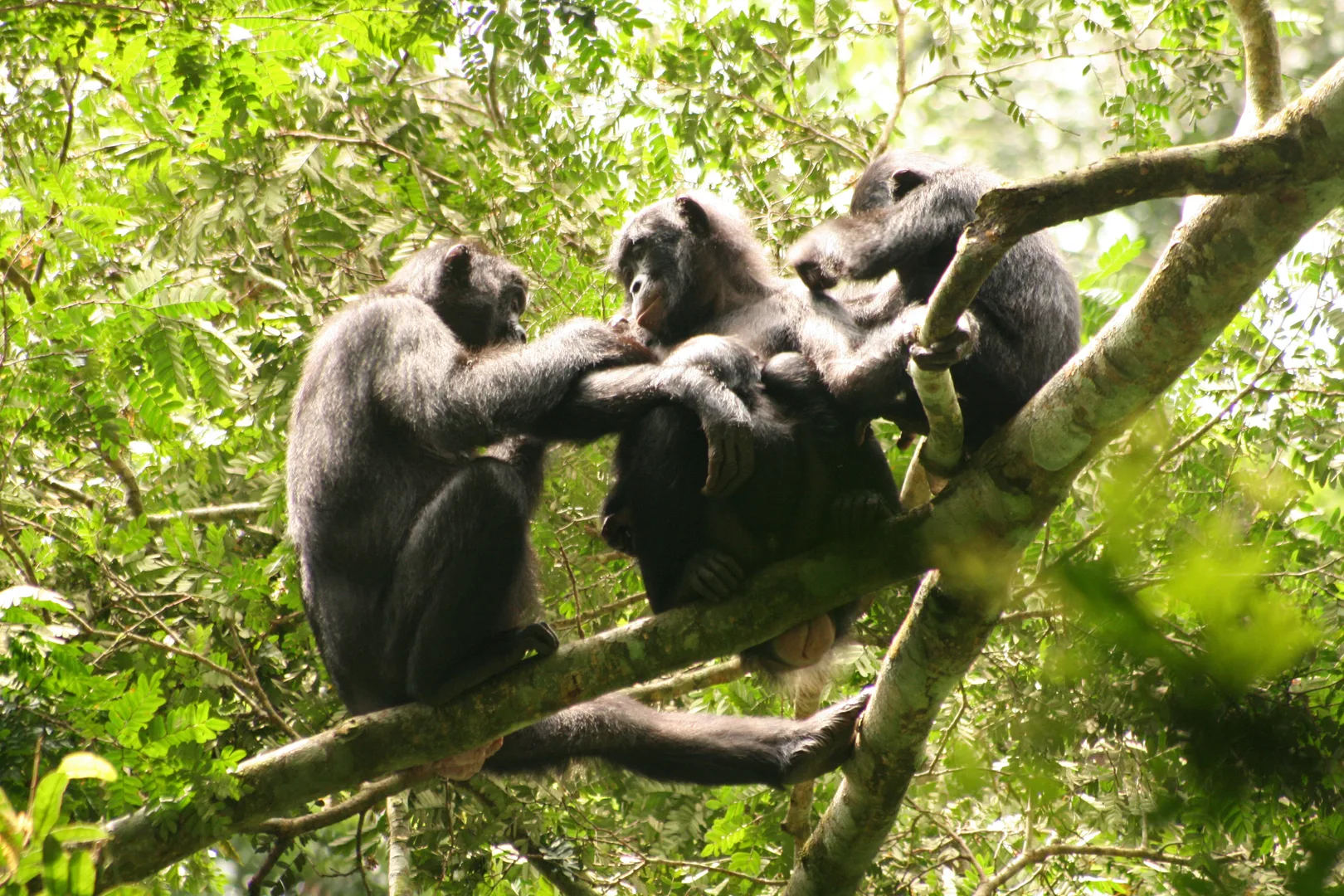
Bonobo society is run by the females. Mothers keep lifelong bonds with their sons, and adult females form strong bonds with each other. Males stay in the group they were born in for life, while females leave in adolescence to join another one. A male’s rise in dominance is correlated with his mother’s strong presence in the group. Bonobos also use touch to give each other reassurance and comfort.
Peace, measured Researchers pooled records from 18 chimpanzee communities and 4 bonobo communities studied over five decades. Their data include 152 killings by chimpanzees and one suspected killing by bonobos. A 2011 paper also found no confirmed record of infanticide (the killing of babies) among bonobos, against many records for male chimpanzees.
Slimmer than a chimp
Bonobos are apes with dark hair covering their bodies. From head to rump they measure 70 to 83 centimeters. Males weigh about 39 kilograms and females about 31 kilograms. Compared with chimpanzees, they are more slender, with smaller heads and smaller ears. They are also more comfortable walking upright, and their hair is neatly parted down the middle of the head. They keep a white rump patch for life, while the patch darkens with age on chimpanzees.
Life in the Congo forest
Bonobos live in the rainforests of the Congo Basin, in a small part of one country, the Democratic Republic of the Congo. Fruit makes up the largest part of their diet. They also eat leaves, stems, shoots, termites, grubs and worms, and they spend hours hunting for earthworms. Each evening they build sturdy nests of leaves and twigs in the forks of trees. Adults sometimes share one.
Endangered and slow to grow up
The IUCN Red List rates the bonobo Endangered. People hunt bonobos for food and sell their babies into the pet trade, and logging roads give people easier access to hunt or capture many rainforest animals, including bonobos. Females don’t usually have their first baby until they are about 13 years old, and a mother gives birth every five to six years. Bonobos live over 50 years in expert care, and their lifespan in the wild is unknown.
Published
Traits
Intel
& FAQ
Guess
first
How big is a Bonobo, really? Slide, lock in, and see what the sources say. Every answer is a figure from this page, quoted from where it came from.
Sources
- 01Fruth et al. (2016). Pan paniscus. The IUCN Red List of Threatened Species 2016: e.T15932A102331567.
- 02Bonobo. San Diego Zoo Wildlife Alliance.
- 03Pan paniscus (bonobo). Animal Diversity Web, University of Michigan.
- 04Wilson et al. (2014). Lethal aggression in Pan is better explained by adaptive strategies than human impacts. Nature.
- 05Furuichi (2011). Female contributions to the peaceful nature of bonobo society. Evolutionary Anthropology: Issues, News, and Reviews.
What the sources say: 46 claims checked word for word against these sources →