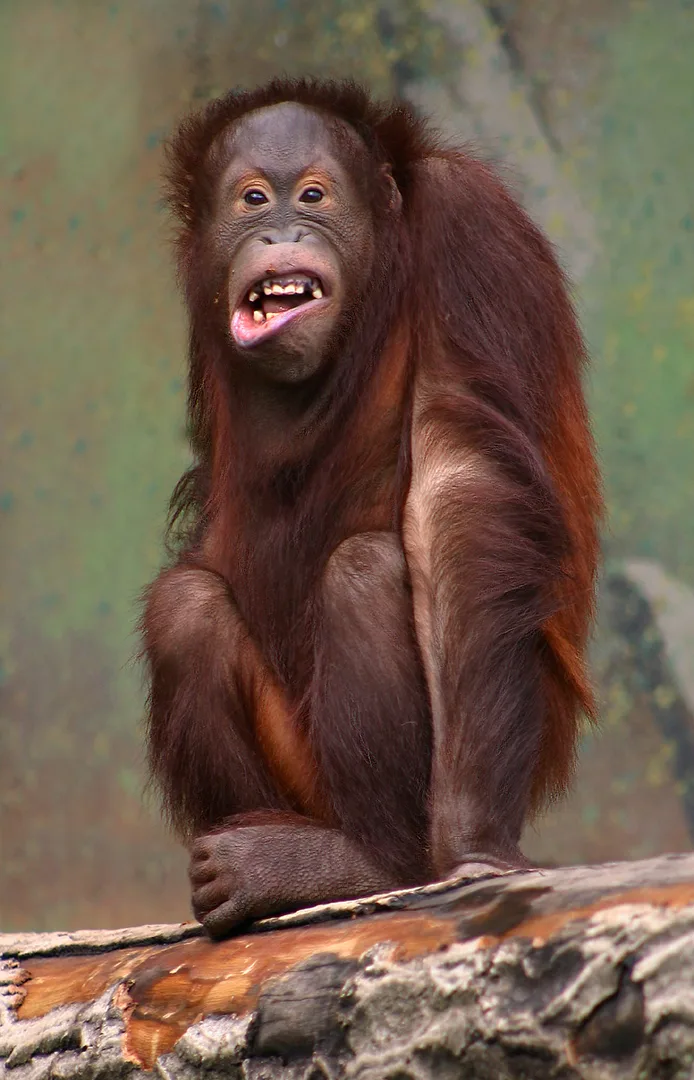
Bornean orangutan (Pongo pygmaeus) in a Kalimantan forest
Field
notes
Built for Life in the Trees
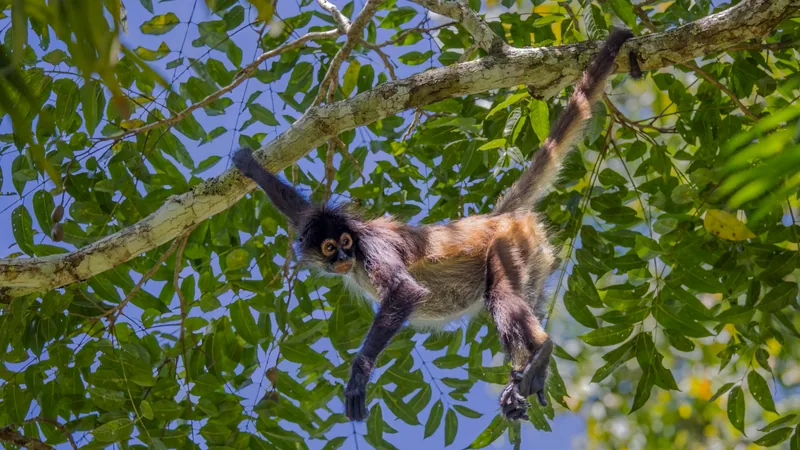
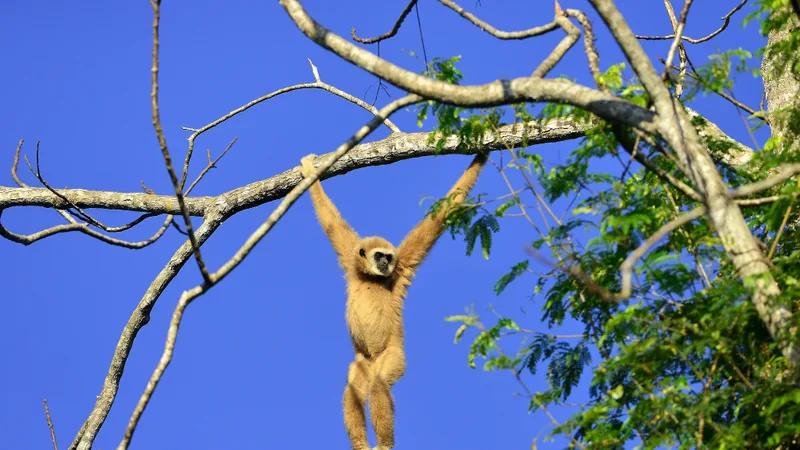
Bornean orangutans live in both the Malaysian and Indonesian parts of the island of Borneo, where they generally inhabit swampy and hilly tropical rainforests. Orangutans are the largest arboreal mammals, and Bornean orangutans rarely come down to the forest floor. An orangutan’s arms stretch out longer than its body, more than 2 meters (7 feet) from fingertip to fingertip, and it has long curved fingers and toes for grasping. Its hands make it graceful and swift when swinging but slow and awkward on the ground. Orangutans can swing hand over hand, but they normally move cautiously, climbing and walking through large trees to spread their weight across the branches. On the ground, they use all four limbs, supporting themselves on the sides of clenched fists rather than on their knuckles. A Bornean orangutan cannot swim, so rivers and other waterways box in where it can travel.
Orangutans usually build a fresh nest each night, though they sometimes rebuild an old one, and a Bornean orangutan’s nest platform sits 12 to 18 meters (40 to 60 feet) off the ground. Orangutans also use leafy branches to shelter from rain and sun, and sometimes drape large leaves over themselves like a poncho.
Two Kinds of Grown Male
“Orangutan” means “person of the forest” in the Indonesian and Malaysian languages. Orangutan males average 136 centimeters (54 inches) in height and females 114 centimeters (45 inches). Adult male Bornean orangutans average about 87 kilograms (192 pounds), and females about 37 kilograms (82 pounds). Males come in two forms: flanged males with wide cheek pads, and unflanged males that are the same size as females and look much like them. Males aged 8 to 15 are generally unflanged and become flanged between 15 and 20, but the presence of a fully mature dominant male may suppress another male’s pads, and in some cases a wild male may never develop them. Both kinds of male father offspring. A male Bornean orangutan’s median life expectancy is about 27 years; there is not enough data to give one for females.
Cheek Pads and the Long Call
A Face Built to Be Heard A flanged male’s cheek pads amplify his loud, deep long call, which can be heard a kilometer or more away, and unflanged males that hear it flee the area.
When males fight, they charge at each other and break branches, and if that doesn’t scare one away, they grab and bite each other’s cheek pads or ears until one gives up and runs away.
Gardeners of the Forest
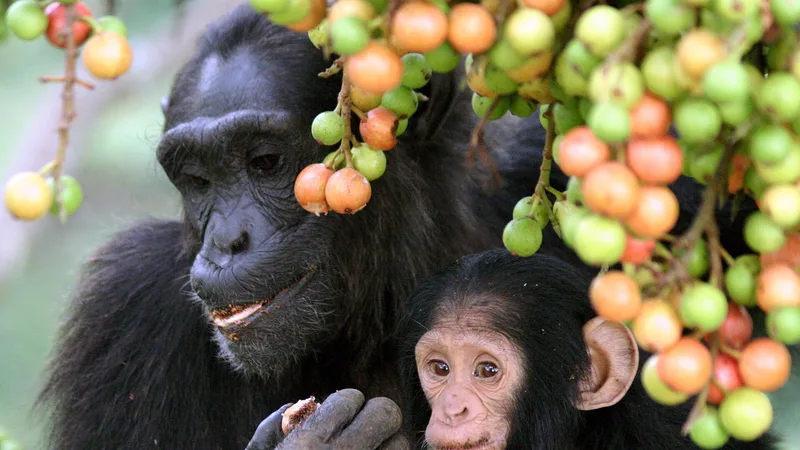
Orangutan diets center on wild figs, durian, and other forest fruit, backed up by leaves, bark, insects, bird eggs, and honey when fruit runs short. Bornean orangutans have been recorded eating more than 500 plant species, and fruit makes up more than 60 percent of their diet. That makes them “gardeners of the forest,” spreading seeds, especially large ones that smaller animals cannot disperse. Bornean orangutans are Critically Endangered: their numbers have dropped by more than half over the past 60 years, and their habitat has shrunk by more than 80 percent in the past 20.
Published Updated
Traits
Intel
& FAQ
Guess
first
How big is a Bornean Orangutan, really? Slide, lock in, and see what the sources say. Every answer is a figure from this page, quoted from where it came from.
Sources
- 01Ancrenaz et al. (2024). Pongo pygmaeus. The IUCN Red List of Threatened Species 2024: e.T17975A259043172.
- 02Pongo pygmaeus (Bornean orangutan). Animal Diversity Web, University of Michigan.
- 03Orangutan. San Diego Zoo Wildlife Alliance.
- 04Orangutan. Smithsonian's National Zoo and Conservation Biology Institute.
What the sources say: 63 claims checked word for word against these sources →